How Gen Z Is Reshaping Everyday Jewelry With Ethics, Personalization, and Durability
Gen Z is rewriting jewelry's purpose: 72% prefer lab-grown diamonds, and over 75% discover pieces via TikTok or Instagram, pushing brands toward ethics, personalization, and durability.
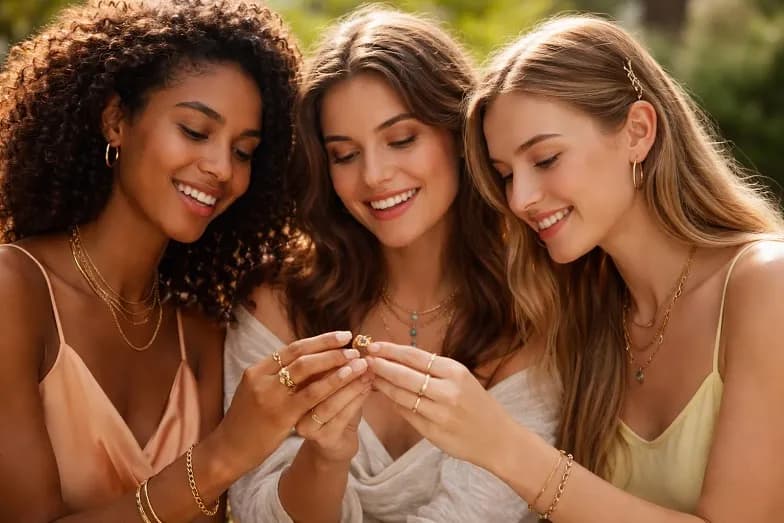
The jewelry that earns permanent residency on your wrist or fingers isn't necessarily the most expensive. For the generation now driving the fastest-growing segment of fine accessories, it's the piece that can survive a gym session, carry a meaningful date engraved on its inner band, and arrive with documentation proving the stone was grown in a lab rather than extracted from contested ground. Gen Z isn't simply buying differently; they're demanding a different definition of what jewelry is for.
Ethics as a Non-Negotiable Starting Point
Among surveyed Gen Z buyers, 72% say they prefer lab-grown diamonds, citing environmental responsibility and ethical sourcing as their primary reasons. That number reflects something deeper than a passing trend. The global lab-grown diamond market was valued at approximately $29.46 billion in 2025 and is projected to grow to around $33.54 billion in 2026, with compound annual growth rates between 13 and 14 percent. Lab-grown diamonds are expected to exceed 21 percent of total diamond market share in 2025, a figure well beyond what the mining industry had anticipated.
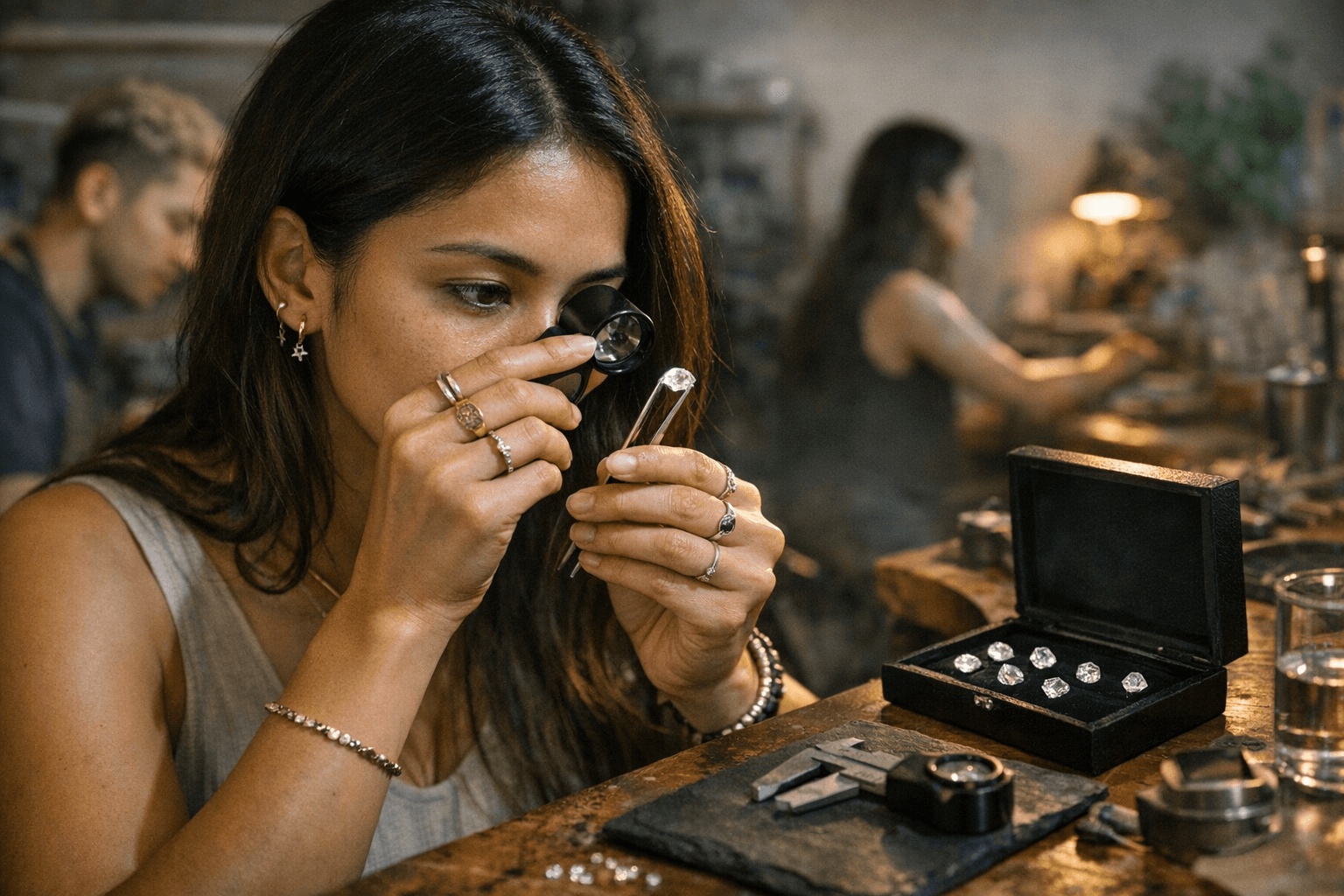
What makes this shift significant for everyday jewelry specifically is that lab-grown diamonds are chemically, physically, and optically identical to mined stones, yet carry a profoundly different narrative centered on innovation, ethics, and access. For a buyer who intends to wear a piece daily rather than lock it in a vault, that narrative matters as much as the cut. When purchasing lab-grown diamonds, certifications from the IGI (International Gemological Institute) or GIA (Gemological Institute of America) apply the same 4Cs grading system used for natural diamonds, ensuring quality regardless of origin.
Recycled metals complete the ethical equation. Recycled precious metals are one of the clearest signals that a brand is trying to reduce extractive impact, and for everyday wear, medical-grade stainless steel, especially 316L, is also worth attention: it's durable, low-maintenance, and long-lasting, which is a sustainability feature in itself. Monica Vinader, the UK-based brand that has become a reference point in accessible fine jewelry, uses 95% recycled gold and ethically sourced stones, combining that commitment with direct-to-consumer pricing that cuts out traditional retail markups.
The Personalization Imperative
Gen Z treats jewelry less like an accessory and more like autobiography. Engraved rings and bracelets bearing meaningful dates, coordinates, or short phrases are among the category's highest performers right now, and the data behind this is striking: Google Trends data reveals a 37% year-over-year increase in searches related to personalized jewelry. This isn't simply about monogramming. It's about building a system of pieces that accumulate meaning over time, each one tied to a specific person, place, or moment.
For Gen Z, jewelry is emotional. Whether it's a name, a specific date, coordinates, or an initial, personalized pieces are in high demand, and it's the sentimental touch that makes a piece feel special, whether bought for oneself or as a gift. The commercial implication is a move away from mass-produced catalogue designs toward made-to-order offerings. Custom charm combinations, stacking ring sets in mixed metals, and layered necklaces built from individually selected components have replaced the single statement piece as the aspirational purchase.
This shift also changes how brands must operate. Producing one-of-a-kind or semi-custom pieces at scale requires a different supply chain than producing uniform collections, which is why the brands gaining the most traction with this cohort have invested heavily in bespoke infrastructure, from engraving capabilities to online design tools that let buyers choose stone shapes, metal finishes, and band widths before a piece is made.
TikTok, Instagram, and the Acceleration of Discovery
Over 75% of Gen Z use social media to guide their jewelry purchase decisions, with Instagram and TikTok identified as the top discovery platforms. According to Shopify data from 2024, 80% of Gen Z prefers to shop online, and over 60% discover products via Instagram, TikTok, or YouTube. The practical consequence is that trend cycles in jewelry now move at a speed previously associated only with fast fashion, with a single viral styling video capable of generating weeks of sustained demand for a specific hoop silhouette or chain gauge.
The market is witnessing a shift where jewelry behaves more like fashion, with faster cycles, more experimentation, and lighter financial commitment. For brands, that means versatility is essential. A piece that photographs well in a flat-lay and layers convincingly with three other pieces in a wrist stack will outperform one designed to be worn alone for a special occasion. The algorithm rewards wearability and visual flexibility, not formality.
The discovery dynamic also rewards authenticity. Gen Z gravitates toward unboxing videos and raw creator reviews rather than polished editorial campaigns. Brands that have performed best in this environment tend to lean into transparency: showing the production process, explaining material certifications, and letting customer-generated content carry much of the discovery weight.
Durability: What "Everyday" Actually Demands
The practical demands of daily wear expose the limits of certain materials quickly. Solid gold in 10k or 14k is highly suitable for daily wear including contact with water, while gold vermeil, a thick layer of gold over sterling silver, is more affordable but benefits from avoiding prolonged moisture exposure such as daily swimming. Gold fill sits between the two: more durable than vermeil and more water-friendly, though it still rewards some care.
For buyers who want true low-maintenance performance, PVD (Physical Vapor Deposition) gold plating is commonly chosen by accessible and fashion jewelry brands seeking durability at a competitive price point, while Rocksbox's water-resistant collection uses premium IP (iron plating) 10-karat gold plating to resist fading through everyday exposure. The broader category lesson is that material choice is inseparable from lifestyle fit. A piece marketed as "fine" but built for occasional wear will fail a Gen Z buyer who treats every day as the occasion.
Sterling silver remains a strong performer for Gen Z, particularly in chunky chains and gender-neutral silhouettes. It requires more attention to tarnish than solid gold, especially with regular sweat or saltwater exposure, but its price accessibility and aesthetic versatility make it a foundational material in the stacking culture this generation has pioneered.
What This Means for Jewelry Going Forward
The convergence of ethics, personalization, and durability isn't a temporary alignment of consumer preferences. It reflects a structural change in what jewelry is supposed to be. Previous generations inherited jewelry or acquired it for milestone occasions. Gen Z buys jewelry to wear right now, every day, as an extension of values and identity rather than a marker of status or occasion.
Brands that treat lab-grown diamonds as a marketing checkbox while failing to deliver on personalization or material integrity will find that Gen Z's loyalty is as traceable as the diamonds they prefer: earned through transparency, lost just as quickly without it. The generation that grew up verifying everything they consume is applying the same rigor to the pieces they wear closest to their skin.
This article was produced by Prism’s automated news system from verified source data, official records, and press releases, then run through automated quality and moderation checks before publishing. The system is built and supervised by the people who set the standards it runs under. Read our full AI policy.
Did this article answer your question?