PVD Coating Powers the Rise of Durable, Water-Resistant Everyday Jewelry
PVD coating bonds metal at the molecular level in a vacuum chamber, creating finishes up to 10x more durable than standard electroplating and genuinely waterproof enough for the shower.
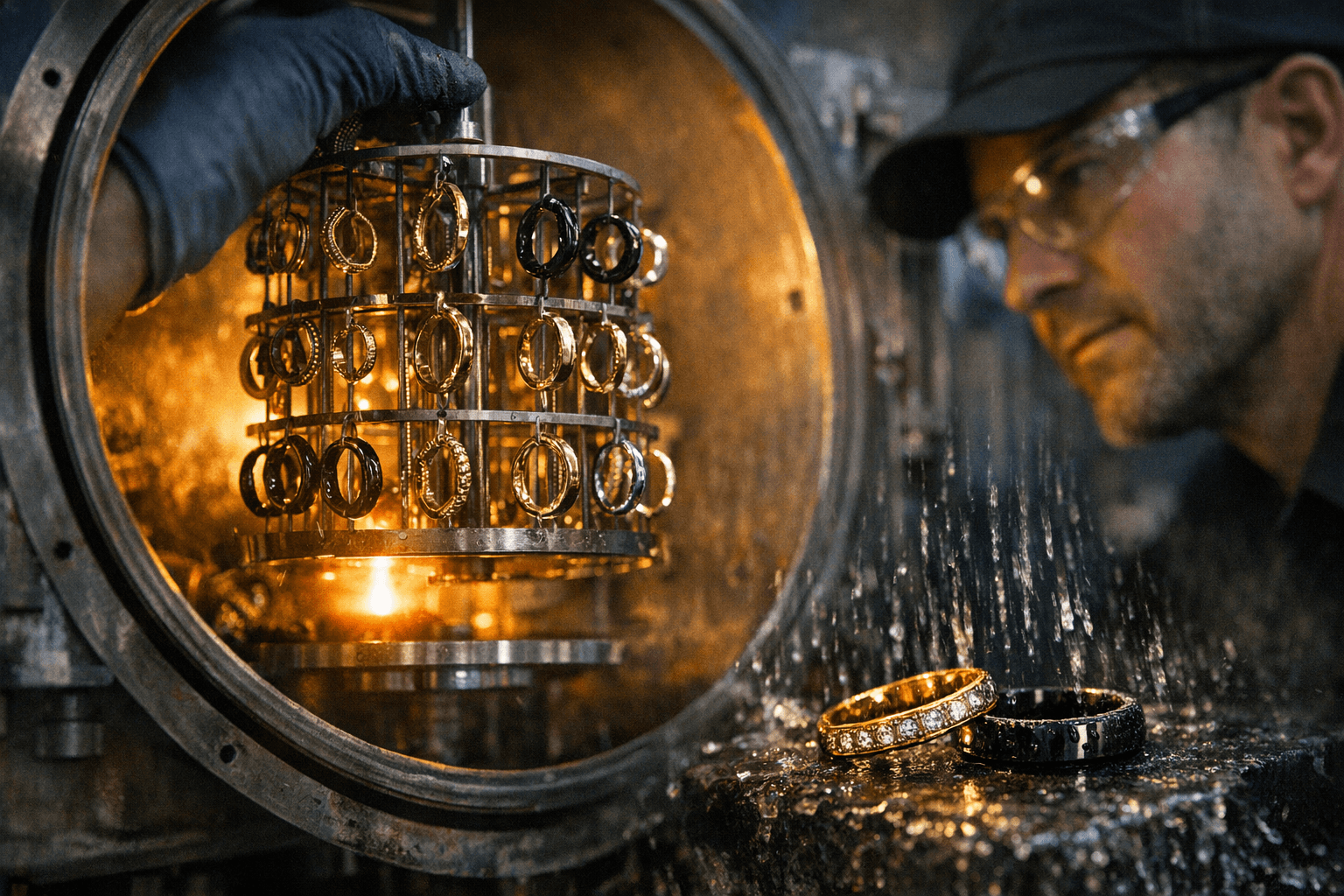
The jewelry that earns permanent residency on your wrist, neck, and ankle isn't necessarily the most expensive piece in your collection. Increasingly, it's the one engineered to survive your actual life: chlorinated pool water, gym sweat, sunscreen, the unconscious habit of never taking it off. Physical Vapor Deposition, better known as PVD coating, is the technology quietly powering that shift, and understanding what it actually does to metal at the molecular level changes how you evaluate every gold-toned piece you consider buying.
What PVD Coating Actually Is
The name sounds industrial because it is. PVD originated in aerospace and watchmaking long before it migrated into fashion jewelry, and the process still carries that precision-engineering pedigree. To apply a PVD finish, jewelry is placed inside a sealed vacuum chamber, which eliminates interference from atmospheric molecules. Inside, a solid coating material, typically titanium nitride for gold tones, titanium carbonitride for black finishes, or zirconium carbonitride for warmer champagne and rose gold hues, is heated until it vaporizes. That vapor cloud travels through the chamber and bonds to the jewelry surface at the atomic level, forming a coating that is typically between 0.25 and 5 microns thick, thinner than a human hair, yet extraordinarily dense and uniform.
The critical phrase is "bonds at the atomic level." This is not a coating sitting on top of metal; it is a coating fused into the surface itself. The distinction matters enormously for durability and is what separates PVD from the bath-and-current methods that have defined gold finishing for over a century.
How PVD Compares to Electroplating, Vermeil, and Ion Plating
To appreciate what PVD delivers, it helps to understand the alternatives it's displacing, or at least outperforming in specific applications.
Traditional electroplating suspends jewelry in a liquid bath charged with an electric current, which drives metal ions, most commonly gold, silver, nickel, or rhodium, onto the base metal surface. The process is well-established and produces beautiful results, but the bond is chemical rather than physical. Standard gold plating is often less than 0.5 microns thick. Even with careful wear, the finish can chip, fade, and wear through to the base metal within months, particularly on pieces that experience friction, like rings and bangles.
Vermeil, a specific category of gold plating, requires a minimum of 2.5 microns of gold over sterling silver, which gives it meaningfully better longevity than standard plating. The tradeoff is cost: the gold content required makes vermeil significantly more expensive to produce, and the sterling silver substrate is still vulnerable to tarnish if the finish wears through.
Ion plating is, in practice, a variation of PVD and the terms are sometimes used interchangeably in trade contexts. Both rely on vacuum-chamber vaporization and plasma deposition. The key differentiator is process specifics and the binding energy achieved: the best PVD applications produce a finish described as up to 10 times stronger than standard gold plating, with hardness characteristics that exceed conventionally plated surfaces in scratch resistance and adhesion.
Where PVD has a notable limitation is substrate flexibility. It performs best on hard metals, specifically 316L stainless steel and titanium. Applied to softer metals like brass or sterling silver, the thermal dynamics of the vacuum process and the difference in expansion rates between coating and substrate can create adhesion problems, including delamination. This is why the PVD conversation is almost always paired with a conversation about base metal.
The Substrate Advantage: 316L Stainless Steel and Titanium
The combination of PVD coating and the right base metal is where the durability story becomes genuinely compelling for people with sensitive skin, not just people who want a finish that lasts.
316L stainless steel, often labeled surgical steel, is the industry standard substrate for PVD jewelry. Its low-carbon composition makes it highly corrosion-resistant, and while it does contain nickel as part of its alloy composition, the nickel stays bound within the metal structure rather than releasing onto skin at meaningful levels. For most wearers, including many with reported nickel sensitivities, 316L presents no irritation. The PVD layer itself adds a further barrier between skin and base metal, which is why PVD-on-316L is increasingly marketed as a hypoallergenic option.
Titanium takes the biocompatibility argument further still. It contains no nickel whatsoever, making it the substrate of choice for wearers with confirmed nickel allergies or those healing new piercings. PVD applies cleanly to titanium and the resulting finish retains all the hardness and waterproofing properties that make the technology valuable. The tradeoff is price: titanium costs more to source and machine than stainless steel, which pushes final retail prices higher even for lightweight pieces.
The Practical Case for Daily Wear
What does the chemistry mean in practice? A well-applied PVD finish on 316L stainless steel is genuinely waterproof: it can withstand showers, pool sessions, and ocean swims without peeling or discoloring. It is sweatproof, which matters for anyone who wears jewelry through workouts or in warm climates. It resists the cosmetic chemicals in lotions, perfumes, and cleaning products that accelerate tarnish on traditionally plated pieces. With normal wear, earrings and necklaces finished with quality PVD regularly last two to five years before showing meaningful wear; some brands cite up to ten years with proper care.
The wear patterns worth knowing: low-friction pieces like chain necklaces, pendant drops, stud earrings, and anklets hold their finish longest because they experience minimal abrasive contact. High-contact pieces, particularly rings and chunky bracelets, wear faster because constant rubbing against surfaces and fingers generates the friction that gradually erodes even a hard PVD layer. This is not a flaw unique to PVD; it affects every surface finish. But it's an honest caveat worth factoring in when choosing what to invest in.
One additional consideration: unlike electroplated jewelry, which can often be re-plated by a jeweler, PVD requires specialized vacuum-chamber equipment. When a PVD finish eventually wears through, replacement is typically more practical than repair.
The Spring/Summer Retail Case
For jewelers and direct-to-consumer brands stocking seasonal collections, PVD-finished pieces built on stainless steel substrates represent a specific commercial argument: they are wear-everywhere pieces that don't require the care instructions most fine jewelry demands. Anklets that can go from sand to saltwater. Chain necklaces layered three deep and left on through a workout. Lightweight hoops worn on a beach vacation without a second thought.
The "wear-everywhere" positioning resonates most strongly in warm-weather categories precisely because summer wear is the stress test that exposes the failures of lesser finishes fastest. A traditionally plated anklet worn through a week at the beach will show it. A PVD-finished stainless steel alternative won't.
The more fluent brands have become in explaining PVD at the point of sale, the stronger that positioning becomes. Shoppers who understand that the durability claim is rooted in a vacuum-bonding process, not just marketing language, have a reason to pay a premium over fast-fashion alternatives and a reason to trust that the finish will still look right a year from now. The technology earns the story. The story earns the sale.
This article was produced by Prism’s automated news system from verified source data, official records, and press releases, then run through automated quality and moderation checks before publishing. The system is built and supervised by the people who set the standards it runs under. Read our full AI policy.
Did this article answer your question?