How to Safely Clean Every Type of Jewelry at Home
Wrong cleaning method can ruin a pearl strand or strip gold plating in minutes. Here's exactly what each material in your jewelry box actually needs.
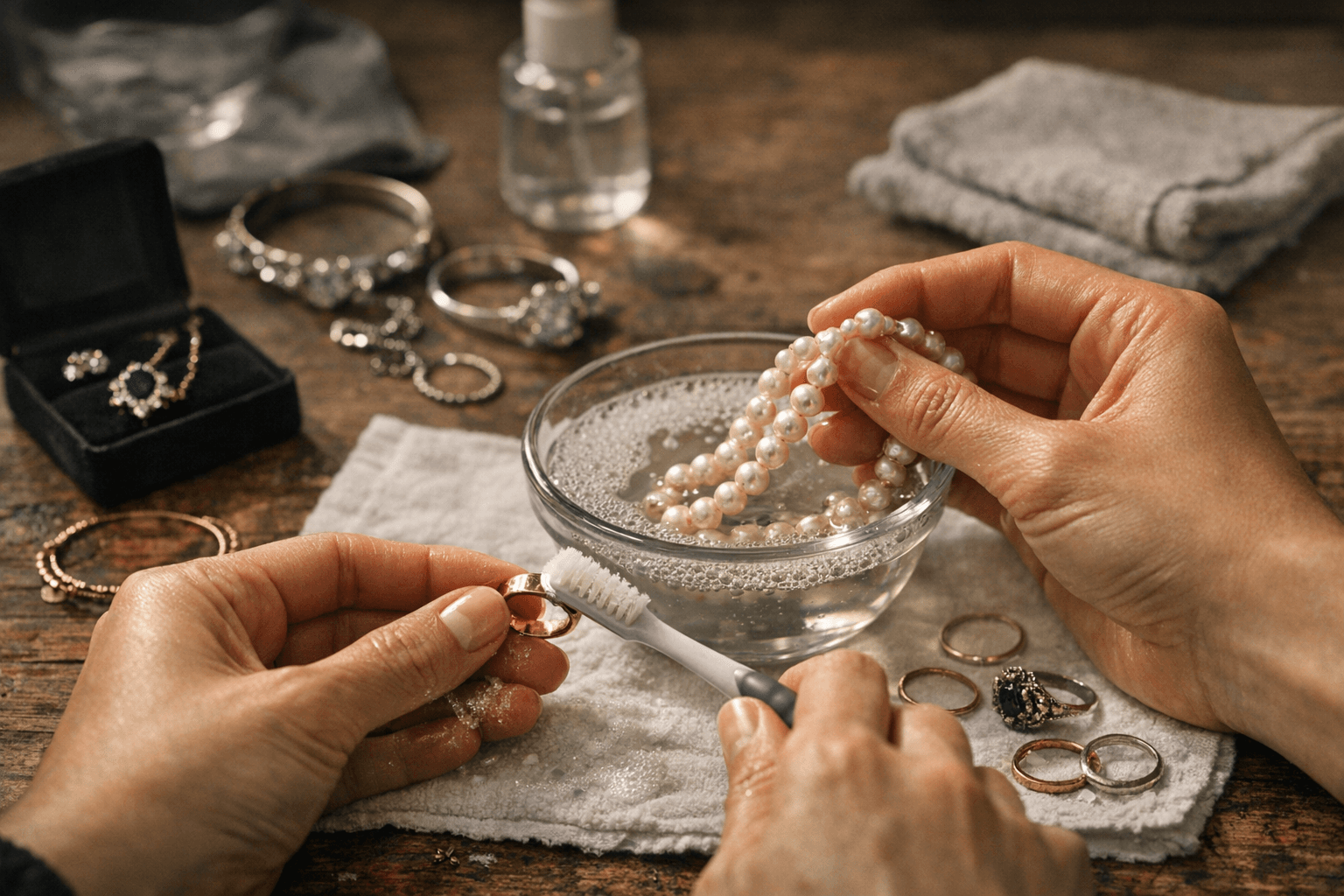
There is a ring sitting in your jewelry box right now that is closer to damage than you think. Not from wear, but from the well-meaning moment you reach for the wrong cloth, the wrong solution, or the wrong instinct. A quick soak that works beautifully on a solid gold band will weaken the silk thread on a pearl necklace. The baking soda paste that polishes sterling silver can dull a gold surface. Jewelry cleaning is not a one-size-fits-all act, and the difference between a revived piece and a ruined one often comes down to material.
Gold: The 10-Minute Refresh
Solid gold, whether 14-karat or 18-karat, is among the most forgiving metals to clean at home. Mix one to three drops of gentle dish soap with warm water in a bowl, ensuring the water is not too hot, and let gold pieces soak for 10 to 15 minutes. This loosens the buildup of skin oils, lotion, and daily debris that accumulates in settings and behind stones without any abrasive action.
After soaking, use a soft-bristle toothbrush to gently work into crevices and around any prong settings. The bristles can reach the underside of a stone where grime collects most densely. When rinsing, do so over a fine-mesh strainer placed in the sink, so any small stones or delicate components are caught rather than lost down the drain. Finish by drying and polishing with a clean microfiber cloth, which restores shine without leaving scratches or streaks. Avoid paper towels entirely; their fibers are coarser than they appear.
One thing gold cannot tolerate: toothpaste. Toothpaste can be abrasive for many metals and should never be used on gold jewelry, even as a quick fix.
Sterling Silver: Tarnish Is Not the End
Sterling silver darkens because of its chemistry. While pure silver does not tarnish, it is too soft for use in jewelry making. Instead, silver jewelry is made with an alloy combining pure silver and a small amount of copper, which produces a more durable metal but one more susceptible to tarnishing. Tarnish is a thin layer of corrosion that forms when silver reacts with sulfur-containing substances in the air. Humidity, salty air, chlorine, household bleach, and cosmetics can all trigger this reaction.
For light tarnish, a dedicated sterling silver polishing cloth is often all you need. Rubbing the cloth against the silver metal will easily remove grime and tarnish without compromising the piece. For more significant buildup, a mild soap-and-warm-water wash followed by thorough rinsing is the next step up. Harsh cleaners like Windex and silver polishes containing alcohol or ammonia are always a poor choice; keep the routine as gentle as possible while still achieving an effective shine.
Sterling silver should be polished and cleaned at least two times per year. If a piece comes into contact with chlorine or sulfur-rich substances such as certain foods or heavy perfumes, clean it promptly rather than waiting. For storage, keep silver absolutely dry and, if your climate is humid, place a small packet of desiccant crystals inside your storage area to slow the tarnishing process between wears.
Gemstone-Set Pieces: Know Your Stone Before You Clean
A gemstone's place on the Mohs hardness scale tells you something, but not everything. Hardness reflects a gem's resistance to scratching and nothing more. Diamonds have the greatest hardness of any natural material, yet they can have inclusions and incipient cleaves that react poorly to heat or mechanical cleaning. The category of treated stones requires even more care: gem merchants sometimes fill tiny fractures in emerald gems with oils to improve transparency, and exposing an oil-treated emerald to heat or ultrasonic cleaning could damage it.
Before any cleaning, examine the setting closely. Look at the prongs to ensure they are still hugging the gemstones tightly. If a stone wiggles when you gently move the piece, contact your jeweler for repair before attempting any cleaning. A cleaning session is the worst time to discover a loose stone.
For hard, untreated gems such as diamonds, sapphires, and rubies, a lukewarm, soapy water soak for 10 to 15 minutes allows dirt and oils to loosen without excessive scrubbing, followed by a gentle pass with a soft toothbrush on any intricate settings. Be cautious not to soak porous gemstones like turquoise or amber, which can absorb water and become damaged or discolored if exposed for too long. Opals and emeralds belong in this careful category as well. When in doubt, a damp cloth is always the safer first choice.
Freshwater Pearls: Handle with Uncommon Gentleness
Pearls sit apart from every other material in the jewelry box because they are organic, formed by living creatures, and that origin makes them uniquely fragile. These gems are extremely delicate and vulnerable to damage via acidic or alkaline substances, extreme changes in temperature and humidity, and exposure to sweat and cosmetics.
After every wear, wipe pearls with a soft cloth to prevent any buildup of oils or other substances that may have come in contact with the jewelry throughout the day. This single habit, practiced consistently, dramatically reduces the need for deeper cleaning. When a damp cloth is needed, mix a small amount of mild dish soap with lukewarm water, dip a soft cloth into the solution, wring out the excess moisture, and gently wipe the pearls rather than submerging them. Never submerge a pearl strand; doing so will weaken the silk thread on which the pearls are strung.
Ultrasonic cleaners, which can be effective on hard metals and diamonds, are entirely off-limits for pearls. The vibration can crack nacre and damage the surface luster that makes a pearl what it is. For storage, store pearl necklaces flat to prevent the strand from stretching, and keep them in fabric-lined compartments separate from other jewelry, since soft nacre scratches easily against metal or harder stones.
Costume and Plated Jewelry: Less Is Genuinely More
Costume and gold- or silver-plated pieces are constructed differently from fine jewelry, and that construction demands restraint. Most fashion jewelry combines inexpensive base metals such as brass or copper with decorative plating, and that thin upper layer is precisely what gives these pieces their appeal. It is also what full immersion, harsh chemicals, and abrasive cleaning will strip away.
The method here is spot-cleaning: a drop of mild dish soap on a barely damp cloth, applied carefully to the affected area only. Avoid hot water, which can damage certain materials or loosen the glue that holds stones in costume pieces. Skip ultrasonic cleaners entirely. While they work well for solid gold, ultrasonic cleaners can destroy costume jewelry by loosening stones and damaging delicate construction. For gold-plated pieces specifically, soap and water is the safest and only necessary method. After cleaning, pat dry with a soft cloth rather than rubbing, and allow the piece to air-dry completely before storing or wearing.
Green marks on skin-contact areas come from copper in the base metal reacting with moisture; applying a thin coat of clear nail polish to those areas can prevent this reaction without affecting the appearance of the piece.
Storage and Daily Habits: Prevention Outperforms Any Cleaning Routine
The most effective jewelry care happens before tarnish or damage occurs. A few consistent habits protect every material in your collection simultaneously:
- Keep all jewelry dry. Remove pieces before showering, swimming, or exercising.
- Avoid exposure to household cleaning products, bleach, and other strong chemicals. Perfume and hairspray should be applied before putting jewelry on, not after.
- Store pieces separately. Metal on metal, stone on stone, and the resulting scratches are entirely avoidable with individual cloth pouches or divided compartments.
- For silver specifically, store in a tarnish-proof cloth such as a flannel pouch, and if the climate is humid, include a small packet of desiccant crystals to absorb moisture in the storage area.
- For pearls, the opposite instinct applies: pearls do best in a moist environment, so wearing them frequently actually helps keep them from drying out.
The best cleaning routine is the one calibrated to what each piece actually is. A gold band and a pearl strand may live side by side in the same drawer, but they require completely different care, and giving each material what it needs is ultimately what determines whether a piece lasts a season or a lifetime.
This article was produced by Prism’s automated news system from verified source data, official records, and press releases, then run through automated quality and moderation checks before publishing. The system is built and supervised by the people who set the standards it runs under. Read our full AI policy.
Did this article answer your question?