how to turn heirloom jewelry into everyday wear
Heirloom jewelry only works if it leaves the drawer. The smartest redesigns protect the story, keep the best stones, and make the piece part of daily life.
The pieces worth saving are often the ones waiting to be remade
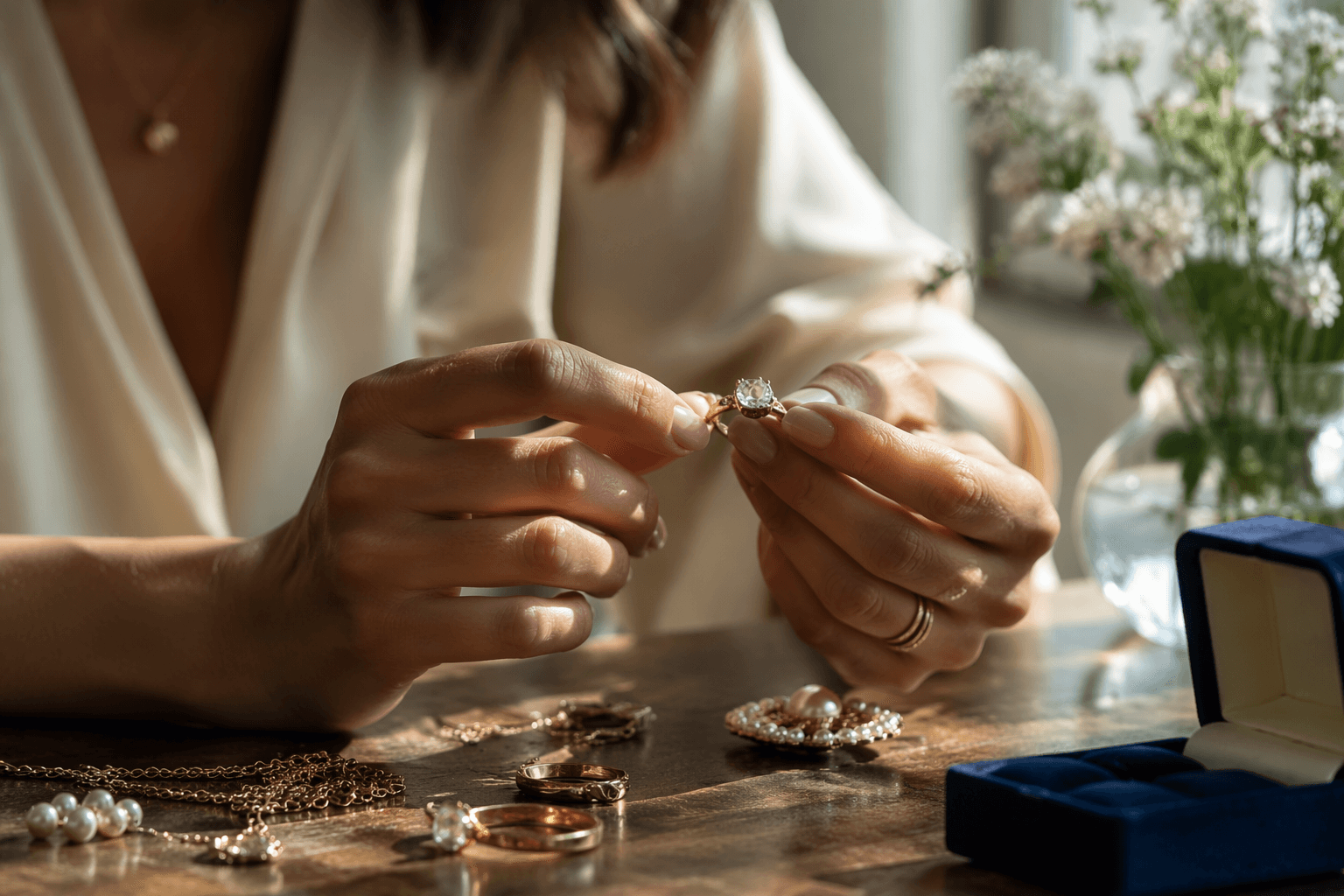
Fine jewelry does not have to remain formal to remain meaningful. The Cut makes that case with a practical, slightly cheeky guide to transforming unworn heirlooms into pieces that feel current enough for every day, even suggesting that “parents’ divorce diamonds” can become a necklace you actually reach for. The point is not to erase history, but to make it wearable again.
That is the appeal of this shift in everyday jewelry: a family piece can keep its emotional charge while shedding the stiffness that made it stay in a box. The Cut spoke with jewelry professionals and five people who had already repurposed their own old fine jewelry, which gives the idea real-world weight. This is not abstract sentimentality. It is a working method for turning inherited stones, dated settings, and forgotten brooches into jewelry that fits modern life.
Begin with the value, not the redesign
Before any saw touches metal, the most important question is what the piece is worth, historically and materially. The Gemological Institute of America is clear that heirloom jewelry may be reimagined when fashions have passed, when the piece is seriously damaged, or when the owner wants something that better reflects personal taste. That is a wide permission slip, but it comes with a warning: if you do not know the historical or monetary value, take the piece to a jeweler or jewelry appraiser before changing it in any way.
That advice matters because not every old ring or pendant is just sentimental scrap. Some pieces have value in the craftsmanship, the provenance, the maker, or the original setting. A good appraisal tells you whether the smartest move is a light refresh, a full reset, or a decision to leave the piece intact. In practice, that first step often determines whether you are preserving a family artifact or planning a true redesign.
Resetting is the most elegant translation
The cleanest path from formal to everyday often begins with the stone itself. Resetting a diamond, sapphire, or other center stone into a necklace can strip away the old-fashioned silhouette while preserving the part that carries the most memory. A pendant sits closer to the body, layers easily, and can be worn with far less ceremony than a cocktail ring or a large cocktail-style brooch.
This is where craftsmanship matters as much as taste. A bezel setting, which wraps metal around the stone, can make a new pendant feel sleek and secure for daily wear. A prong setting, by contrast, can make a stone appear lighter and more open, which may suit a more classic or delicate design. Those choices are not cosmetic details. They shape how often you will actually wear the piece, how protected the stone will be, and how contemporary the final object feels.
Keep the details that hold the memory
Not every heirloom should be stripped to its gemstone. Sometimes the smartest redesign keeps the engraving, the original setting, or a single special stone while changing everything around it. That approach preserves the handwriting of the old piece, even as the silhouette becomes more modern.
This is especially persuasive when a piece carries family history in small, specific markers. A clasp engraved with a date, a mount that belonged to a grandmother, or a row of stones from several relatives can be incorporated into a new design without sentimental overkill. The result is less museum restoration than thoughtful editing. The old object disappears just enough for the new one to live.
Combine family pieces when one jewel is stronger than several
Another useful strategy is to bring multiple inherited pieces into one design. This can be the most satisfying answer when you have several beautiful but mismatched items, each too formal or too fragile to wear alone. Stones from different pieces can be gathered into a single pendant, ring, or bracelet that reads as intentional rather than inherited by accident.
That kind of consolidation is also emotionally honest. It acknowledges that the family story may be scattered across several objects, but the daily wardrobe only needs one strong piece to carry it. A unified design often feels more contemporary than trying to wear several old items at once, each with a different era stamped into it.
Redesign has become part of the sustainability story
The case for repurposing is not only sentimental. Gold and other precious metals can be recycled and reset into new jewelry designs, which makes redesign attractive in an industry increasingly attentive to waste and sourcing. A peer-reviewed study on gold supply found that the global gold market is supplied by mining at 74 percent, recycling of high-value gold at 23 percent, and electronic scraps at 3 percent. Those numbers help explain why existing metal is often treated as a meaningful resource, not just leftover material.
That environmental logic has become part of the way jewelers talk about the process. Jewelsmith describes gold and other precious metals as “endlessly recyclable,” and notes that diamonds and gemstones can usually be reset into updated designs personalized to the wearer’s story. That framing gives redesign a double appeal: it keeps precious materials in circulation and turns an emotionally loaded piece into something more useful.
It can also be gentler on the budget
There is another reason redesign has become so persuasive: it can cost less than buying a brand-new piece. That does not mean a custom reset is inexpensive, especially if the work involves complex fabrication or a major structural change. But when the metal and stones already belong to you, the new expense is often concentrated in design and labor rather than in the full retail price of new materials.
For many people, that economics is part of the appeal. A redesigned heirloom can carry the look and substance of a new jewel without the same outlay, particularly if the original piece already includes a substantial stone or a meaningful amount of gold. In that sense, the decision is both aesthetic and practical: you are paying to unlock what is already there.
The real question is what should stay intact
The best heirloom redesigns are not the ones that change the most. They are the ones that understand what is worth preserving and what is merely inherited form. If the stone is excellent, reset it. If the engraving tells the story, keep it. If the piece is damaged, dated, or simply too formal to live outside a drawer, let it become something you will actually reach for.
That is the heart of the everyday-jewelry shift: not special-occasion ownership, but daily companionship. The object can change shape, setting, and context while still holding its memory. The most successful heirlooms are no longer the ones stored safely away. They are the ones that have found a second life on the body.
This article was produced by Prism’s automated news system from verified source data, official records, and press releases, then run through automated quality and moderation checks before publishing. The system is built and supervised by the people who set the standards it runs under. Read our full AI policy.
Did this article answer your question?