Jacqueline Rabun’s minimalist jewelry reflects Los Angeles and London
Rabun’s jewelry turns Los Angeles ease and London discipline into sculptural everyday pieces shaped by memory, symbolism, and a global visual vocabulary.
Los Angeles gives the line its shape
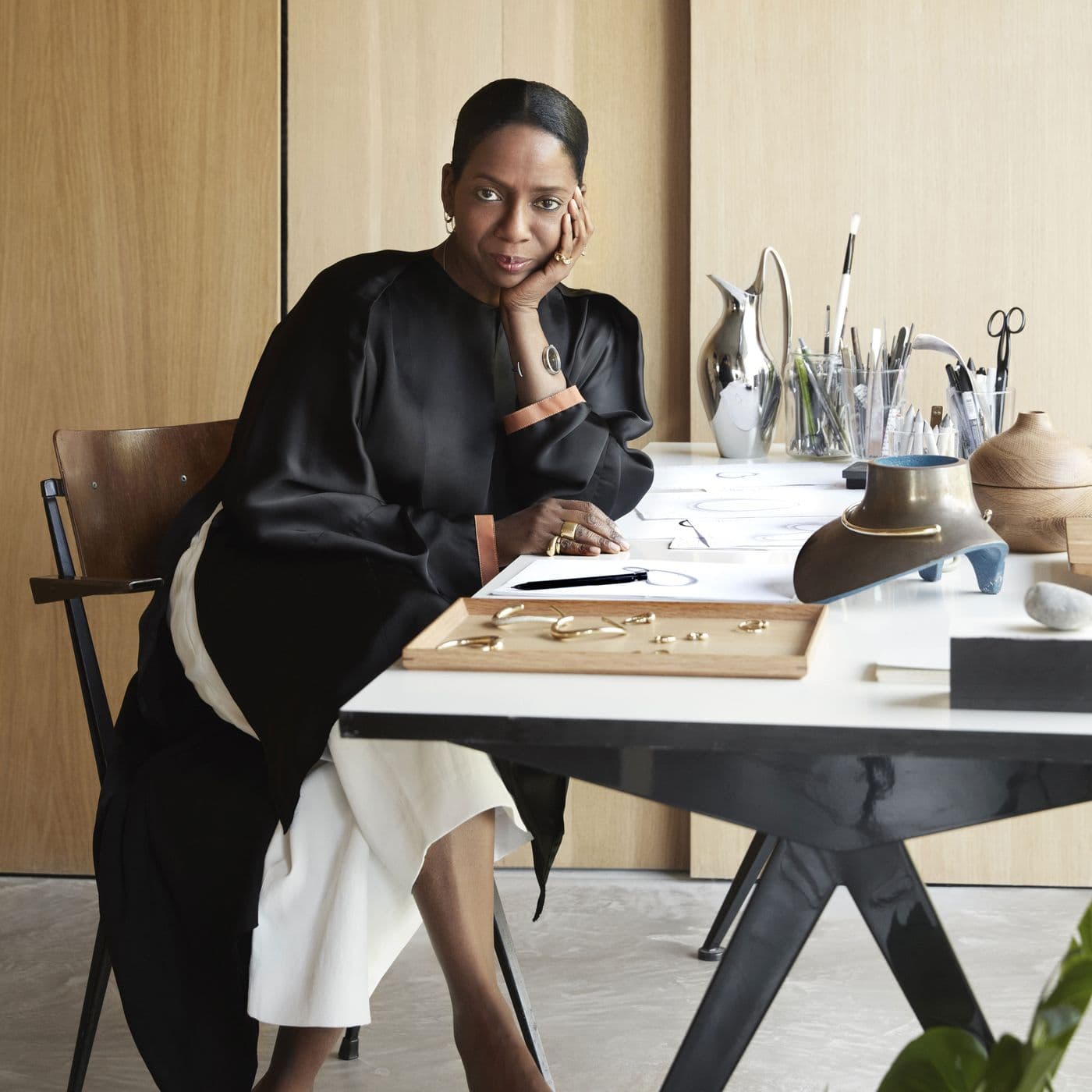
Jacqueline Rabun’s jewelry begins with place. She started designing in Los Angeles in 1988, and the city’s influence shows up in the way her pieces reject fuss in favor of clear, organic form. The work feels pared back, but not bare: every curve has intention, and every surface seems to have been edited down to the exact gesture it needs.
That sensibility traces back to a formative encounter with M Gallery in Los Angeles in the 1980s. Rabun has described being struck by the architecture, the minimalism, and the idea of jewelry presented as art, and that moment became the seed of her own design language. For anyone drawn to everyday jewelry that feels modern rather than decorative, that is the first lesson in Rabun’s work: look for pieces that carry structure, not excess.
London sharpened the minimalism
Rabun moved to London in 1989 and opened her studio there, then launched her debut jewelry collection, Raw Elegance, in 1990. The title fits the work: there is restraint, but also a sense of something elemental, as if the piece has been reduced to its most truthful form. London seems to have given that instinct discipline, turning Los Angeles spontaneity into a more architectural language.
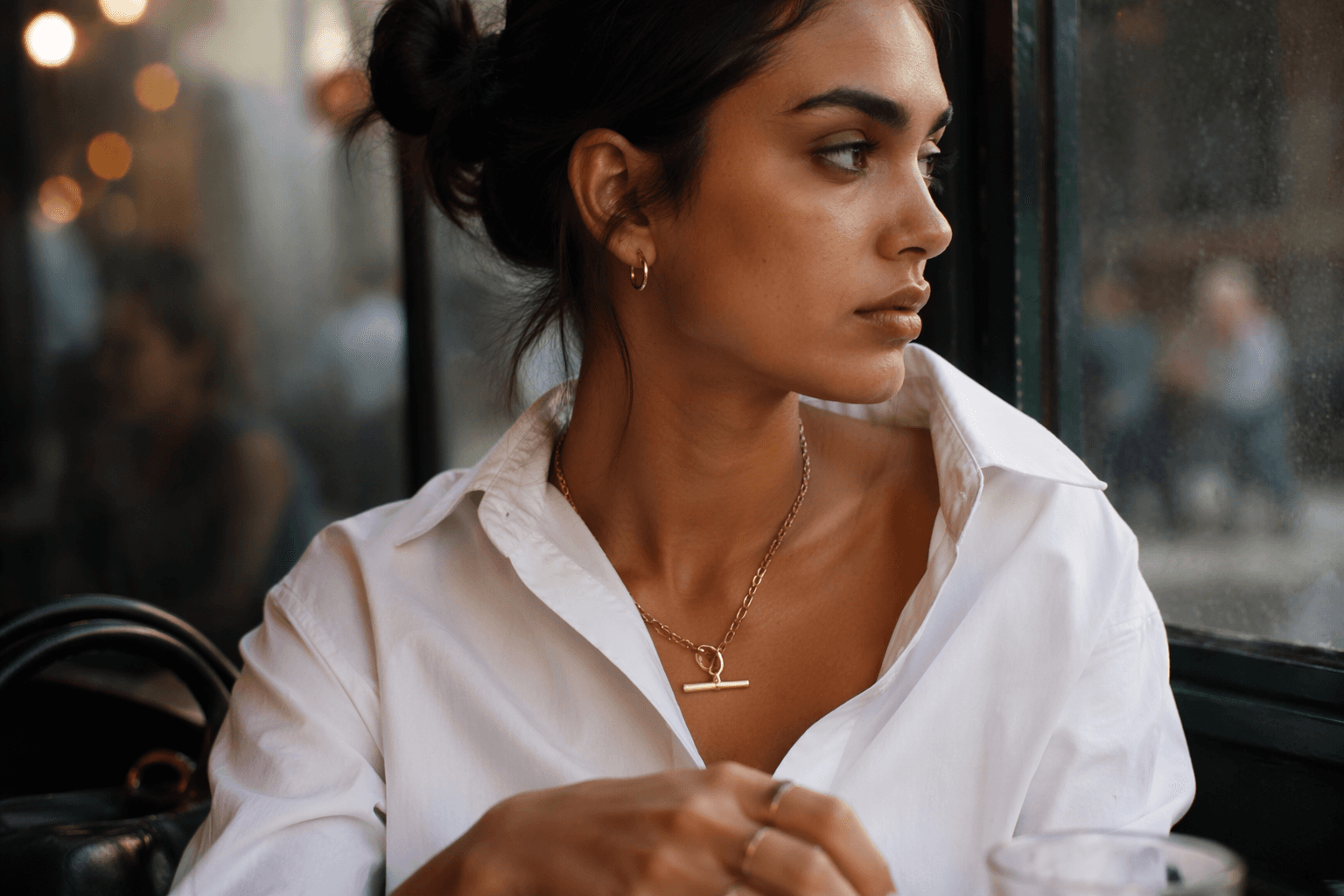
That balance, between softness and structure, is what makes her jewelry so easy to wear now. The pieces do not rely on trend-driven detail, and they do not need heavy styling to make an impression. They read as objects with a point of view, which is why they feel just as at home with a white shirt and denim as they do with evening wear.
What to look for in the Rabun approach
Rabun’s aesthetic is often described through the words minimal and organic, but the appeal is in how those ideas meet on the body. Her forms are sculptural without becoming bulky, and they favor a sense of movement over symmetry for its own sake. If you want jewelry with the same effect, the best pieces will feel almost drawn rather than assembled.
- organic contours instead of hard-edged geometry
- a single strong silhouette rather than layered ornament
- surface simplicity that lets shape do the talking
- pieces that can anchor an outfit without overwhelming it
Look for:
That is what makes this language so useful for everyday dressing. The right necklace, ring, or pair of earrings does not need to be loud to feel complete. It only needs to have enough presence to hold the eye for a second longer than expected.
Offspring and the power of symbolism
Her collaboration with Georg Jensen began in 1999, and the first collection, Offspring, became a signature line. Georg Jensen describes the collection as a symbolic representation of mother and child, which gives a clear sense of how Rabun works: even her most minimalist designs carry emotional structure. The forms may be spare, but the meaning is not.

That is a crucial distinction in contemporary jewelry. A great everyday piece should do more than disappear into an outfit. It should bring some idea with it, whether that idea is connection, continuity, protection, or memory. Offspring shows how Rabun uses abstraction to make symbolism feel modern rather than sentimental.
A global vocabulary, not a single influence
Rabun’s references extend well beyond California. In interviews, she has cited raw, organic forms in African art, the expressive beauty of Danish design, the purity of Japanese design, and surrealist art as important influences. Taken together, those points explain why her jewelry can feel both grounded and elusive, both restrained and emotionally charged.
The range matters. African art brings an interest in elemental form, Danish design adds clarity and expressiveness, Japanese design sharpens purity and balance, and surrealism opens the door to wit and surprise. Rabun’s work sits at the intersection of those ideas, which is why the pieces feel designed rather than merely styled.
A career measured in objects, not just milestones
The scale of her 2023 retrospective at Carpenters Workshop Gallery in London said as much as any biography could. More than 250 pieces from her archive were shown alongside drawings and photographs, underscoring how much material she has built across decades. This is not a designer known for one signature trick. It is a body of work with real range, even when the line remains visually disciplined.
That breadth is important for readers looking at jewelry as an investment. Pieces with staying power usually have more than a recognizable look. They have a grammar, and Rabun’s grammar is one of form, proportion, and restraint. Her archive shows that the language has held up because it was never dependent on a single era’s taste.
The return to Los Angeles changes the reading
Rabun moved back to Los Angeles in October 2020 after 32 years in London, saying she felt homesick during the pandemic. The return adds a final, telling chapter to the story. Los Angeles was not just where her career started; it remained a place she kept circling back to, even after decades abroad.
That homecoming helps explain why her work still feels so rooted in place. Los Angeles gives it light and ease, London gives it edge and structure, and the result is jewelry that feels modern because it is built from lived experience rather than trend. For anyone choosing everyday pieces now, Rabun offers a useful standard: seek jewelry with a clear line, a quiet silhouette, and enough symbolic force to last beyond the season.
This article was produced by Prism’s automated news system from verified source data, official records, and press releases, then run through automated quality and moderation checks before publishing. The system is built and supervised by the people who set the standards it runs under. Read our full AI policy.
Did this article answer your question?