Kering and CIBJO spotlight traceability and new jewelry materials
An old CD turned into a lacquered jewel and a gemstone-origin project put traceability and reclaimed materials at the center of Kering's latest jewelry prize.
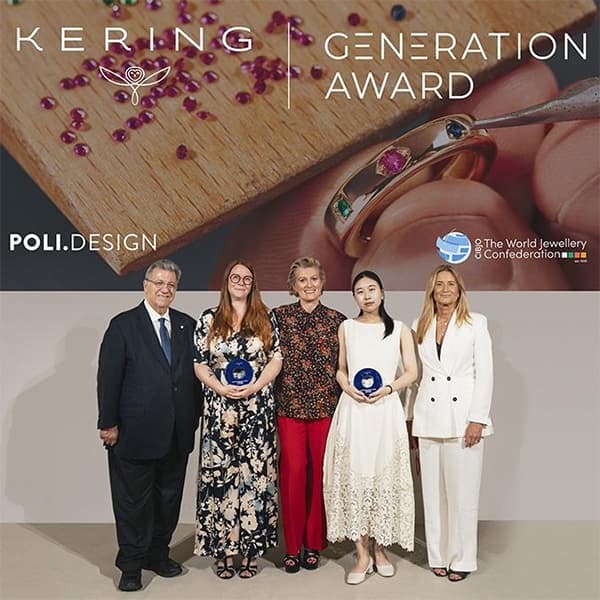
A student jewel made from old compact discs and a startup project built to pinpoint a gemstone’s origin set the tone for the second Kering Generation Award X Jewelry. The competition brought 44 startups and students from 10 universities and academies to Kering’s headquarters in Paris on July 9, during Paris Haute Couture Week. The point was not a finished retail collection, but a sharper view of where everyday jewelry may be headed, toward reclaimed materials, cleaner sourcing and technology that can verify what a stone is and where it came from.
Kering framed the 2026 edition around “Second Chance, First Choice,” a brief aimed at reducing the jewelry industry’s environmental footprint across products, processes, services and technology, including AI. The program itself has been building for years: Kering launched the Generation Award in China in 2018, expanded it to Saudi Arabia and Japan, and broadened it to jewelry in 2024. The maisons backing the jewelry award are Boucheron, Pomellato, DoDo and Qeelin, a mix that ties the project to both high jewelry and more playful, everyday forms.

The first jewelry edition was announced in November 2024, and its finalists were presented at JCK Las Vegas in June 2025. That earlier competition asked entrants to make jewelry from discarded materials, a premise that now feels less like an exercise in recycling than a forecast of taste. Waste is no longer only a sustainability talking point; in the right hands, it can become surface, texture and story.
Yang Yuchan of the Beijing Institute of Fashion Technology won the Student category for Perching Willow, a contemporary piece made from old compact discs, traditional Chinese lacquer techniques and mother-of-pearl inlay. The material choice is the most visually arresting part of the piece, but the craftsmanship matters just as much. Lacquer gives the work depth and discipline, while mother-of-pearl softens the hard sheen of the discs, turning a familiar object into something that reads as wearable rather than merely clever. Yang will receive a six-month internship with Pomellato.
GeoGems of France, led by Lauriane Pinsault, won the Startup category for a project designed to determine the origin of a gemstone. That kind of traceability has obvious appeal in a market where buyers want beauty with fewer blind spots, especially when a stone’s story can now be part of its desirability. GeoGems will receive mentorship with Poli.Design experts at Politecnico di Milano, placing provenance technology in the same conversation as design thinking.
Marie-Claire Daveu said the initiative shows that innovation at the crossroads of craftsmanship, technology and environmental responsibility is becoming a necessity for the industry. With Boucheron, Pomellato, DoDo and Qeelin behind the program, Kering is making that argument inside the maisons as well as on the student bench.
This article was produced by Prism’s automated news system from verified source data, official records, and press releases, then run through automated quality and moderation checks before publishing. The system is built and supervised by the people who set the standards it runs under. Read our full AI policy.
Did this article answer your question?