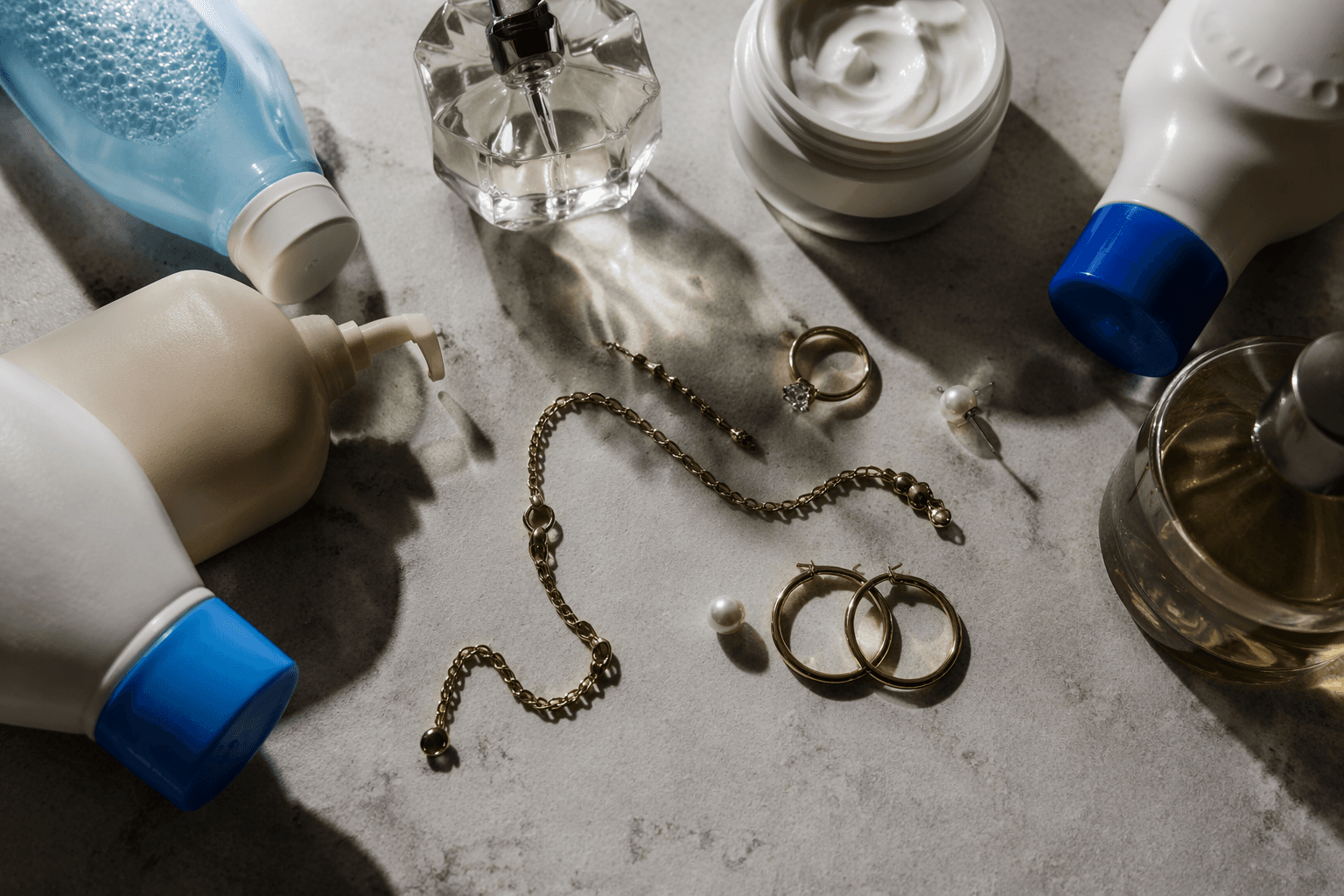
Louise Carter CEO on everyday jewelry for active women
Qirra built Louise Carter into a 300,000-customer brand by asking why gold jewelry can't survive a workout, a swim, and a full life without fading.
The Problem With "Good" Jewelry
Most women who love jewelry have a drawer they rarely open. Inside: a tangle of chains gone green, a gold-dipped bracelet stripped to silver at the clasp, a pendant saved for occasions that never quite come. Louise Carter, the Hawaii-based brand founded in 2023, was built to challenge that reality directly — to make pieces designed for the life you actually live, not the careful one you perform around your jewelry.
The founder and CEO, who goes by Qirra, arrived at the concept through frustration that many women will recognize immediately. "I always felt stuck between two choices," Qirra says. "Either spend a lot of money on solid gold and worry about losing it, or buy something cheaper that wouldn't last." That impasse became the brand's entire design brief.
What PVD Actually Means (and Why It Matters)
The technology at the center of Louise Carter's proposition is physical vapor deposition, or PVD. Its pieces combine the look and feel of 14k gold with the durability of surgical-grade stainless steel using advanced PVD bonding technology, the same process long trusted in luxury watchmaking and industrial applications for its exceptional wear resistance.
The process itself is more sophisticated than conventional gold plating. Jewelry is placed inside a vacuum chamber, where a solid coating material is turned into a vapor that then bonds to the jewelry surface, forming a very thin, very dense coating — bonded at the molecular level rather than layered over the top. PVD coating is ten times stronger than standard gold plating due to the use of a vacuum coating process, which results in an extremely durable finish.
That strength matters in practical terms. PVD-coated pieces maintain their original luster and color much longer than traditional alternatives, with resistance to scratches, fading, and tarnishing that conventional electroplating simply cannot match. Longines, one of Switzerland's most established watchmakers, uses PVD on its watch cases for both color and protection against scratches, which gives a sense of the pedigree behind the process when applied correctly.
The base material matters as much as the coating. Louise Carter uses surgical-grade stainless steel beneath the PVD layer, which the brand specifies as hypoallergenic, lead-free, and nickel-free. For women with sensitive skin who have spent years avoiding earrings, this combination is meaningful: the metal touching skin poses no irritation risk, and the gold surface above it resists the chemical interactions that typically cause tarnishing.
Designed Around an Active Life
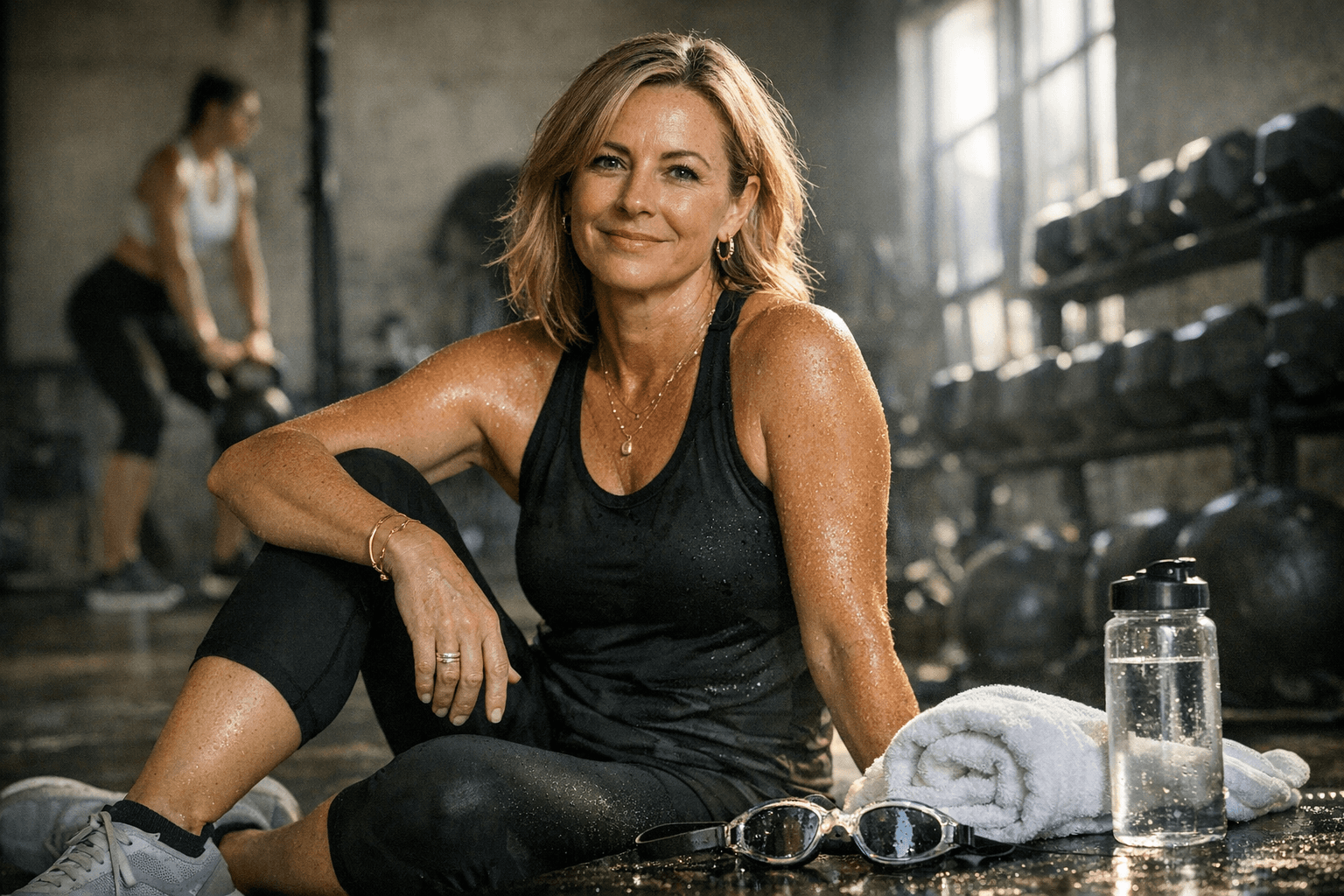
Hawaii is not a backdrop for this brand; it is the operating environment. Louise Carter's design philosophy draws directly from the context of ocean activity and outdoor living that shape daily routines in the islands, and that geography has practical implications. A piece designed to survive salt water, sunscreen, chlorine, and the humidity of a tropical climate is a piece that can survive a gym session in Chicago or a morning run in Austin.
"Women today are incredibly active," Qirra notes. "They're working, traveling, exercising, raising families. Jewelry shouldn't be something you have to babysit." That line lands as both a philosophy and a product spec. The brand's pieces are marketed as fully waterproof: shower-safe, pool-safe, and ocean-safe without requiring removal.
The design aesthetic leans dainty and stackable rather than statement-making. Thin chains, small pendants, slender bands — pieces that sit flat against the body, don't catch on gym equipment, and layer naturally with one another. This is everyday jewelry in the architectural sense: built for use, not display.
The Permanent Bracelet Category
One of the more interesting moves Louise Carter has made is into the permanent bracelet market. The brand's permanent bracelet kits, designed for friends, couples, and families, emphasize its focus on meaningful, lasting connections through jewelry that can be worn every day. These kits allow wearers to weld or clasp a bracelet closed so it becomes a fixed part of the wrist, removed only by choice.
Permanent jewelry has grown significantly as a category, driven partly by the ritual of having it applied with someone else and partly by the appeal of a piece that truly never comes off. For Louise Carter, whose entire brand logic is built on durability and ease, it's a natural fit. A permanent bracelet that fades within months undermines the concept entirely; one made with PVD-bonded steel can, in principle, live on the wrist indefinitely.
Growth, Pricing, and What the Numbers Tell You
The brand has quickly built a loyal following, amassing more than 300,000 customers and over 45,000 reviews. That scale, achieved in roughly two years since the 2023 founding, reflects both aggressive digital marketing and a pricing strategy calibrated for accessibility. Bundle deals bring individual piece costs well below what comparable gold vermeil or solid gold jewelry commands, positioning Louise Carter in the space between fast fashion accessories and fine jewelry.
That positioning deserves some scrutiny. PVD coatings do outperform traditional gold plating, but they are not indestructible. In real-world jewelry use, earrings and necklaces with light friction often last two to five or more years with normal wear, while bracelets with medium friction last one to three or more years depending on use. Pieces that experience constant rubbing, like rings worn daily, will show wear sooner than pendants or chains. The brand backs its color with a lifetime warranty, which is a meaningful commitment if it holds up in practice.
Customer reviews reflect the full range. Many wearers report wearing pieces through months of daily showers, workouts, and ocean swims without visible change. A smaller number report quality inconsistencies and difficulty accessing warranty support. This variance is common across the accessible PVD jewelry category and worth factoring into expectations, particularly for pieces subjected to the most physical stress.
The Broader Shift This Brand Reflects
Louise Carter is not alone in this space. The durable everyday jewelry category has grown considerably, with brands across price points adopting PVD and ion plating processes to compete on longevity rather than carat weight. This growth reflects a broader consumer shift: shoppers increasingly want accessories that balance style, affordability, and durability without the maintenance demands of traditional fine jewelry.
What Qirra identified — and built a brand around — is a real gap in the market. Between the fragility of cheap fashion jewelry and the anxiety that comes with expensive solid gold, there has been a middle ground largely underserved. PVD technology makes that middle ground genuinely viable. Whether Louise Carter's execution delivers consistently on its promises depends on the piece, the use case, and the individual wearer's experience. But the founding logic is sound: jewelry that you can wear without thinking about it is, for most women, more valuable than jewelry you can only wear carefully.
This article was produced by Prism’s automated news system from verified source data, official records, and press releases, then run through automated quality and moderation checks before publishing. The system is built and supervised by the people who set the standards it runs under. Read our full AI policy.
Did this article answer your question?