Pandora Opens Canadian Fulfillment Hub, Cutting Delivery Times by 50%
Pandora's new Mississauga warehouse bypasses U.S. customs entirely for Canadian orders, halving delivery times and sidestepping up to $182M in annual tariff exposure.
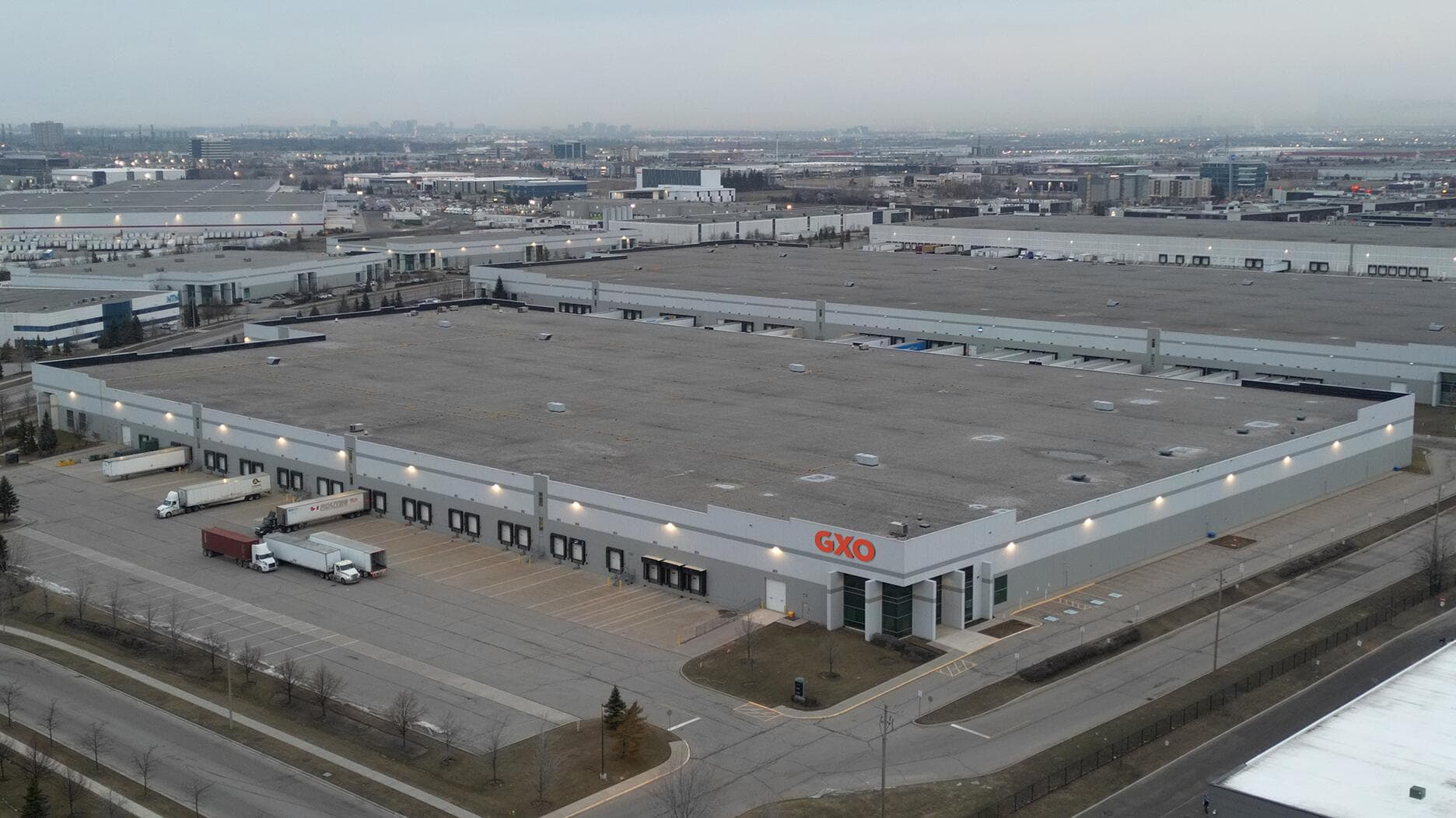
Pandora's new 10,600-square-foot distribution center in Mississauga, Ontario opened April 2, solving two problems simultaneously: Canadian customers will now receive their orders in two to four days instead of five to seven, and those shipments will no longer pass through U.S. customs, where tariffs of up to 46% have been imposed on goods from Pandora's primary manufacturing markets in Thailand and Vietnam.
The move is a direct response to the fiscal pressure of the Trump administration's "Liberation Day" tariffs, announced exactly one year prior. Pandora manufactures its jewelry primarily at two factories in Thailand, which faces a 36% U.S. import tariff, and also sources from Vietnam, where the rate reaches 46%. When Canadian orders were routed through Pandora's Baltimore, Maryland distribution center, goods imported from Thailand cleared U.S. customs before crossing the border again. The Mississauga facility short-circuits that path entirely, allowing shipments to travel directly from Pandora's manufacturing operations to Ontario without triggering U.S. import duties.
Pandora estimated the gross annual tariff impact at DKK 1.2 billion, equivalent to approximately USD $182 million, with roughly DKK 700 million absorbed in 2025 alone. The company expects the tariff environment to reduce its operating margin by 1.5 percentage points in 2026. Former CEO Alexander Lacik was unambiguous about why domestic U.S. manufacturing is not on the table: producing jewelry in the United States "simply won't work," he said publicly, citing the absence of sufficient craft talent in the country.
The Mississauga warehouse is operated by GXO Logistics, the world's largest pure-play contract logistics provider, and can handle up to 12,500 online orders per day. It runs on a pick-to-light system, a warehouse technology that uses illuminated indicators to guide workers to the correct inventory location during order picking, reducing errors and increasing throughput. The facility also simplifies returns for Canadian e-commerce customers, a meaningful operational detail for a market where more than 20% of Pandora's Canadian sales are generated online.
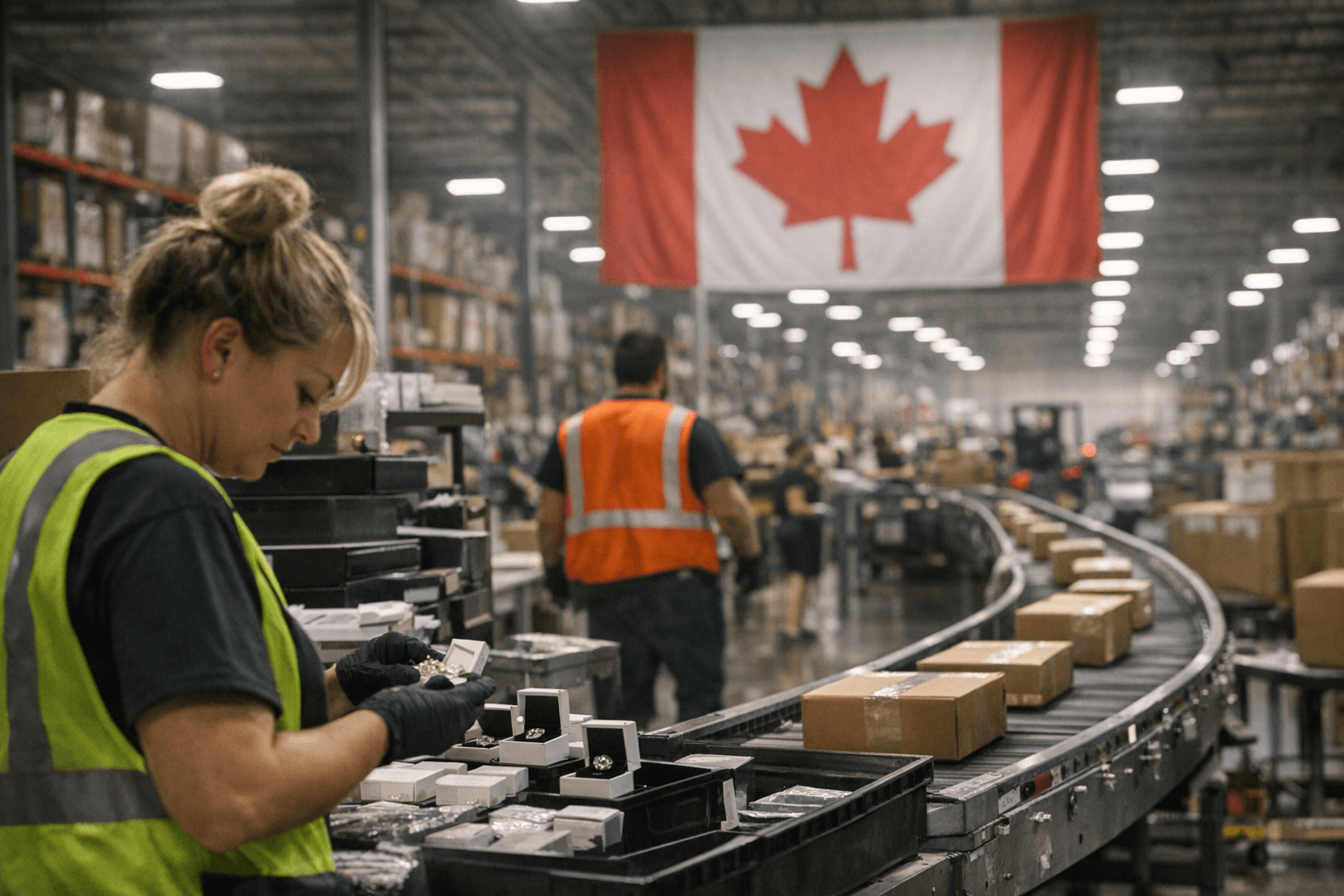
Canada is one of Pandora's fastest-growing markets. Revenue there grew more than 50% between 2019 and 2025, crossing DKK 1 billion last year. The Mississauga center extends a logistics partnership between Pandora and GXO that already covers distribution hubs in the U.S., UK, and Continental Europe. Michael Jacobs, GXO's President of Americas and Asia Pacific, said the expansion was aimed at "further supporting the brand's accelerating omnichannel growth through localized, in-country fulfillment."
The opening marks one of the first significant operational milestones under new Pandora CEO Berta de Pablos-Barbier, who took the role following Alexander Lacik's retirement at the company's Annual General Meeting on March 11, 2026. Lacik, who joined in April 2019, oversaw a 45% revenue increase and workforce growth from roughly 24,000 to approximately 39,000 employees before stepping down. De Pablos-Barbier joined Pandora in November 2024 as Chief Marketing Officer before ascending to the top role, and now leads the world's largest jewelry brand by volume, one that generated global revenue of DKK 32.5 billion (EUR 4.4 billion) in 2025 and crafts its pieces entirely from recycled silver and gold.
The Mississauga facility addresses one component of Pandora's tariff exposure, but the broader DKK 1.2 billion annual impact remains unresolved. With the operating margin expected to narrow by 1.5 percentage points in 2026, de Pablos-Barbier inherits both the infrastructure Lacik built and the tariff headwinds he could not fully absorb.
Know something we missed? Have a correction or additional information?
Submit a Tip