Minimalist Style Meets Statement Jewelry, Eight Brands to Know
One bold jewel can do the work of a whole wardrobe reset. These eight brands prove minimalist dressing and statement jewelry can be the same philosophy.
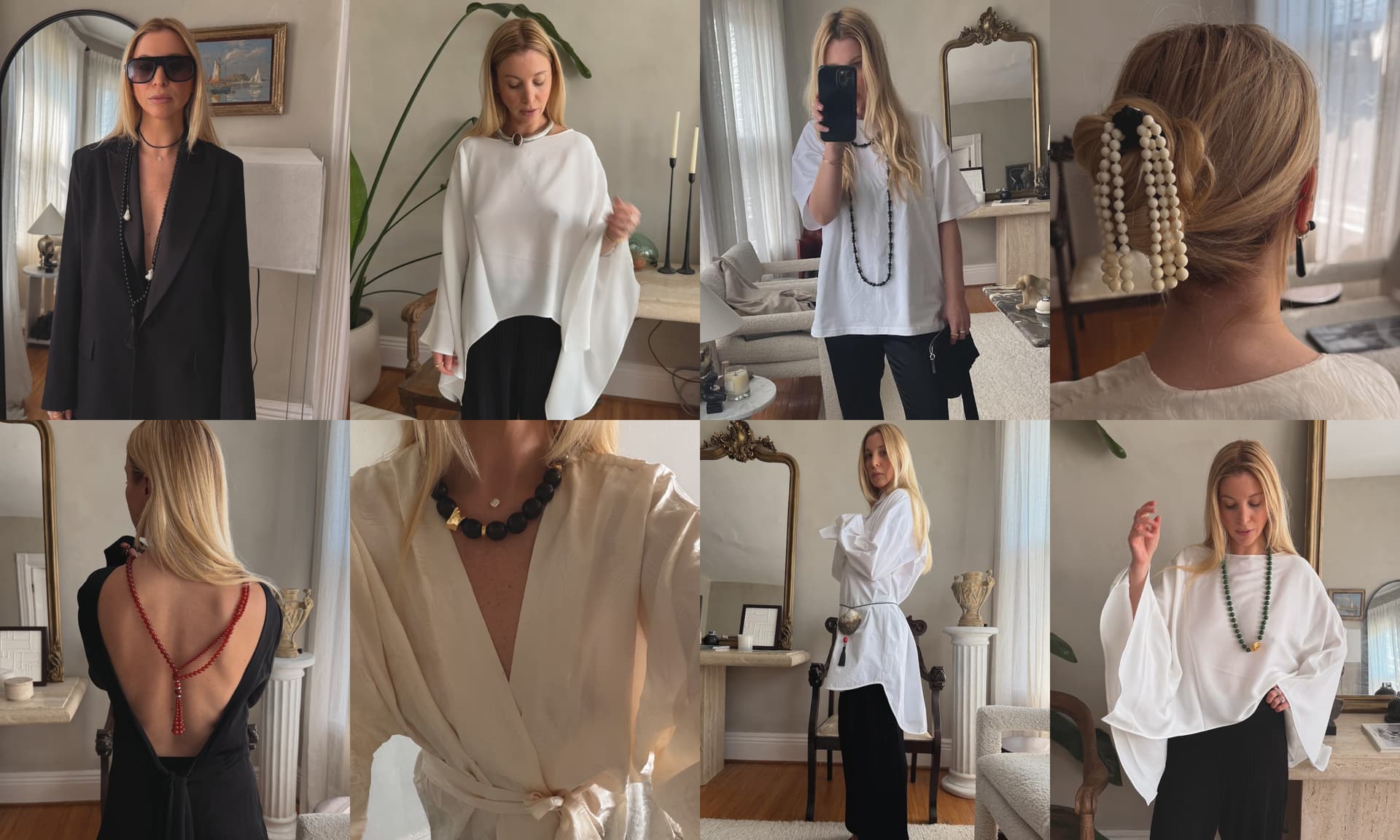
The smartest way to refresh a pared-back wardrobe is not always another black sweater or better white shirt. Jewelry has become the shortcut to personality, and Bain’s latest luxury market read makes the case plain: even as the broader luxury market slowed in 2024 and 2025, jewelry stood out as a top performer, the category shoppers still chose when they wanted something that felt both personal and lasting. That is why minimalist dressing in 2026 looks less austere and more intentional, with one distinctive piece doing the work of three basics.
Le Sundial
Le Sundial understands the appeal of a jewel that reads clean at a glance and richer the longer you look. Based in Milan and owned by Le Sundial S.r.l., the brand builds its collections, including the DECO Collection and the Venice Opera Collection, around handcrafted production in Italy, which gives the pieces the sort of polish minimalists tend to trust.
The attraction here is not excess, but architecture. Milanese design sensibility, Italian craft, and collection names that nod to decorative history suggest a house that knows how to make statement jewelry feel composed rather than loud, exactly the balance that lets a necklace or pair of earrings move easily from daytime tailoring to dinner.
Julietta
Julietta brings a more intimate kind of confidence to the statement-jewelry conversation. Founded by Juliana Liden and handcrafted by an all-female team in a Brooklyn-based studio, the label reimagines vintage elegance with a modern edge, a combination that gives the pieces enough personality to stand apart without tipping into costume.
That balance has clearly resonated with women whose style is built on discernment, not decoration. Coveteur has noted fans including Candice Swanepoel, Carla Ginola, Maeve Reilly, Elizabeth Sulcer, Grece Ghanem, and Alix Earle, and the appeal is easy to understand: Julietta’s jewelry feels polished enough for a dress-up moment, but restrained enough to become part of an everyday uniform.
Lizzie Fortunato
Lizzie Fortunato has the kind of backstory that explains why the brand feels so lived-in, not merely designed. Twin sisters Lizzie and Kathryn Fortunato launched it in spring 2008 from a Lower East Side walk-up, after Lizzie started designing jewelry at Duke University, and the line has since grown beyond statement jewelry into 14-karat fine jewelry, handbags, belts, scarves, and home objects.
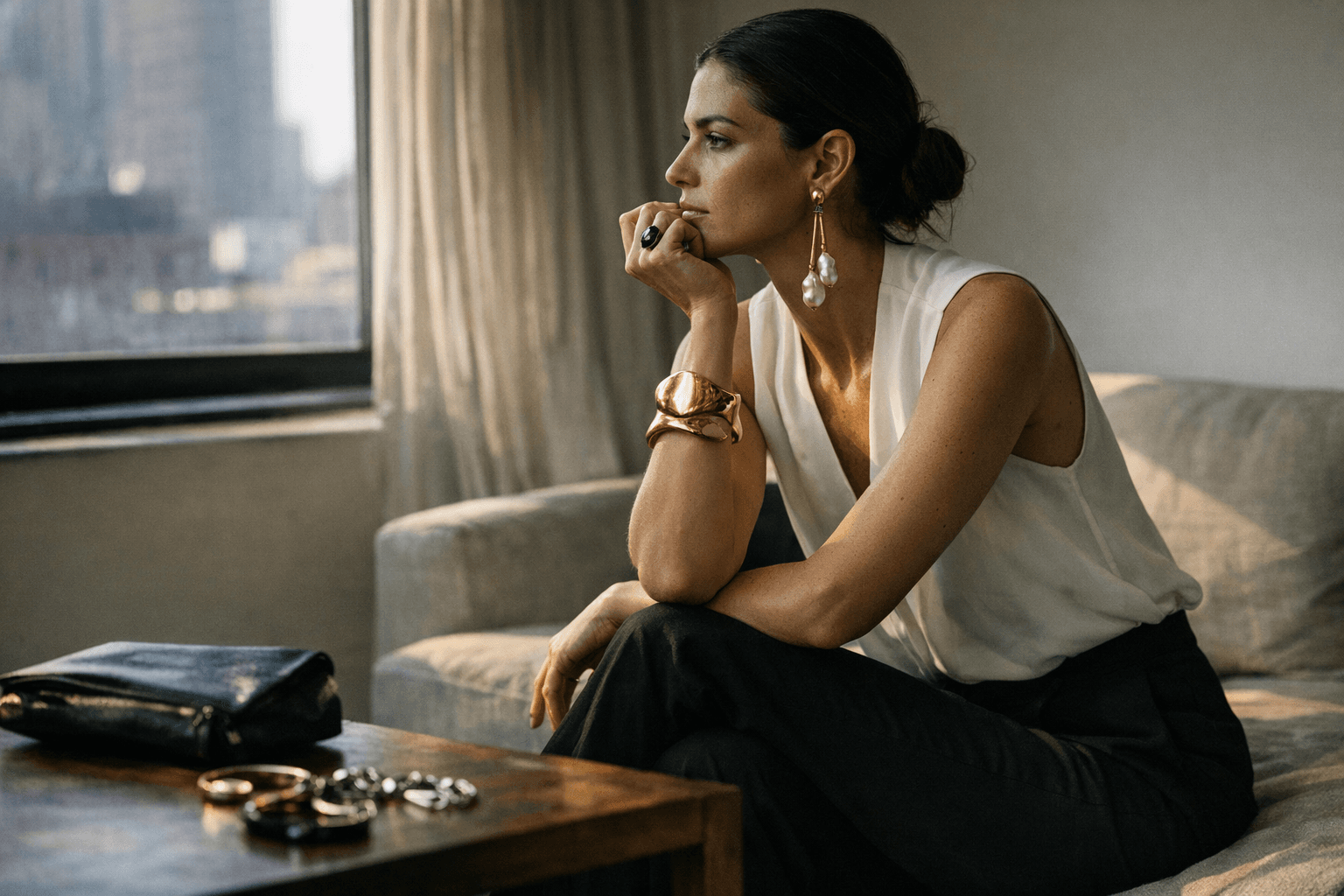
That breadth matters because it shows the brand thinks about style as a full ecosystem, not a single product category. Its Re-Jeweled resale marketplace is especially smart for buyers who want their jewelry to have a longer life cycle, a practical luxury idea that suits the minimalist who would rather own one strong piece, then keep it in rotation for years.
Completedworks
Completedworks is for anyone who prefers a jewel with a sculptural argument. Founded in 2013 by Anna Jewsbury, the brand works primarily from recycled materials and describes its jewelry and ceramics as exploring the beauty and complexity of the everyday through form, which gives its pieces a conceptual edge without making them feel precious in the wrong way.
There is something compelling about the way the brand aligns sustainability with design seriousness. Recycled and renewable materials are not presented as a side note but as part of the point, and that makes Completedworks especially relevant for readers who want their jewelry to look considered on the body and sensible in principle.
At Present
At Present approaches jewelry less like a traditional label and more like a guide to finding the right piece at the right moment. Founded in 2020 by Marc Bridge, with Monica Chambers as cofounder, it positions itself as a discovery platform for extraordinary jewelry, connecting customers with emerging artists and independent designers while framing jewelry around personal milestones.
That concept is quietly powerful for minimalists, because it shifts the buying decision away from accumulation and toward meaning. A ring for an engagement, a necklace for a promotion, a bracelet for a move or a first child, these are the kinds of pieces that gain emotional weight over time, which is often what justifies a higher spend more than carat count alone.
Jennifer Behr
Jennifer Behr is a reminder that statement jewelry can still feel controlled and elegant when it comes from a designer with a strong sense of shape. Launched in 2005 in New York City after Jennifer Behr studied sculpture and art history, the brand first built its reputation in luxury hair accessories before expanding into jewelry in 2017, and everything is still handcrafted in New York City.
That background matters because it gives the jewelry a certain discipline of line and finish. The same eye that can make a hair accessory feel refined rather than decorative also helps the jewelry read as polished and wearable, which is exactly the kind of versatility that lets one piece work across office hours, evening plans, and everything in between.
Mosquito
Mosquito takes the everyday idea literally, and that is part of its appeal. The Spanish fine-jewelry brand centers modernist, wearable forms designed for daily life and even for use in and out of water, a practical detail that instantly changes how fine jewelry can fit into a wardrobe.
This is the kind of proposition minimalists understand immediately: beauty should not be trapped in a box. When a piece can survive real routines and still look intentional, it becomes less of an occasion purchase and more of a companion, which is where investment jewelry starts to feel genuinely worth it.
Tara Chial
Tara Chial offers the most personal reading of all eight labels. Her line is small-batch and handmade, shaped by her earlier work in a jewelry design house in New York and by her later return to Panama, a trajectory that gives the brand a sense of both atelier training and individual point of view.
Small-batch production is not just a talking point here, it is the reason the jewelry feels distinct. For readers who want statement pieces that do not look overproduced or interchangeable, Tara Chial’s work offers a persuasive answer: one that feels intimate, artisanal, and easy to imagine wearing often, which is still the real test of any jewel worth the spend.
This article was produced by Prism’s automated news system from verified source data, official records, and press releases, then run through automated quality and moderation checks before publishing. The system is built and supervised by the people who set the standards it runs under. Read our full AI policy.
Did this article answer your question?