Ring sensors translate sign language in real time, researchers say
Seven slim rings tracked 100 ASL and International Sign words with about 88% accuracy, hinting that jewelry-shaped wearables could become discreet communication tools.
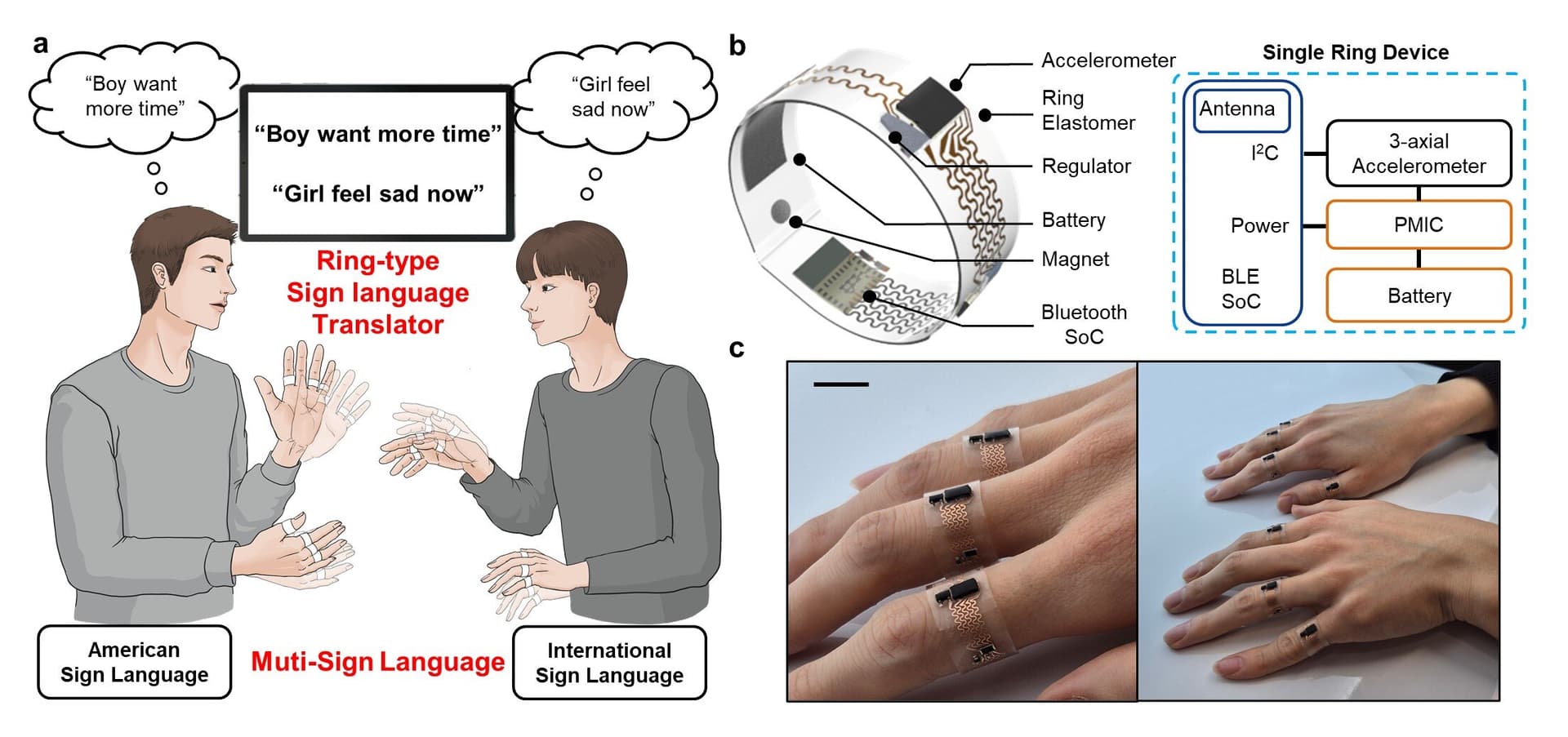
Seven ring sensors, worn on selected fingers, translated sign language in real time without the bulk of a glove. The prototype, called WRSLT for wirelessly connected, ring-type sign language translator, came from researchers at Yonsei University and Hankuk University of Foreign Studies in South Korea and used Bluetooth, onboard motion sensing and a modular design to keep the hand free.
That distinction matters in jewelry as much as in assistive tech. A ring can disappear into daily dress in a way that a wired sensor array never will, and the researchers appear to have built WRSLT around that idea. The system used seven independent rings, and the paper reported that it did not require per-user calibration, a hurdle that has long slowed wearable translation devices. In tests with unseen users, it recognized 100 American Sign Language words with 88.3% accuracy and 100 International Sign Language words with 88.5% accuracy.

The design also addressed a more practical problem: pace. Fluent signers can communicate at roughly 100 to 150 signs per minute, which makes slow, word-by-word translation awkward for everyday conversation. To keep up, the team added a sequential word-detection framework and AI-based autocomplete that could turn continuous signing into phrases and sentences without separate sentence training. The idea is not just to detect a hand shape, but to make a back-and-forth exchange feel less like data entry and more like conversation.
The researchers framed that as a response to the limits of earlier systems, many of which relied on glove-type wearables, wires, constrained movement and nonpersonalized sensor placement. WRSLT was built to preserve full finger mobility and improve comfort and adaptability, two qualities that matter if a device is meant to be worn all day. The paper also notes that more than 300 sign languages are used worldwide, underscoring how narrow most translation tools still are compared with the breadth of real communication needs.

The broader appeal is obvious: if the rings prove reliable, discreet and comfortable enough for constant wear, they could make small daily interactions easier, from ordering at a restaurant to socializing across language barriers. That would move ring form factors beyond health tracking and into accessibility and communication, a shift that feels especially meaningful in a category usually judged by sparkle, not signal.
Know something we missed? Have a correction or additional information?
Submit a Tip