RingConn Gen 2 emerges as Oura’s strongest smart ring rival
RingConn Gen 2 is the rare smart ring that feels like real jewelry first, then turns the subscription-heavy Oura equation on its head.
The smart ring market finally looks like a jewelry category
RingConn Gen 2 lands at exactly the right moment: Wareable’s updated 2026 guide says the smart-ring market boomed in 2025, expects even more releases in 2026, and now treats the field as larger than Oura alone. The same guide says Oura’s lifetime sales passed 5.5 million rings in September 2025, yet legal battles have continued to affect U.S. availability, which helps explain why shoppers are looking harder at alternatives that feel polished enough for daily wear. IDC and Counterpoint Research both point to the same shift, with larger brands entering the category and smart rings moving from niche gadgets toward mainstream health companions.
That matters because the best smart ring is no longer just the one with the most metrics. It is the one you can live with on your hand all day, in the same way you might choose a slim signet, a softly brushed wedding band, or a ring with a finish that does not scream for attention. Wareable’s verdict puts RingConn Gen 2 at the center of that conversation, not because it tries to out-glitz Oura, but because it balances wearability, battery life, and value with uncommon confidence.
Why RingConn Gen 2 feels like the most wearable choice
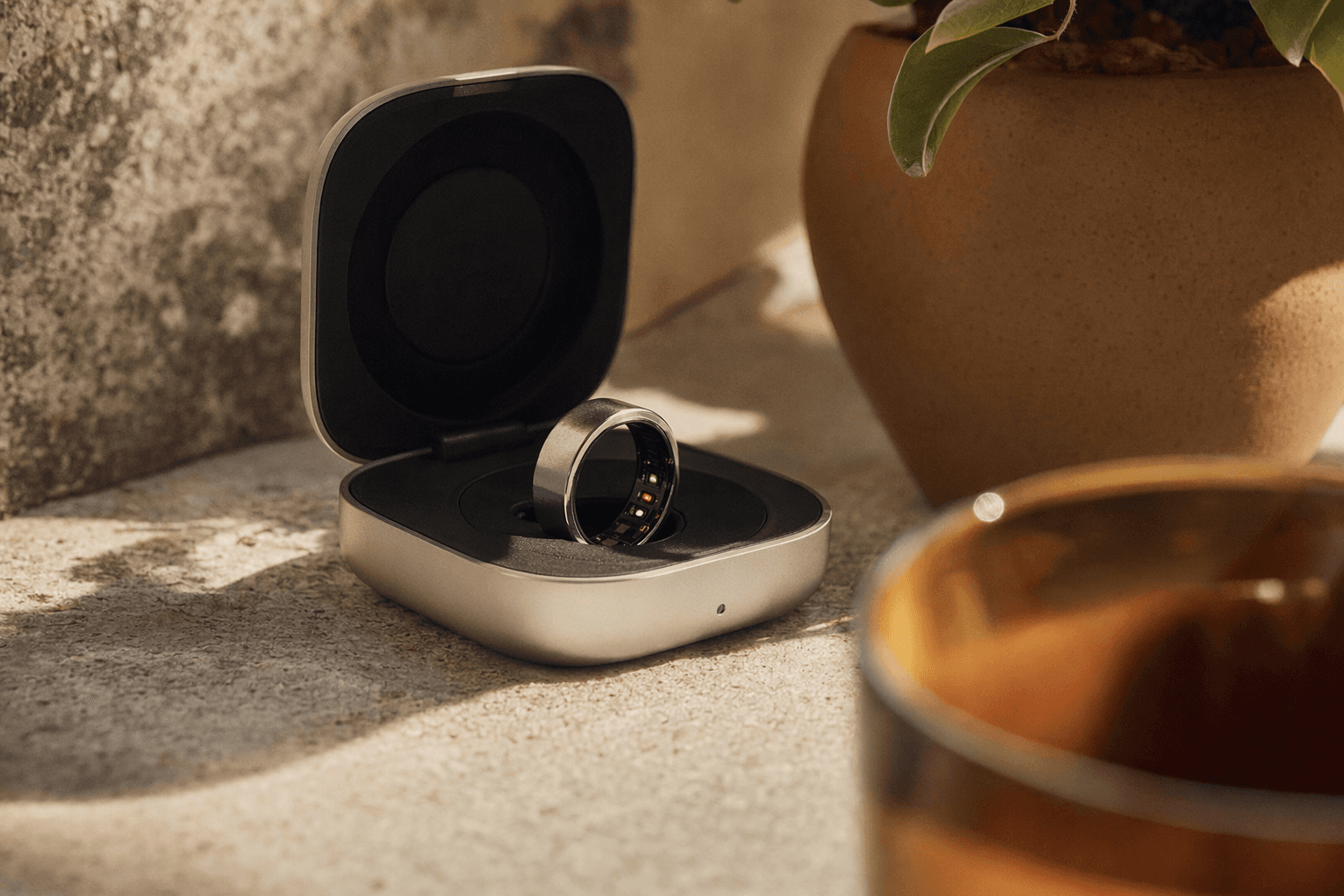
RingConn Gen 2’s strongest argument is that it behaves like a piece of jewelry you forget you are wearing. The standard model is priced at $299, the rose-gold version rises to $399, and neither requires a monthly subscription, which immediately makes the ring easier to justify as an everyday object rather than a recurring software commitment. RingConn says the ring delivers 10 to 12 days of battery life, with up to 150 days from the charging case, and includes automatic sleep apnea monitoring, a feature that gives the piece real clinical ambition without cluttering the design language.
That combination is what gives RingConn its edge in a jewelry-first wardrobe. The rose-gold finish, in particular, pushes the ring toward the language of fine accessories rather than consumer electronics, and the absence of a subscription keeps the ownership story clean, which matters when a piece is meant to live beside a watch, a wedding band, or a stack of slim metal rings. RingConn launched Gen 2 on Kickstarter on August 1, 2024, presenting it as the world’s first smart ring with integrated sleep apnea monitoring, and Wareable’s updated testing says that the formula now reads as premium, practical, and unusually complete.
Why Oura Ring 4 still sets the standard for polish
Oura Ring 4 remains the category’s reference point for refinement. Oura says the ring is built in fully titanium construction, comes in six finishes including rose gold, brushed silver, gold, black, stealth, and silver, and now spans sizes 4 through 15, which helps it sit more naturally on a wider range of hands. Oura also says the ring is designed for all-day comfort and offers up to 5 to 8 days of battery life, which is respectable, though not in the same league as RingConn’s extended endurance.
The technology story is equally serious. Oura’s Smart Sensing platform uses an 18-path multi-wavelength PPG system, and software updates that began rolling out on October 3, 2024 added Automatic Activity Detection with average heart rate and heart-rate zones for more than 40 activities, plus upgrades to Daytime Stress, Cycle Insights, and the redesigned Oura app. In other words, Oura still feels like the most mature expression of the smart ring as a health instrument, especially for readers who want the ring to deliver the deepest possible read on sleep, recovery, and activity.
The real tradeoff is ownership, not just hardware
The sharpest difference between these two rings is how they ask to be owned. Oura Ring 4 starts at $349 and requires Oura Membership at $5.99 per month or $69.99 per year in the United States, while RingConn Gen 2 starts at $299 with no monthly fee attached. Wareable says that over two years, Oura Ring 4 ends up costing roughly $200 more than RingConn Gen 2 once the subscription is included, and that arithmetic is hard to ignore if you want one ring to become part of your daily rotation instead of a line item that quietly grows more expensive over time.
That cost difference is not just financial, it is aesthetic in a subtler sense. A ring with no subscription feels complete when it leaves the box, while a ring that depends on membership can feel closer to a service wrapped around a jewel. Oura still wins on ecosystem maturity and polish, but RingConn’s design-value balance is strong enough that, for many readers, the more compelling luxury is simplicity: better battery life, a handsome finish, and no recurring fee attached to the act of wearing a ring.
What the broader market says about the future of smart jewelry
Wareable’s guide also underscores how crowded the field has become, noting strong impressions from Ultrahuman Ring AIR, Renpho LYNX Smart Ring, RingConn Gen 2 Air, Circular Ring 2, Leep Ring, and Amazfit Helio Ring. That breadth is useful because it shows smart rings are no longer novelties chasing a trend; they are becoming a category with distinct styles, budgets, and priorities, much like fine jewelry lines that split between minimal daily bands and more technical statement pieces.
Still, the story that matters most for everyday wear is not how many brands are arriving. It is that RingConn Gen 2 now feels like the clearest answer for readers who want a smart ring that can pass as a refined accessory, last far beyond a long weekend, and avoid the friction of subscription ownership. Oura Ring 4 remains the most complete luxury benchmark, but RingConn is the one that most convincingly turns smart-ring practicality into something elegant enough to stay on the hand.
Know something we missed? Have a correction or additional information?
Submit a Tip