Spring 2026 jewelry trends turn to sculptural forms and mixed metals
Spring 2026 jewelry makes its strongest case in mixed metals and sculptural lines, while wood and tassels stay sharper when used as accents.
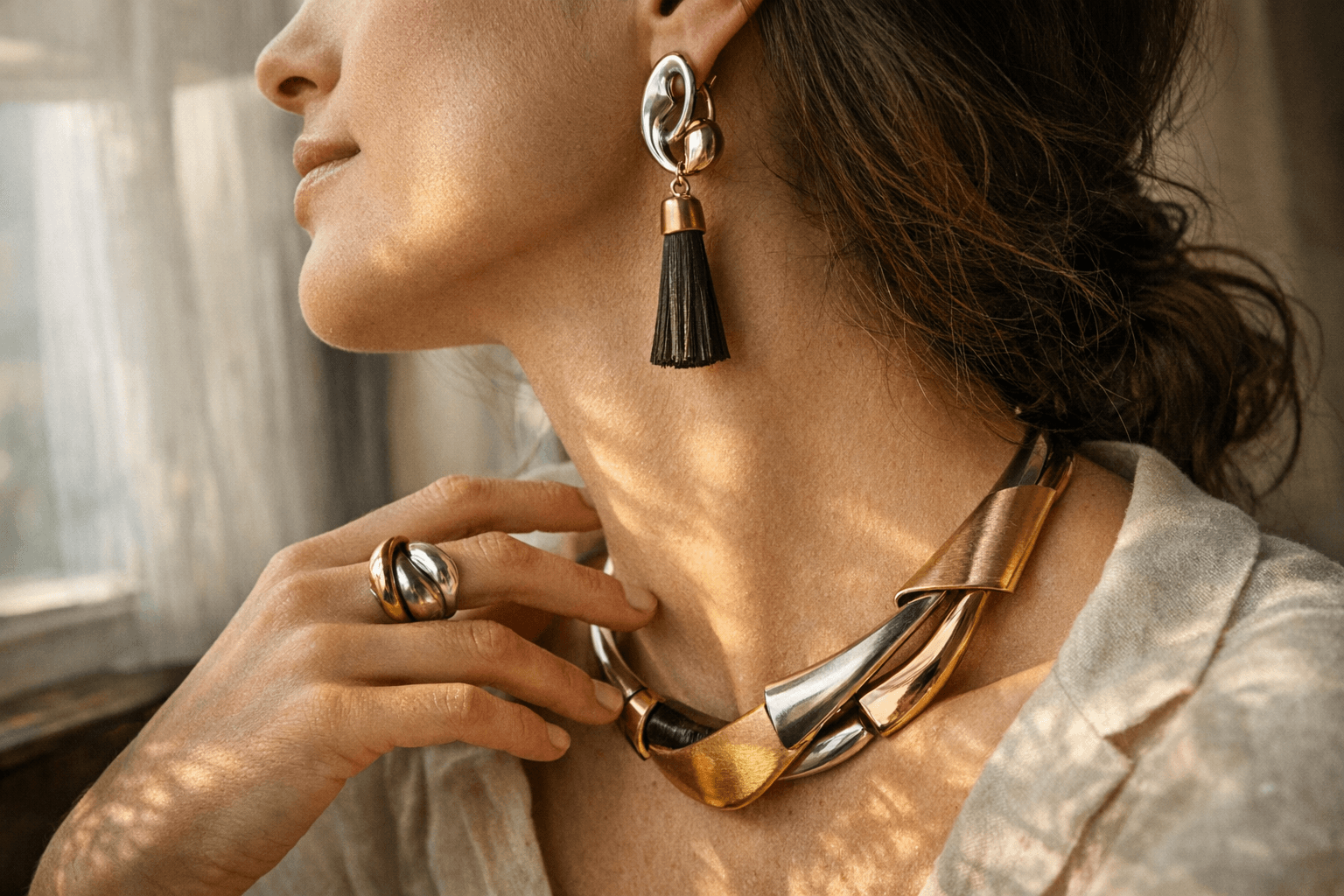
The season’s clearest shift is from decoration to construction. L’Officiel USA’s spring 2026 edit puts form first, organizing jewelry around silhouette, color, and materiality, and that framing holds up across the runways, the showroom, and the store floor. The message is simple: the pieces that feel modern now do not just sparkle, they move, connect, and balance materials with intent.
The commercial appeal comes from restraint as much as drama. Tiffany & Co., Cartier, and Bulgari each show a different path into the same conversation, from polished geometry to richer color and volume. That matters because gold prices are shaping what designers can make, and shoppers can feel the effect immediately: lighter-feeling builds, smarter use of mixed metals, and designs that rely on line and finish instead of sheer mass.
What reads wearable now
Two-tone metal is the easiest runway idea to wear without feeling overworked. It solves the old problem of choosing between warm and cool jewelry, and it makes stacking simpler around watches, wedding bands, and everyday hoops. A Cartier-style mix of gold tones can look deliberate even in a plain chain or a single pendant, which is why this idea translates so cleanly into real life.
Lariats are the other strong commercial story, but only when they are controlled. The best versions hang close to the body, use a clean drop, and let the chain do the work rather than piling on extra ornament. At retail, that usually means a Y-necklace shape or a slim, adjustable chain that can sit under a shirt collar or over a knit without fighting the outfit.
Sculptural forms are also moving into daily wear, but the successful ones keep their edges smooth and their proportions sensible. JCK described spring-summer 2026 as a moment of “new maximalism,” with sculptural movement, statement pendants, and utility-inspired accessories rising from the runways. In practice, that does not have to mean oversized drama. A rounded pendant with volume, a curved collar, or a chain that reads like a tiny piece of architecture can deliver the same energy in a far more wearable way.
What stays more editorial than everyday
Wood accents are beautiful when they are treated as a material story, not a novelty. A small inlay, bead, or warm-toned panel can soften a metal-heavy piece and add texture, but too much wood can tip a design into souvenir territory. The most convincing versions will use wood the way fine watchmakers use contrast: as a carefully placed note, not the entire composition.
Tassels are even trickier. On the runway, they bring motion and a little theatricality, which is exactly why they photograph so well. In daily wear, though, full tassels can feel fussy unless the construction is crisp and the length is moderated. The wearable translation is usually a short fringe on an earring, a restrained pendant sweep, or a dangling detail that moves when you do but does not dominate the outfit.
Why this spring feels like a reset
WWD’s Paris Fashion Week coverage found that spring 2026 jewelry leaned hard into self-expression, with geometric interplays, sinuous lines, chunky volumes, color, and reimagined pearls. Buyers called the season a “reset” toward design, craftsmanship, and creativity, even with economic headwinds still pressing on the market. That is a useful lens for shoppers, because it explains why the best pieces feel more authored than logo-driven.
The resurgence of pearls fits that same logic. They are not returning as prim formalwear only, but as part of a broader mix of texture and shape, where a classic material gets recast in a sharper silhouette. Pair that with a dash of color and the result is less heirloom stiffness, more personal styling.
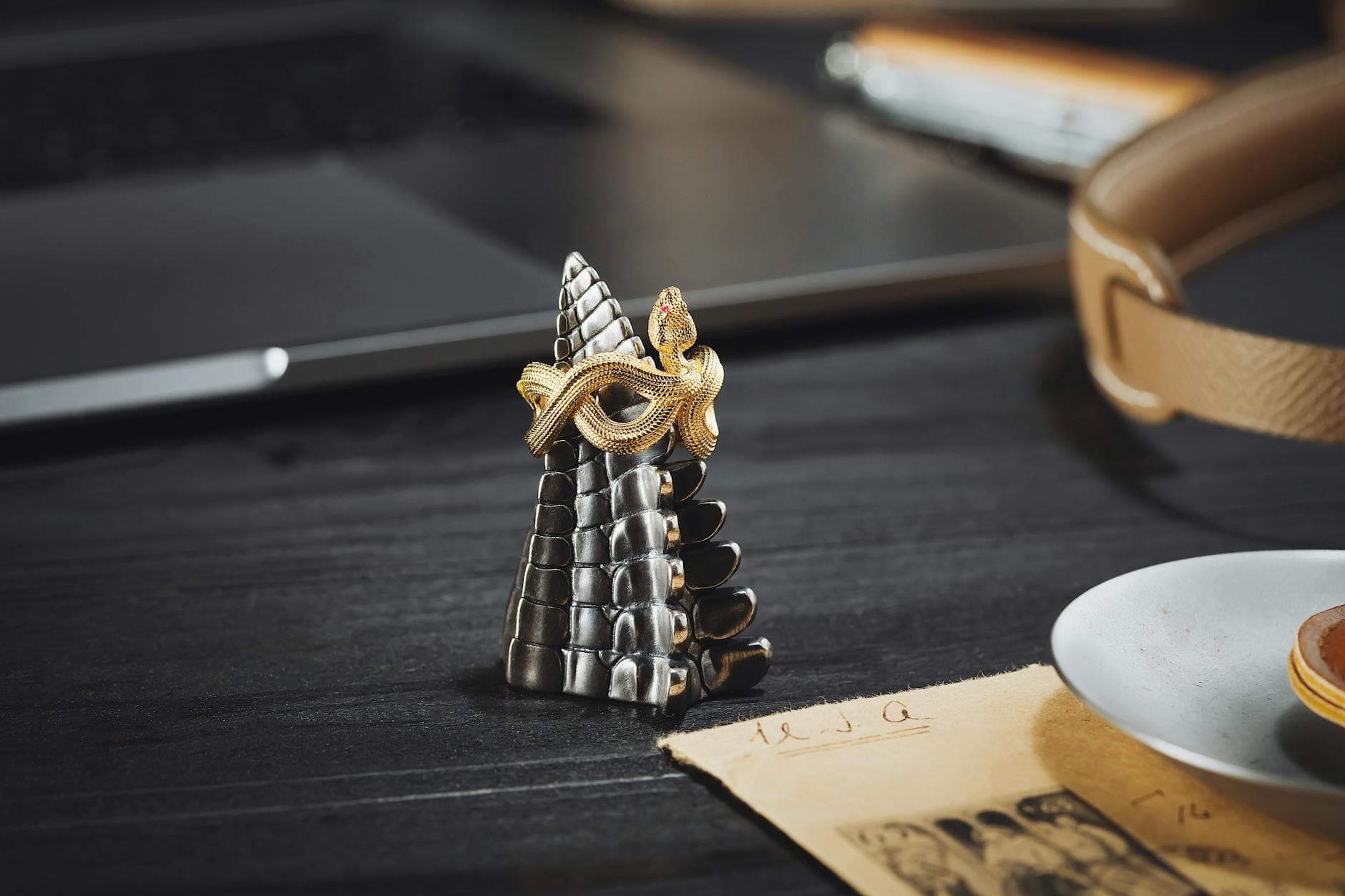
Bulgari is the obvious luxury touchpoint for this mood, because its vocabulary has always made room for color, volume, and sensual curve. Tiffany & Co. brings a cleaner, more streamlined reading of form, while Cartier remains the reference point for graphic poise and intelligent metal work. Together, those houses show how the season can be bold without becoming chaotic.
How to decode the commercial versions
The easiest way to spot the retail-friendly version of this trend is to look for one strong idea, not four. A necklace that combines silver and gold, a pendant with a single carved surface, or a lariat with a precise drop will usually feel more current than a piece trying to stack every runway signal at once. Oak and Luna, along with assortments at Saks Fifth Avenue, Neiman Marcus, Bloomingdale’s, Selfridges, and Ounass, are the kinds of places where these ideas often appear in more accessible materials and price points.
- Choose two-tone pieces if you want the broadest wear. They bridge existing jewelry wardrobes and make mixed stacks look intentional.
- Look for lariats with adjustable length and a clear focal point. The necklace should frame the neckline, not tug at it.
- Treat wood as an accent material. Small inlays and polished beads read far more refined than large, unbroken wooden sections.
- Buy tassels only when the movement is controlled. Short fringe and compact drops tend to age better than long, heavy sways.
- Pay attention to finish and joins. Mixed metals only look luxurious when the transition is seamless and the clasp feels as considered as the front.
The market backdrop still matters
JCK’s January 2026 predictions also pointed to tariff pressure, the Tucson gem shows, and a possible natural diamond revival, all of which help explain why designers are thinking harder about material choices. Victoria Gomelsky has also been tracking colored stones and metals closely in the same conversation, which reinforces how central material strategy has become. Even Pantone’s 2026 Color of the Year, Cloud Dancer, is muted, so jewelry is carrying more of the visual weight than it did in louder seasons.
That is the real story of spring 2026: the strongest jewelry is not competing for attention through excess, but through intelligence. The pieces worth wearing now are the ones that make mixed metal, sculptural shape, and precise material contrast feel like part of everyday dressing, while the most theatrical tassels and wood-heavy gestures remain where they belong, on the edge of the editorial frame.
This article was produced by Prism’s automated news system from verified source data, official records, and press releases, then run through automated quality and moderation checks before publishing. The system is built and supervised by the people who set the standards it runs under. Read our full AI policy.
Know something we missed? Have a correction or additional information?
Submit a Tip