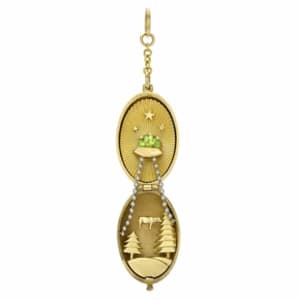
Tacori frames fine jewelry as a forever investment with tax refund match-ups
Tacori turns tax-refund season into a test of fine-jewelry value, with made-to-order bands and necklaces built for repeat wear, not trends.
The tax refund as a jewelry budget
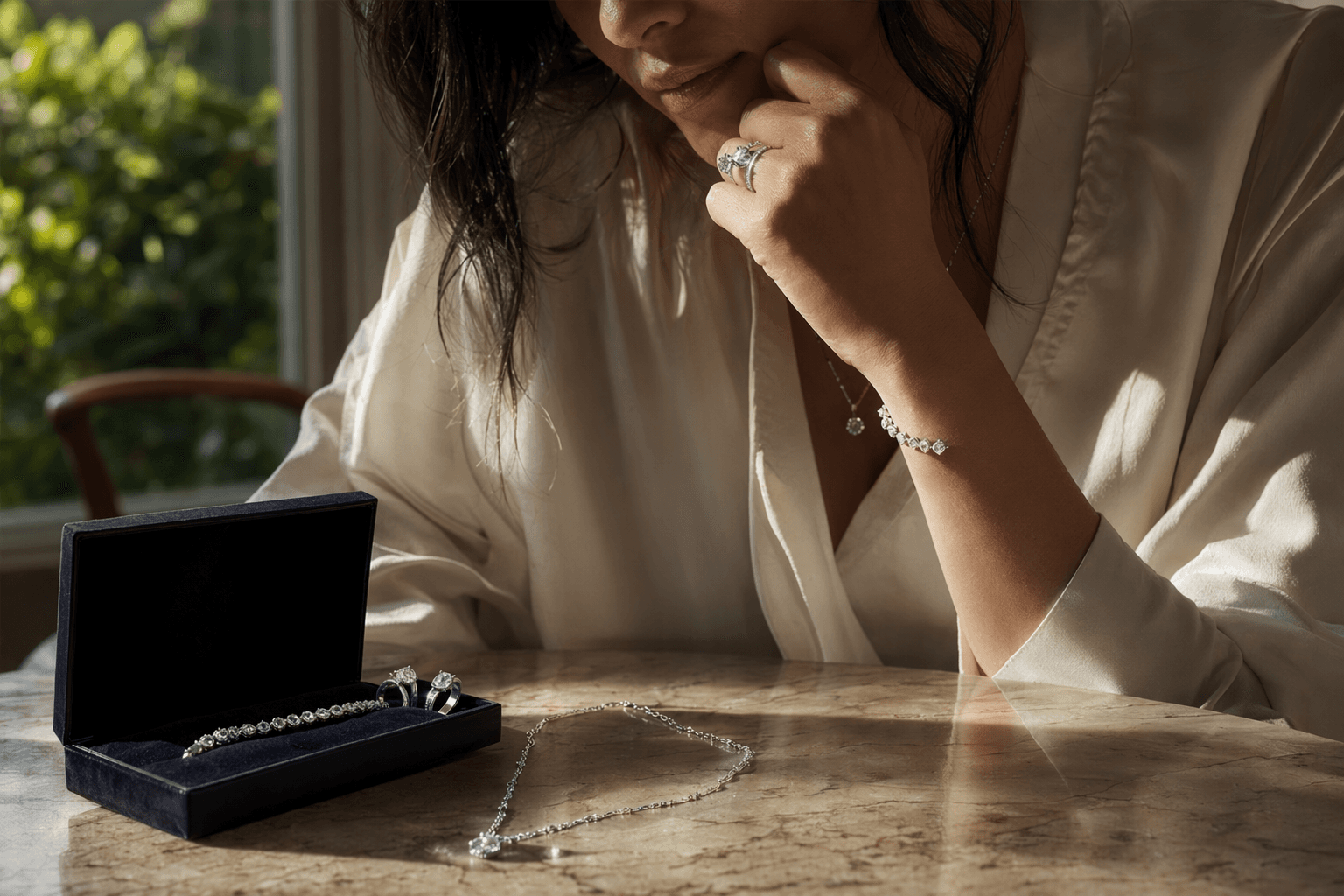
Tacori’s "Invest in Forever" campaign turns a seasonal refund into a buying lens, and the site is explicit about it: "A different kind of return" and "Enter your tax refund amount to explore pieces within your budget." That framing is clever because it treats fine jewelry less like an impulse and more like a long-term wardrobe decision, something you buy to wear often and keep in rotation for years.
The collection is broad enough to support that argument. Tacori says the campaign spans fine jewelry "from platinum to gold, diamonds to gemstones," and the landing page showed 418 results. That breadth matters, because an investment piece should not be a single logo-driven trophy. It should give you options across metal, stone, and scale so the purchase can fit your life, not just your feed.
Specific pieces make the case more concrete. The Classic Crescent RoyalT Round Cut Diamond Eternity Band is priced at $6,990, the Founder’s Collection Round Cut Diamond Eternity Band at $6,490, the Classic Crescent RoyalT Marquise and Round Diamond Eternity Band at $11,790, and the Dahlia Petal Diamond Pavé Station 18-inch Necklace in 18kt Yellow Gold at $5,090. These are serious prices, which is precisely why the question should be value over novelty: will you wear it enough, love it long enough, and eventually hand it down?
Why Tacori can talk about forever
Tacori has the kind of backstory that supports a longevity pitch. The founders, Gilda Balian Tacorian and Haig Tacorian, originated from Romania, and the company traces its start to 1969, when Haig left Europe for California and built the business with Gilda around a mix of European flair and California style. The brand says it has remained family owned and operated for more than four decades and across three generations, with Haig as chairman, Paul Tacorian as CEO, and Nadine Tacorian as design director and COO.
That continuity is not just romantic branding. In jewelry, a recognizable design language is part of what keeps a piece relevant after trends move on. Tacori says its Crescent silhouette dates to 1998, when a signature shape evolved from an earlier heart-based design and became the house’s visual hallmark. A motif that has already outlived multiple style cycles is more convincing as an heirloom candidate than a look built only for the moment.
Craftsmanship also backs up the pitch. Tacori says its fine jewelry is made-to-order in its California Design Studio, that it is American made, and that it is sold through authorized retailers in the United States and Canada. Those details suggest a brand that is trying to build trust around process as much as polish. For a piece to feel like an investment, the buyer needs to believe in the making, not only the marketing.
How to test the investment claim
The smartest way to read Tacori’s campaign is to break "investment" into three practical questions: what is it made of, how often will you wear it, and how easily will it live beyond you? Materials come first. The campaign spans platinum, gold, diamonds, and gemstones, which gives you a useful range of durability, warmth, and visual impact. Platinum tends to suit buyers who want longevity and density, gold brings versatility and warmth, and diamonds or gemstones decide whether the value sits mostly in the stone or in the metal and workmanship.
Then look at silhouette. Eternity bands are classic for a reason: they read cleanly, stack well, and rarely need explanation. The Classic Crescent RoyalT Round Cut Diamond Eternity Band and the Founder’s Collection Round Cut Diamond Eternity Band both sit in a language that feels familiar rather than faddish, while the Marquise and Round version adds a more decorative edge without leaving the category of daily-wear fine jewelry. The Dahlia Petal Diamond Pavé Station Necklace is softer and more layer-friendly, the kind of piece that can move from a white shirt to evening tailoring without feeling out of place.
Cost-per-wear makes the argument less abstract. Worn three times a week for 10 years, the $6,490 Founder’s Collection band works out to about $4.16 per wear, while the $6,990 Classic Crescent RoyalT band comes in around $4.48. At two wears a week over the same period, the $5,090 necklace lands at roughly $4.89 per wear. That is not a guarantee of value, but it is a useful way to think about jewelry that will spend its life on skin instead of in storage.
Resale and heirloom value are less predictable, but they still follow patterns. A clean eternity band is easier to pass on because its form is legible across generations, and its appeal does not depend on a passing silhouette. A more ornate piece may be deeply loved, yet the best heirloom candidates are usually the ones that look composed in any decade, not just photogenic in this one.
Why the retailer network matters
Tacori’s service language reinforces the idea that this is meant to be a lasting relationship, not a one-off purchase. The brand says a Tacori bridal ring is "more than an investment in a beautiful piece of jewelry," and it directs buyers toward its authorized retail partners for purchase and care. That matters because fine jewelry is not only bought, it is maintained, cleaned, resized, insured, and eventually inherited.
The timing is smart, too. The Internal Revenue Service says taxpayers can check refund status 24 hours after e-filing or about four weeks after mailing a paper return, which makes tax season a natural window for a considered buy. Tacori has simply wrapped that moment in a more elegant argument: if you are going to spend a refund on something lasting, choose a piece that will still feel earned after the season has passed.
This article was produced by Prism’s automated news system from verified source data, official records, and press releases, then run through automated quality and moderation checks before publishing. The system is built and supervised by the people who set the standards it runs under. Read our full AI policy.
Did this article answer your question?