TEFAF New York spotlights contemporary and vintage art jewels
TEFAF New York turns art jewelry into a trend forecast, with sculptural gold, long sautoirs and vintage references poised to filter into everyday wear.
TEFAF New York as a jewelry forecast
TEFAF New York’s jewelry section is less a display case than a preview of what will start appearing, quietly, in everyday jewelry counters next. The fair’s 10th edition runs May 15 to 19, 2026, with an invitation-only collectors’ preview on May 14 at the Park Avenue Armory in New York City, and it arrives with 88 exhibitors from 15 countries across four continents. That scale matters because TEFAF is not treating jewelry as a side category, but as part of a broader presentation of modern and contemporary art, design, jewelry, and antiquities that spans 7,000 years of artworks across 15 unique presentations inside the Armory’s historic period rooms.
The setting itself helps explain why the jewelry feels so influential. The Park Avenue Armory is not a neutral trade-show shell, and TEFAF remains the only art fair there to activate its 16 historic period rooms. That mix of old architecture and high-level dealer presentations gives the jewelry a context that is both connoisseurial and tactile. In practice, that means the pieces read less like luxury accessories and more like small-scale design statements, which is exactly why their influence tends to trickle downward into mainstream wear.
The exhibitors shaping the look
Forbes singled out five exhibitors specializing in contemporary and vintage jewelry for this year’s fair: Didier Ltd., FD Gallery, Forms, Hemmerle, and Ana Khouri. That lineup tells the story. Didier Ltd. and FD Gallery anchor the vintage and historical end of the spectrum, while Hemmerle and Ana Khouri represent the kind of highly authored contemporary work that has helped redefine what collectible jewelry looks like now. Forms sits between those worlds, with the added intrigue of making its first appearance at TEFAF New York after four years at TEFAF Maastricht.
TEFAF’s own leadership framed the dealer roster as the core of the event. Leanne Jagtiani, the fair’s director, said, “The heart of TEFAF New York lies with its exhibitors,” and the fair’s structure bears that out. The dealers are not simply filling booths, they are curating the argument for why art jewelry belongs inside a cross-disciplinary fair where provenance, authorship, and design language matter as much as polish.
Forms adds another useful layer to the story. The Hong Kong high jewelry firm is using TEFAF New York as an entry point into the U.S. market, and Flora Wong said the timing felt right for the move. That kind of migration is worth watching because it often signals where the next collector conversation is headed: not just toward one-off trophy pieces, but toward a broader appetite for jewelry with a stronger point of view and a clearer maker identity.
The pieces that hint at what comes next
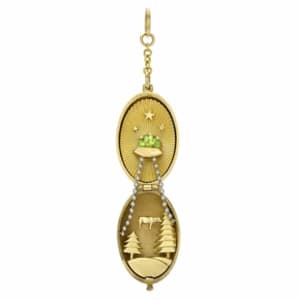
Among the standouts, a Lucio Fontana gold bracelet and a Bulgari sautoir do the most to explain the fair’s likely influence on everyday jewelry. Both pieces point toward a shift away from fussy ornament and toward shape, line, and sculptural presence. A gold bracelet associated with Fontana suggests the appeal of compact, architectural metal work that reads as art on the wrist. A sautoir, by contrast, brings length, movement, and ease, the kind of necklace that can transform a simple shirt or knit without needing gemstones to do all the work.
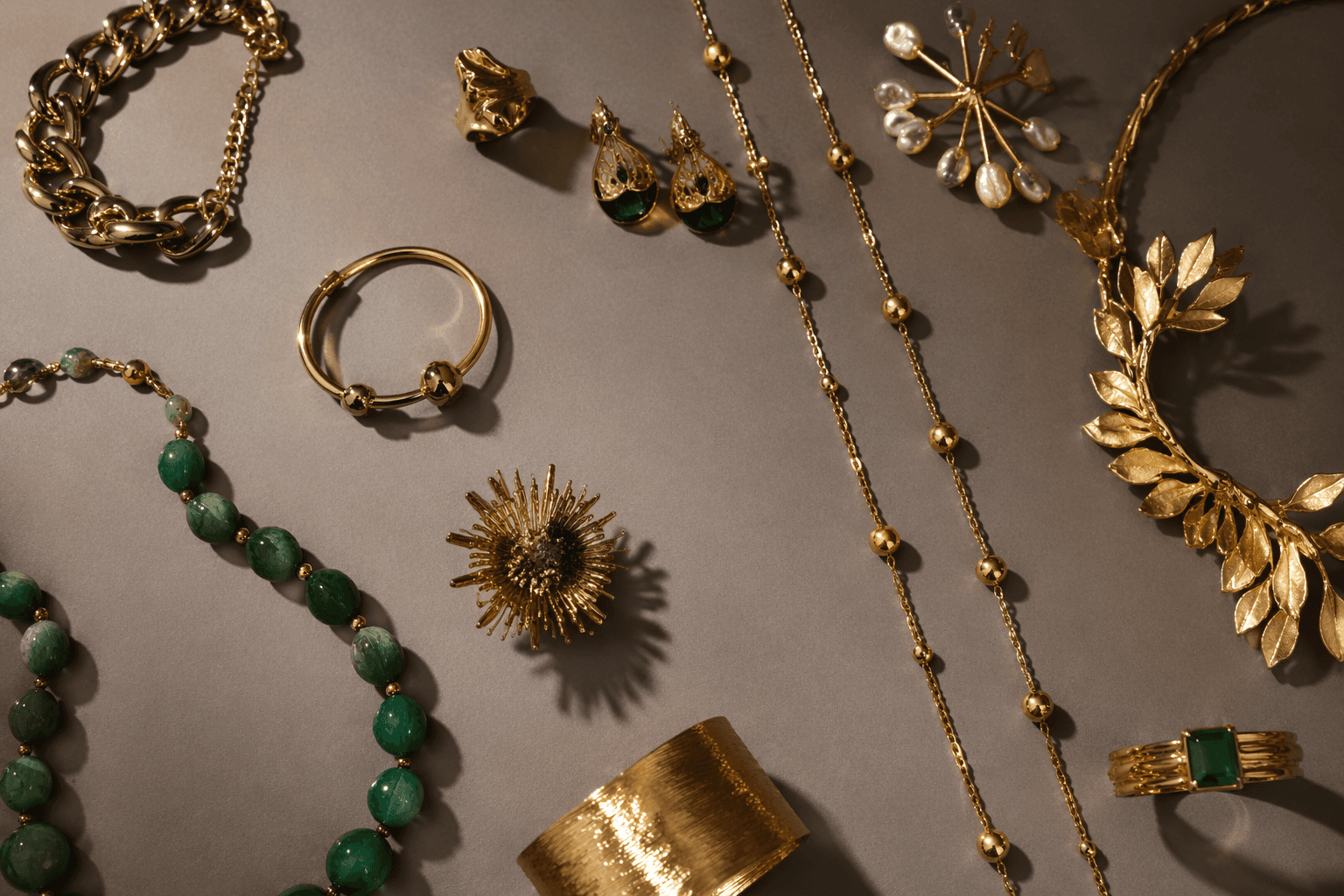
Those ideas are already visible in the broader mix of exhibitors. Hemmerle’s permanent presence at both TEFAF New York and TEFAF Maastricht, noted by Forbes in 2024, signals continuity and collector trust, two qualities that help art-jewelry aesthetics seep into mainstream taste. Ana Khouri’s presence reinforces the market’s ongoing appetite for pieces that feel sculptural rather than merely decorative. Together, the exhibitors point to a set of design cues that are likely to travel well beyond the fair floor: rounded gold forms, elongated necklines, unusual stone settings, and silhouettes that look antique in spirit without becoming costume.
What to borrow now from the fair floor
The trickle-down effect is already easy to name in everyday terms.
- Sculptural gold is the clearest takeaway. Think bracelets and cuffs with visible volume, not thin, anonymous bands.
- Long necklaces are returning with force. A sautoir-like length brings elegance without requiring a full evening look.
- Vintage-inspired silhouettes are gaining ground. Rounded contours, softened edges, and art-deco-adjacent lines feel more current when they are stripped of excess.
- Unusual stone settings matter more than oversized stones. The setting can become the signature, especially when it frames a gem as if it were part of a small object of design.
- Pieces that look collected, not purely seasonal, are gaining value. That is where vintage dealers like Didier Ltd. and FD Gallery and design-driven contemporary names like Hemmerle and Ana Khouri meet on common ground.
The fair’s broader scale reinforces that this is not a niche sidebar. TEFAF later said nearly 90 exhibitors from 14 countries participated in the May 2026 fair overall, underscoring the event’s international reach even as the jewelry section kept its own sharper identity. In that context, jewelry is not competing with the paintings and antiquities around it. It is borrowing their seriousness.
Why this matters beyond the armory
For readers who care about what survives beyond the moment, TEFAF New York is useful precisely because it treats jewelry as an authored object. The dealers are named, the provenance is legible, and the pieces are shown in a setting that rewards close looking. That is the opposite of vague luxury marketing. It is a reminder that the most influential jewelry often starts as something more specific: a bracelet with sculptural force, a necklace with old-world length, a vintage silhouette refreshed by a contemporary hand.
The next wave of everyday fine jewelry will not look like TEFAF, but it will borrow from it. Expect more gold with volume, more necklaces that fall with intention, and more pieces that feel like miniature works of design rather than interchangeable accessories.
This article was produced by Prism’s automated news system from verified source data, official records, and press releases, then run through automated quality and moderation checks before publishing. The system is built and supervised by the people who set the standards it runs under. Read our full AI policy.
Did this article answer your question?