The Clear Cut enters Blue Nile era with trust and AI insights
The Clear Cut's jump into Blue Nile is really a trust story, with gemological expertise, curation, and AI aimed at making online diamond buying easier to verify.
What this deal means for first-time diamond buyers
The Clear Cut’s move into Blue Nile is not just another luxury acquisition. It is a bid to make online diamond shopping feel more legible, more personal, and harder to game, at a moment when buyers are asking sharper questions about provenance, grading, and whether a seller’s “expertise” is real or just polished marketing. Signet Jewelers is folding a specialist brand built on education and custom service into a much larger digital jewelry platform, and that combination will matter most to shoppers trying to tell the difference between confidence and hype.
Why trust has become the real luxury
Signet first set this Blue Nile strategy in motion on August 9, 2022, when it announced an all-cash acquisition of Blue Nile for $360 million. At the time, Signet said Blue Nile had generated more than $500 million in calendar-year 2021 revenue, signaling that the brand already had the scale to matter inside a larger portfolio. Since then, Signet has been repositioning Blue Nile toward what it calls “elevated luxury jewelry anchored in natural diamonds,” a clear signal that the company wants less browsing noise and more premium conviction.
That matters because the next phase of diamond shopping is not about throwing more inventory at buyers. It is about helping them verify what they are seeing. Blue Nile’s move away from a grid-heavy, search-first experience toward a more curated assortment built around natural stones suggests a different kind of online showroom, one where the buyer is meant to feel guided rather than overwhelmed. For anyone shopping for a first engagement ring or a significant diamond gift, the question is simple: does the experience make the stone easier to trust, or merely prettier to click through?
The Clear Cut’s pedigree gives the strategy some weight
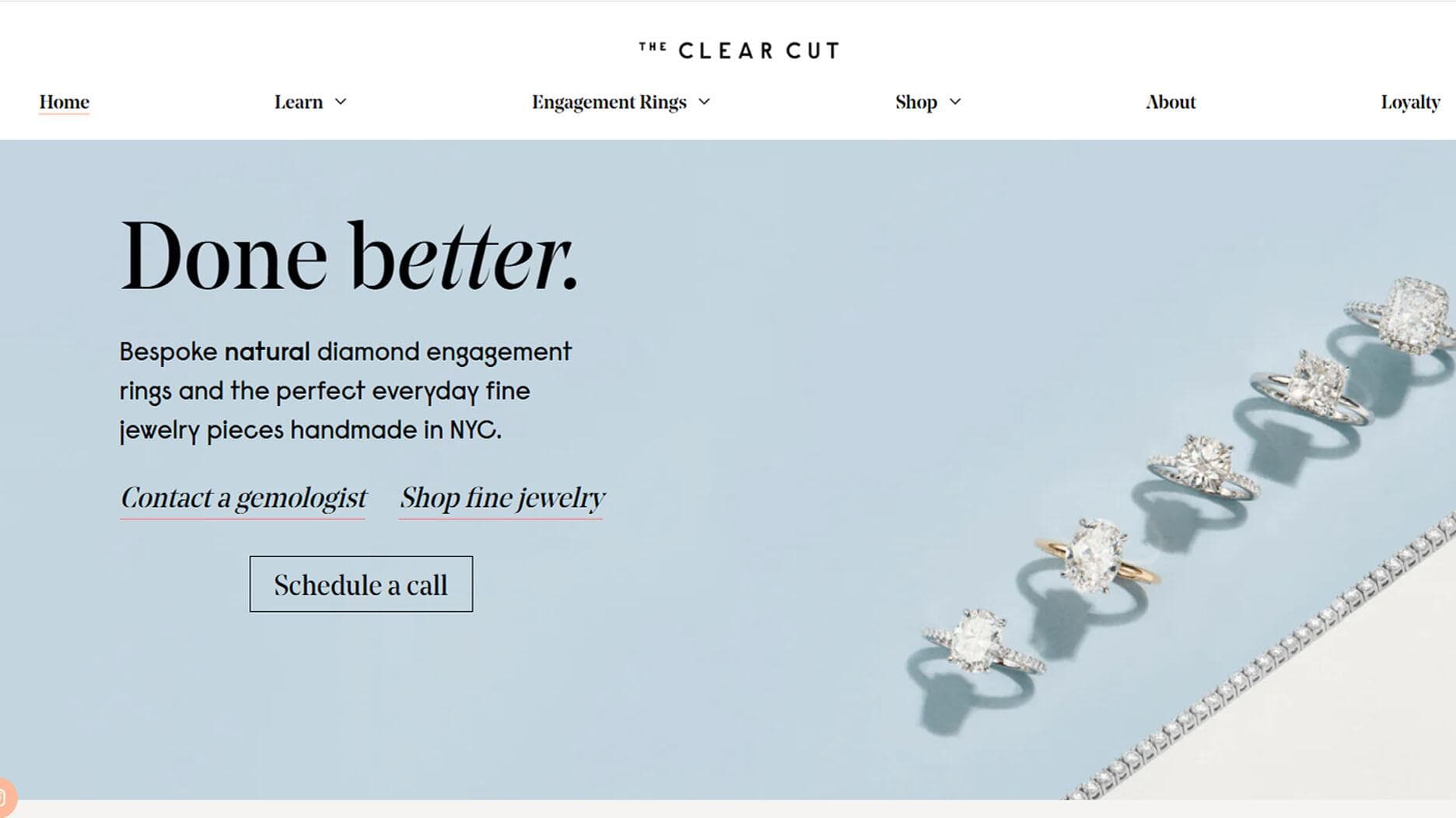
The Clear Cut brings a different kind of credibility into the mix. Founded in 2016 by Olivia Landau and Kyle Simon, it started as an educational blog before becoming a business built around custom diamond buying. Landau is a fourth-generation diamond expert and a GIA graduate gemologist, which gives the brand a concrete gemological backbone that many DTC jewelry startups never develop. The company also describes itself as the largest digitally native only natural diamond jewelry company in the United States.
That background matters because education is not a side benefit in diamond retail. It is the product. A first-time buyer needs to understand the basics that affect value and confidence: the grading report, the setting, the cut quality, the metal choice, the return policy, and whether the seller is steering toward the stones that best fit the customer or the stones the seller most wants to move. A brand that began by teaching buyers how to think about diamonds has an advantage if it can bring that same clarity into Blue Nile’s larger storefront.
What the numbers say about the market
This deal is also a clue about how expensive diamond buying has become at the top end of the market. WWD reported that 39% of Blue Nile’s bridal transactions in 2025 were $10,000 or above, while The Clear Cut says its average order value is nearly $30,000. Those figures place both businesses firmly in the high-stakes part of the category, where trust is not a luxury add-on but the basis of conversion.
That is why this is a tuck-in with strategic intent. Signet is not just buying another jewelry name. It is trying to improve trust, service, and conversion in the part of the business where shoppers are spending the most and hesitating the longest. Forbes reported that, once the deal closes, Landau, Simon, and The Clear Cut team are expected to join Blue Nile to help accelerate the luxury brand’s repositioning. In other words, the expertise is meant to travel with the brand.
What shoppers should verify before buying online
If you are shopping a diamond online, the strongest lesson from this move is that claims about trust should be testable. A polished website can say “expert-led” or “AI-powered,” but the buyer should still ask for specifics.
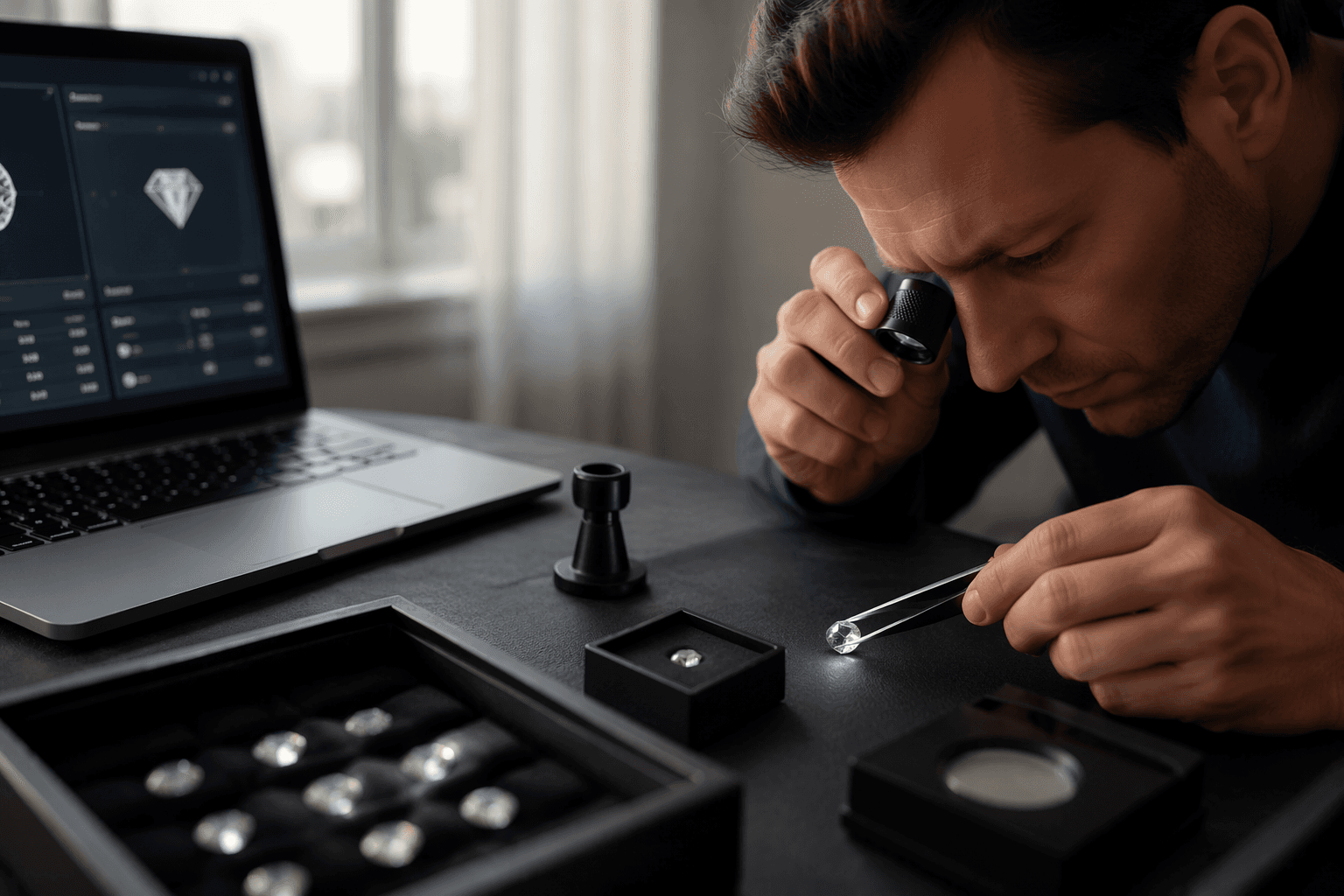
- Certification: Ask which grading laboratory issued the report. GIA remains the benchmark many buyers know, and Landau’s own GIA background is part of why The Clear Cut’s educational pitch carries weight.
- Stone origin: Confirm whether the diamond is natural or lab-grown. Blue Nile has been deprioritizing lab-grown diamonds while moving toward a more curated assortment, so shoppers should make sure the product description matches the store’s broader positioning.
- Customization: Find out how the custom process works. Does the seller offer loose stones, ring settings, or full bespoke design? The Clear Cut built its reputation on personalized diamond buying, so this is one place where the transition into a larger platform should be visible.
- Education tools: Look for comparison guides, video consultations, stone imagery, and plain-English explanations of cut, color, clarity, and carat. Education is useful only if it helps you make a decision without needing a sales pitch to decode the basics.
- Service and follow-up: Ask who answers questions after checkout. A true service model should include resizing, setting guidance, shipping security, and a clear path back to a human expert.
What the AI claim should mean in practice
The AI angle is the most modern part of the story, but it should be treated carefully. AI can be helpful if it narrows a search to stones that fit a budget, a shape preference, or a setting style. It becomes meaningful only if it improves transparency, not if it just repackages inventory in a more persuasive way.
For shoppers, the key question is not whether AI is involved. It is whether the system explains why a diamond is being recommended. Does it surface tradeoffs between cut and size? Does it flag certification details? Does it help compare settings in a way that feels tailored rather than generic? If the answer is yes, AI can function as a buyer-confidence tool. If not, it is just another buzzword attached to expensive goods.
Why the Blue Nile fold-in matters
Reports say The Clear Cut’s separate website will eventually be folded into Blue Nile after the acquisition closes, even as the brand name remains. That is a telling move. It suggests Signet wants The Clear Cut’s trust equity and bespoke service to inform a broader luxury platform rather than stand apart as a niche destination.
The best-case version of this merger is easy to see: Blue Nile gets sharper education, better handholding, and a more personal path to purchase, while The Clear Cut gains inventory depth and the scale of a larger parent company. For buyers, that could mean fewer dead ends and more confidence at the moment the decision gets serious. In a diamond market where the cost of uncertainty can be enormous, that may be the most valuable luxury of all.
This article was produced by Prism’s automated news system from verified source data, official records, and press releases, then run through automated quality and moderation checks before publishing. The system is built and supervised by the people who set the standards it runs under. Read our full AI policy.
Did this article answer your question?