The Plumb Club pushes ethical sourcing proof as shoppers demand transparency
Shoppers are asking for proof, not promises. The Plumb Club is leaning on RJC certification to make ethical sourcing legible at the case.

Why ethical sourcing is becoming a buying criterion
For everyday jewelry, the question is no longer only whether a piece wears well or layers beautifully. Buyers increasingly want to know whether the chain, ring, or bracelet in front of them can be traced to responsible practices, and they want that answer in documents, not adjectives. The Plumb Club has made that shift explicit by pushing third-party proof and Responsible Jewellery Council standards, a move that reflects a broader change in what consumers expect before they commit to a purchase.

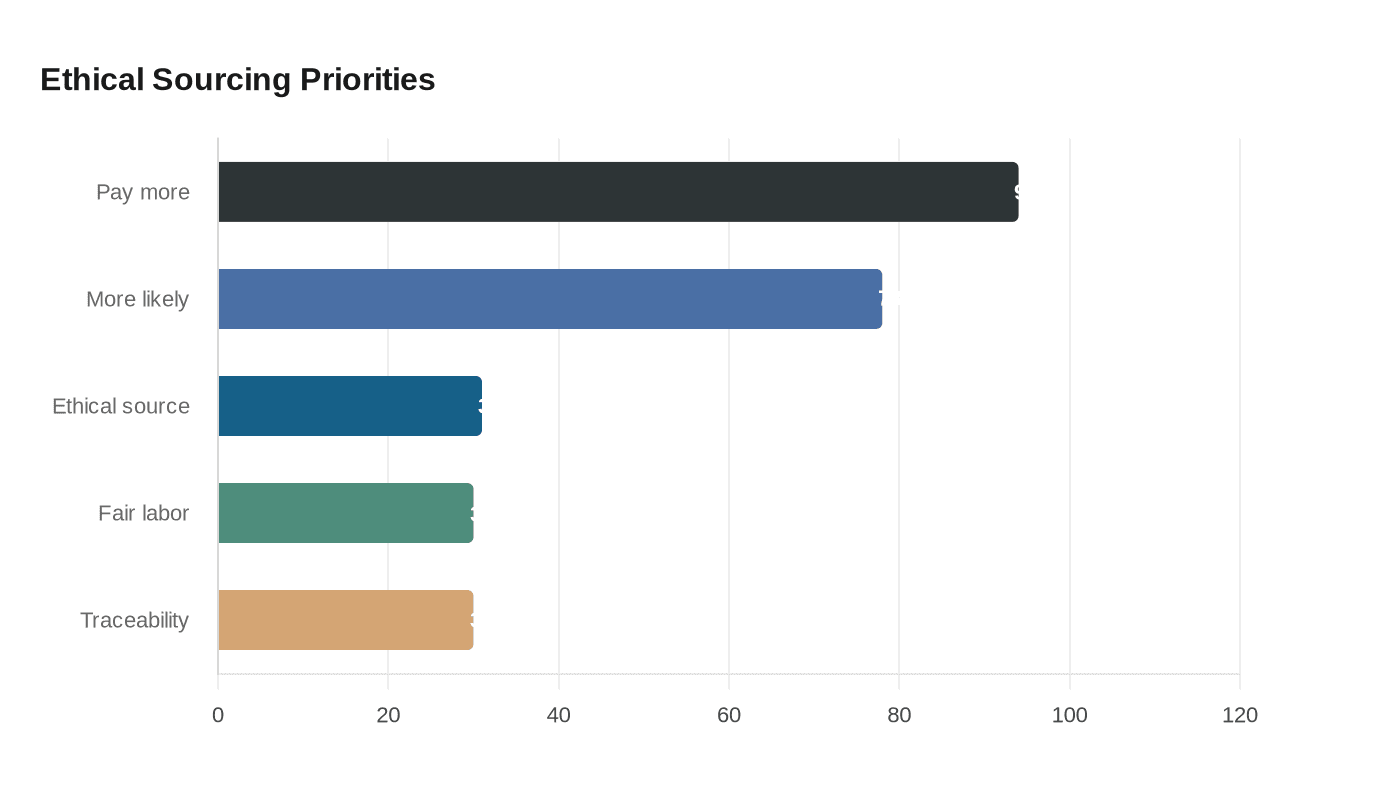
The numbers are hard to ignore. In a 2025 consumer survey of more than 2,000 U.S. respondents, 78% said they were more likely to buy if they knew more about a store’s responsible business practices. An even larger 94% said they would be willing to pay more for ethically sourced products. In the same year, Plumb Club reporting found that 31% of respondents considered ethical sourcing important, up 7 percentage points from 2023, while fair-labor practices rose to 30%, also up 7 points, and origin traceability climbed to 30%, up 8 points. That is not a niche concern. It is a purchasing filter.
What The Plumb Club is asking the industry to prove
The Plumb Club describes itself as a group of more than 50 premier diamond, jewelry and watch suppliers and manufacturers. Its most consequential stance is also the simplest to understand: it says it is the first and only RJC member organization that requires every one of its members to be certified against the RJC Code of Practices. In practical terms, that means responsibility is not left to individual brands to define as they go. It is pushed down the supply chain and documented at the member level.
That matters because shoppers are increasingly fluent in the difference between a feel-good claim and a verifiable one. A phrase like “responsibly sourced” sounds reassuring, but without certification, traceability, or independent oversight, it can remain little more than marketing language. The Plumb Club’s model tries to close that gap by making proof part of membership itself.
What RJC membership and certification mean
The Responsible Jewellery Council sits at the center of this conversation. It says it is the world’s leading sustainability standard-setting organisation for the jewelry and watch industry, founded in 2005 by 14 organisations including De Beers, Tiffany & Co. and Cartier. Today, it says it represents more than 2,000 member companies across the global watch and jewelry supply chain.
That scale matters because jewelry is built in stages, not single gestures. A clasp may be made in one place, a stone sourced in another, and finishing completed somewhere else entirely. When a standard-setting body spans the supply chain, the promise of responsible practice becomes more useful to a shopper. It is not only about a polished retail story. It is about whether the materials and manufacturing can be checked against a recognizable code.
David Bouffard, the RJC chair, has called The Plumb Club’s model of cascading RJC membership through its members “a leadership example for other trade associations.” The phrase captures the larger stakes here. The industry pressure is shifting toward verifiable proof, and associations are being judged on whether they help buyers see that proof clearly.
How to read the labels, seals and claims
When you are shopping for an everyday piece, the most useful habit is to separate a claim from the evidence behind it. A responsible-sourcing seal is only meaningful if you know who issued it, what it covers and whether the claim reaches beyond a retailer’s own internal standards. For that reason, third-party documentation matters more than broad language.
Use this checklist when a salesperson or product page says a piece is ethical, responsible or sustainably made:
- Ask whether the claim is backed by third-party certification, not only a brand promise.
- Look for RJC Code of Practices certification, especially when the seller or supplier is connected to The Plumb Club.
- Ask how far the traceability goes. Does it cover origin, labor practices, or both?
- Distinguish between material sourcing and manufacturing standards. A piece can be traceable without being fully transparent on labor, and vice versa.
- Treat vague words, such as conscious, responsible or ethical, as starting points, not proof.
- Ask for documentation that can be shown, not just described.
This is where the RJC framework becomes useful. Its certification language gives buyers a concrete benchmark in a category that has long relied on softness of phrase. A seal backed by standards is more persuasive than a poetic promise about integrity, particularly when you are buying an item meant to live on the body every day.
Why this is especially relevant for everyday jewelry
The case for proof is strongest in the everyday category because these are the pieces people wear constantly. A slim gold chain, a pair of diamond studs, a small pendant, a tennis bracelet, these are not special-occasion purchases that disappear into a box after a single night. They become part of a routine, which is exactly why shoppers want confidence in how they were made.
That durability of use changes the value equation. If a buyer is already willing to spend more, as the survey shows 94% are, then the premium is easier to justify when it buys accountability as well as craftsmanship. Responsible sourcing does not replace design or gem quality. It adds another layer of worth, one that follows the piece long after the first wear.
The Plumb Club’s position also reflects a broader retail reality: consumers are shopping more online, where tactile inspection is limited and trust depends even more heavily on clear evidence. In that environment, the strongest ethical-sourcing story is not the one with the warmest language. It is the one with the clearest paper trail.
The new standard for smart buying
For jewelry shoppers, the takeaway is straightforward. Ethical sourcing should not feel like a vague ideal reserved for high jewelry or a boutique talking point meant to flatter the conscience. It should be visible, documented and specific enough to withstand scrutiny.
The Plumb Club’s push for RJC-backed proof suggests where the market is heading: toward a place where responsible practice is no longer a decorative claim, but part of the product itself. In that future, the most credible pieces will not just shine at the wrist or throat. They will arrive with the kind of documentation that makes their beauty easier to trust.
This article was produced by Prism’s automated news system from verified source data, official records, and press releases, then run through automated quality and moderation checks before publishing. The system is built and supervised by the people who set the standards it runs under. Read our full AI policy.
Did this article answer your question?