Waterproof Jewelry Buying Guide, Best Metals for Shower, Pool, and Sea Wear
The best waterproof jewelry is less about marketing and more about metal choice, finish, and what your day actually looks like. The right piece can survive showers, sweat, and sea spray; the wrong one will dull fast.

What waterproof jewelry really means
The appeal is obvious: jewelry you can keep on through the shower, the gym, the pool, and a beach weekend without treating it like a fragile heirloom. That promise is why “waterproof” has become such a powerful shopping word, but the smarter buy is usually water-resilient jewelry built from materials and finishes that can tolerate real life, not just a glossy label. Even the best metals still lose some shine over time, and chemicals, salt, soap, and chlorine can shorten the life of a finish long before a clasp gives out.
That distinction matters because daily exposure is harsher than most people realize. Tiffany says dust, pollution, and routine wear can cloud gemstones and dull gold and platinum surfaces, while the Gemological Institute of America warns that chemicals can damage or discolor precious metals including gold, silver, and platinum. In other words, waterproof jewelry is not jewelry that never ages. It is jewelry that ages more gracefully when it is worn where life actually happens.
The metals that hold up best
For most shoppers, solid gold remains the most dependable everyday luxury because it balances beauty with resistance. Mejuri describes 14k gold as built for everyday durability and superior resilience compared with 18k and 22k gold, and that distinction is worth remembering if you plan to leave a piece on through handwashing, humidity, or occasional dips in the ocean. The higher the gold content, the softer the metal generally becomes, which is why 14k often feels like the sweet spot for wearers who want precious metal without babying it.
Platinum sits in the same conversation, especially for readers who want a dense, substantial feel and a metal that can take regular wear. Tiffany’s care guidance still notes that gold and platinum can dull with time, so even the most robust precious metals benefit from periodic professional maintenance. The point is not that platinum is indestructible. It is that, among fine-jewelry metals, it is one of the best choices when your life includes constant contact with skin, water, and the occasional pool deck.
Where stainless steel and PVD earn their place
If your priority is low maintenance rather than traditional precious-metal value, stainless steel deserves serious attention. Contemporary brands increasingly use 316L stainless steel as a base because it is suited to everyday wear, and Missoma explicitly finishes some of its 18ct gold-plated jewelry with ultra-durable PVD plating on 316L stainless steel for everyday, water-resistant wear. That construction is important: the steel provides structure, while the PVD finish is designed to help the surface withstand more of what daily life throws at it.
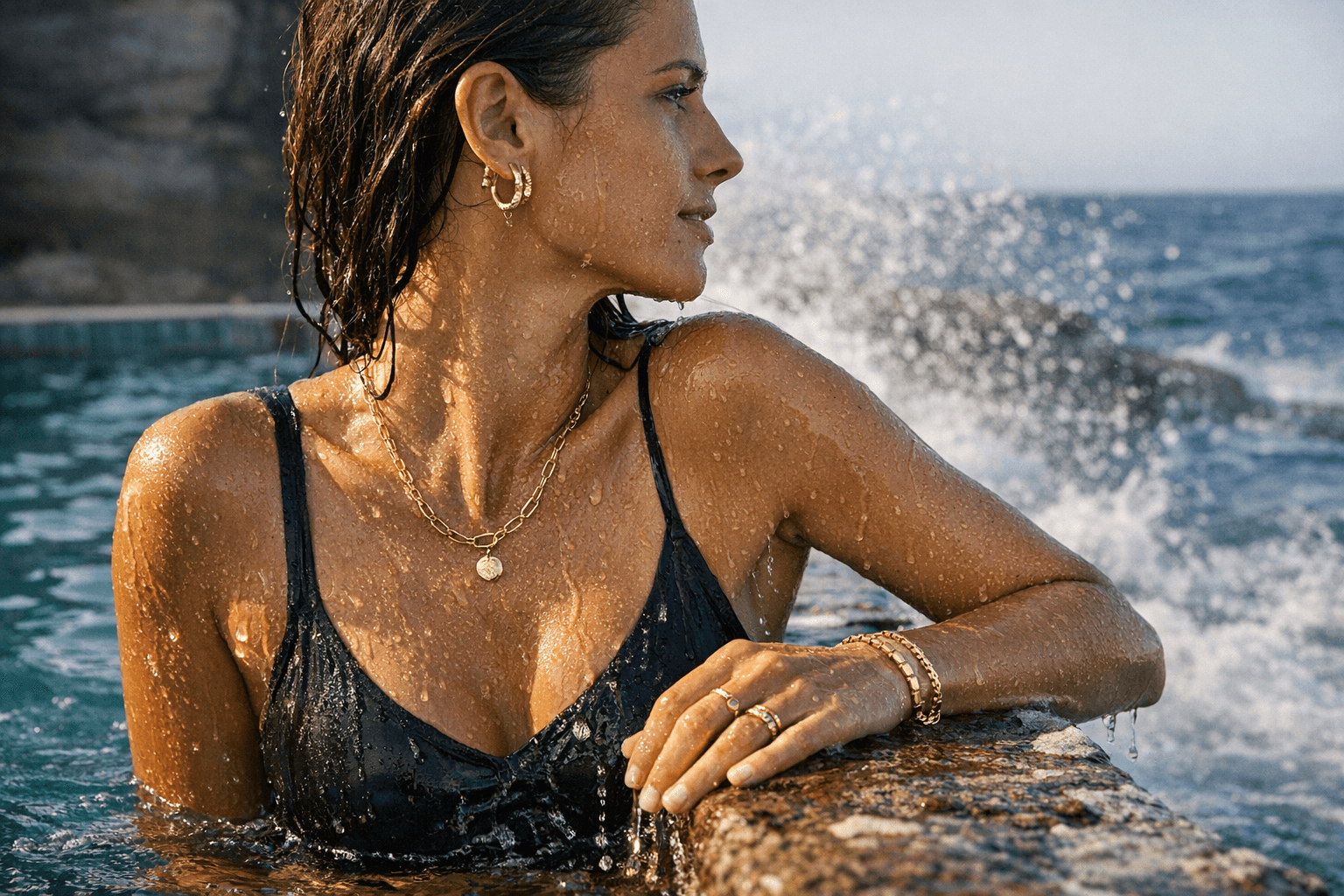
For readers who want jewelry they can wear on vacation without a second thought, this is where the category gets practical. Forbes reported in April 2026 that Louise Carter’s brand bonds 14k gold via PVD to a stainless steel base for greater resilience to water, sweat, chlorine, and everyday wear. That kind of construction speaks directly to the person who wants the look of gold with fewer maintenance rituals, especially if the piece is going to see a lot of sunscreen, sea spray, and wet towels.
Gold plating, vermeil, and the limits of coating
Plating can be a smart entry point, but it is not the same as solid gold. Mejuri notes that gold vermeil uses a thick layer of solid gold over sterling silver, while Missoma leans on PVD coating over stainless steel for more water resistance than traditional plating usually offers. The difference is not cosmetic trivia. It determines how long a piece will keep its color, how often you can wear it in wet conditions, and whether it is better suited to a sink-side lifestyle or true all-day use.
That is why coated jewelry should be read carefully. If a brand uses terms like gold-plated, gold vermeil, or PVD-coated, the construction tells you more than the finish alone. PVD has a stronger durability story than many conventional coatings, but it is still smart to check whether the base is stainless steel, sterling silver, or something more vulnerable. A beautiful coating over a soft, moisture-sensitive base may look polished on day one and tired by season’s end.
What to avoid in the shower, pool, and sea
Sterling silver is the clearest cautionary tale. Tiffany says it tarnishes rapidly when exposed to salty air and swimming pool chlorine, which makes it a poor choice for frequent beach days or lap sessions unless you are committed to cleaning it often. The same goes for chlorine bleach, which Tiffany warns can quickly cause gold to discolor and possibly disintegrate. That is a startling reminder that “waterproof” is never a blanket claim, because the problem is often not water itself but what is dissolved in it.
Delicate stones need even more restraint. Catbird advises avoiding soap, water, and household cleaners for opal jewelry, and that guidance reflects the stone’s sensitivity rather than any flaw in the brand. Opals have a personality that rewards care, not punishment. If your jewelry wardrobe includes opal, enamel, or other fragile finishes, it belongs in the category of pieces you remove before the pool rather than the kind you forget about until vacation ends.
Care still matters, even for durable pieces
A true everyday jewelry collection still needs maintenance, even when the materials are chosen wisely. Tiffany recommends periodic professional maintenance, and that advice applies especially when pieces have been exposed to regular wear, sunscreen, salt, or household cleaning products. The small rituals matter because they protect both the metal and the stones, which can look dulled long before they are actually damaged.
- Rinse jewelry after heavy exposure to saltwater, chlorine, or soap.
- Keep fine pieces away from household bleach and harsh cleaners.
- Remove opals and similarly delicate stones before swimming or scrubbing.
- Store jewelry separately so surfaces do not rub against each other.
Simple habits go a long way:
Catbird’s two-year warranty from the date of purchase also matters as a signal of confidence, especially in a category where wear and tear is part of the proposition. A warranty does not make jewelry waterproof, but it does help define how seriously a brand expects its pieces to handle everyday life.
How to choose the right piece for your lifestyle
If your jewelry needs are light and your definition of waterproof means shower-safe and sweat-friendly, 14k gold is the safest fine-jewelry bet. If you want more resilience with less worry, look to 316L stainless steel with PVD coating, especially in pieces designed for daily wear and travel. If you are building a collection around frequent swimming, beach time, or tropical heat, prioritize materials and finishes that are explicitly described as water-resistant, then avoid sterling silver, opals, and bleach-heavy environments.
The best waterproof jewelry is not the loudest claim on the box. It is the piece that keeps its shape, color, and polish after real use, from the first morning shower to the last salt-crusted evening of summer.
This article was produced by Prism’s automated news system from verified source data, official records, and press releases, then run through automated quality and moderation checks before publishing. The system is built and supervised by the people who set the standards it runs under. Read our full AI policy.
Did this article answer your question?