Ancient Irish Gold Lunala, Stolen in 2009, Rescued From Dublin Dumpster
A 4,000-year-old Irish gold lunala, stolen in a 2009 burglary, was pulled from a Dublin dumpster just hours before collection and now rests in the National Museum of Ireland.

A crescent-shaped gold necklace worn by the early kings of Ireland spent roughly 60 years locked in a chemist's shop safe in County Roscommon before two thieves changed its story forever. The delicate lunala and two accompanying gold discs, dating from around 2300 to 1800 BC, were stolen in a February 2009 burglary when the thieves grabbed the entire safe from the Strokestown shop of Patrick Sheehan. Curators from the National Museum of Ireland's Irish Antiquities Division, working alongside police, traced the jewelry and accompanying papers to a dumpster in Dublin and pulled them from the rubbish just hours before collection.
The lunala's journey to that dumpster began quietly enough. Farmer Hubert Lannon first unearthed it in March 1945 while cutting turf in a bog at Coggalbeg, County Roscommon. He kept it at home for two years before passing it to Sheehan, the local chemist in nearby Strokestown, who placed the 4,000-year-old piece in his shop safe. There it remained, largely undisturbed, for more than six decades.
When the safe was stolen in February 2009, its contents, including a necklace that predated the Roman Empire by more than a thousand years, were apparently discarded without the thieves recognizing what they had. The near-disposal of an object once worn by Irish Bronze Age royalty was averted by the swift collaboration between museum specialists and law enforcement. In March 2010, two men pleaded guilty to the burglary and received three-year suspended sentences.
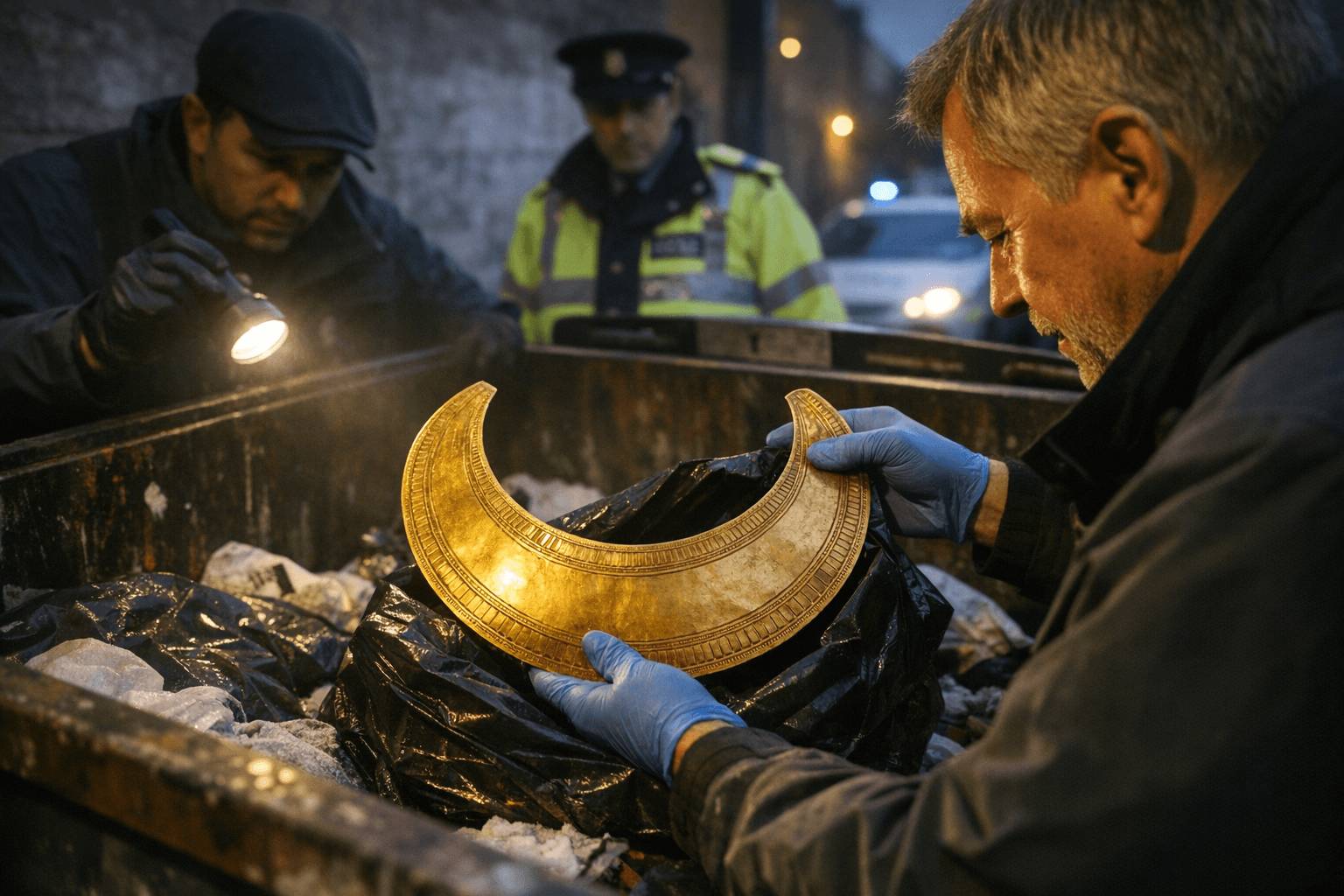
The recovered lunala and both gold discs have since entered the permanent collections of the National Museum of Ireland, where they are now among the institution's rare Bronze Age holdings. The form itself, a lunala, takes its name from the Latin for moon: a broad, hammered crescent of gold sheet, typically worn as a collar, that represents some of the finest metalwork produced in Early Bronze Age Europe. That this particular example spent its modern life in a pharmacy safe, only to surface in a Dublin dumpster before reaching a museum vitrine, gives the object a custodial history as improbable as anything from the bog where Lannon first turned it over in his hands.
This article was produced by Prism’s automated news system from verified source data, official records, and press releases, then run through automated quality and moderation checks before publishing. The system is built and supervised by the people who set the standards it runs under. Read our full AI policy.
Did this article answer your question?