CBP Seizes 1,588 Counterfeit Pieces Bearing Cartier, Tiffany, Gucci Trademarks
CBP seized 1,588 pieces of counterfeit Cartier, Tiffany, and Gucci jewelry in Louisville, worth $9.2M at retail, all shipped from Hong Kong to a New York home.
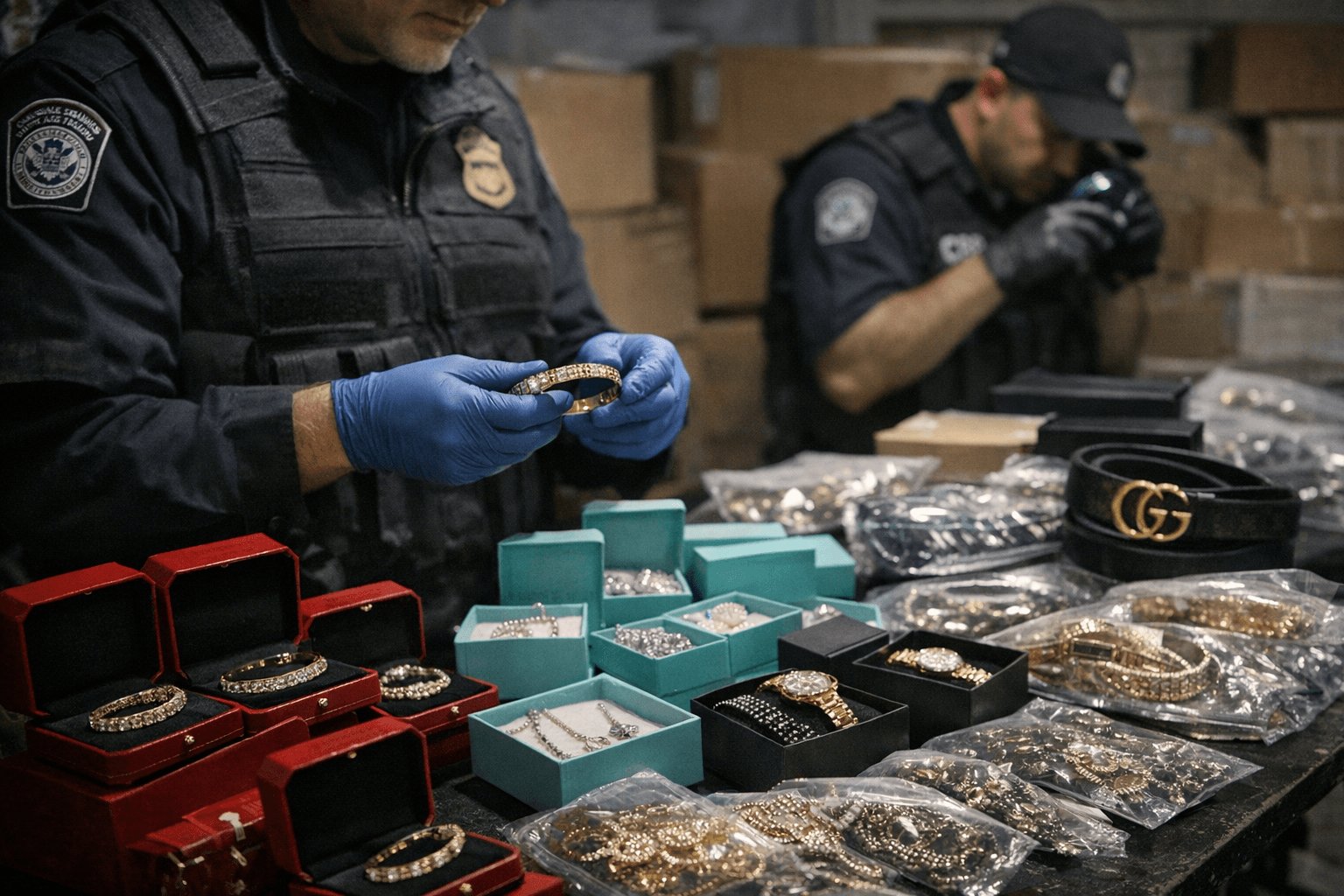
Nine-point-two million dollars' worth of jewelry, none of it real, was stopped at the Louisville port of entry on April 3, when U.S. Customs and Border Protection officers detained two express-consignment shipments containing 1,588 pieces of counterfeit goods bearing some of the most coveted names in fine jewelry.
The haul, which arrived from Hong Kong bound for a private residence in New York, broke down as 691 pairs of earrings, 522 bracelets, 197 necklaces, and 178 rings. Every single piece carried the trademark of a house that has earned its name through decades of craft and material integrity: Cartier, Chanel, Christian Dior, Fendi, Gucci, Louis Vuitton, Tiffany, Van Cleef and Arpels, and Yves Saint Laurent.
CBP officers submitted documentation and photographs to the agency's trade experts at the Consumer Products and Mass Merchandising Center of Excellence and Expertise. Those experts coordinated directly with the trademark holders, who confirmed the jewelry was counterfeit and subject to seizure under CBP's statutory authorities. The $9.2 million figure represents what the goods would have commanded at retail had they been genuine, a number that makes the scale of the operation immediately legible.
The Louisville port has become a consistent flashpoint for luxury counterfeit interceptions, in part because it processes a high volume of express-consignment shipments, the same fast-delivery networks that power legitimate e-commerce. CBP notes that the rapid growth of online retail has opened more entry points for counterfeit and pirated goods, allowing sellers to list fake merchandise alongside authentic goods with little visible difference at point of sale.
The broader stakes are staggering: American consumers spend more than $100 billion annually on intellectual-property-infringing goods, and the U.S. accounts for roughly 20 percent of the counterfeits illegally sold worldwide. In fiscal year 2025 alone, CBP seized more than 78 million counterfeit items with a combined estimated retail value exceeding $7.3 billion, figures that put a single 1,588-piece haul in sharp relief but also underscore how much slips through.
For buyers who shop online marketplaces or social-platform storefronts, the lesson is direct: a Cartier Love bracelet priced far below retail, arriving in a poly mailer from an overseas address, is not a deal. It is a counterfeit. Beyond the financial loss, CBP explicitly flags consumer-safety concerns, pieces manufactured outside any quality or materials standard, with no accountability for the alloys pressed against your skin.
The agency urges purchasing exclusively from authorized retailers and encourages reporting suspected violations through CBP's anonymous e-Allegation system for illegal imports.
Know something we missed? Have a correction or additional information?
Submit a Tip