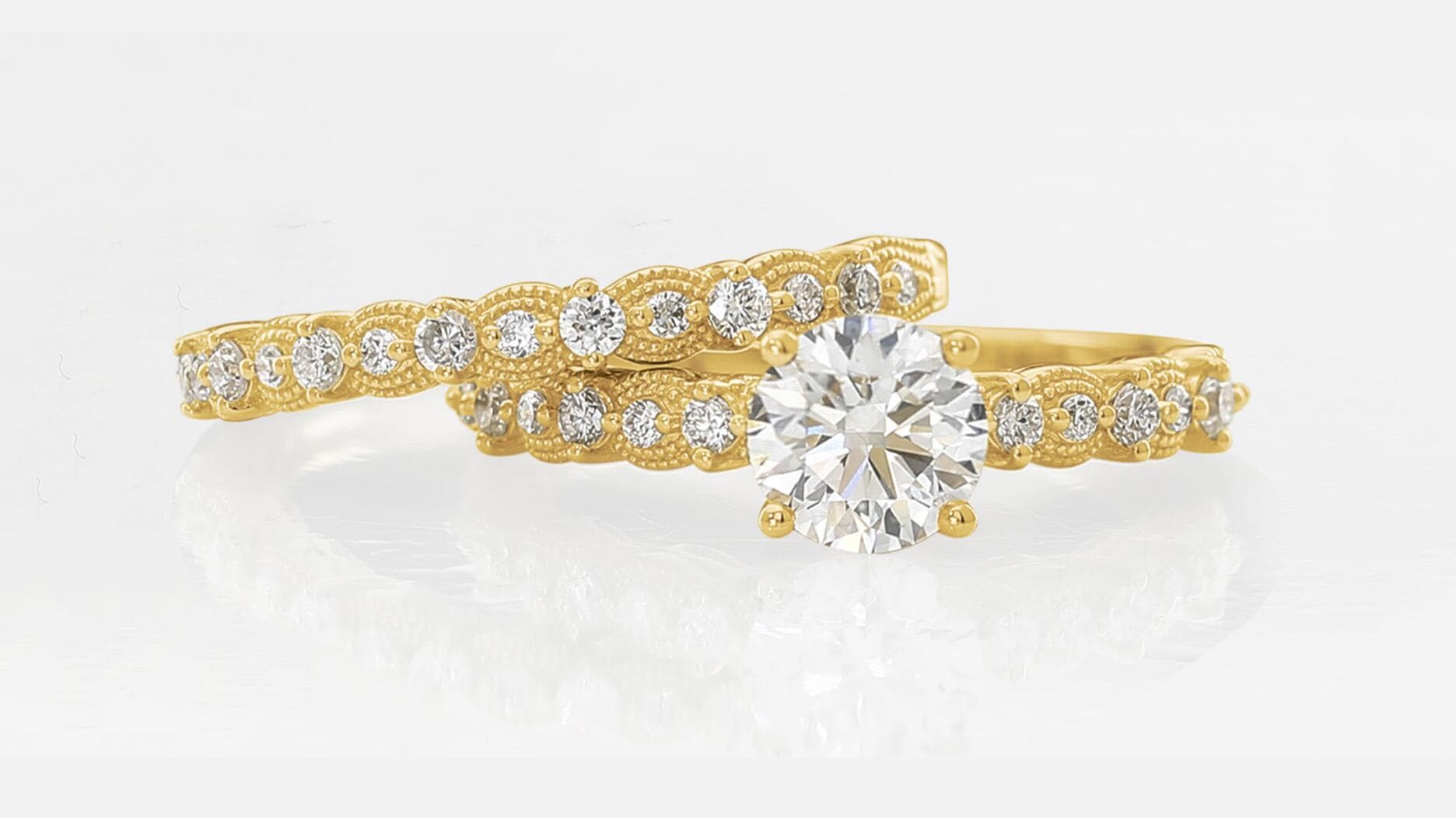
China's Gold Futures Crash Fuels Jewelry Counter Shopping Surge
Shanghai gold futures shed more than 8% in five sessions last week, yet jewelry counters reported brisk traffic in 3D hard-gold and classic designs.
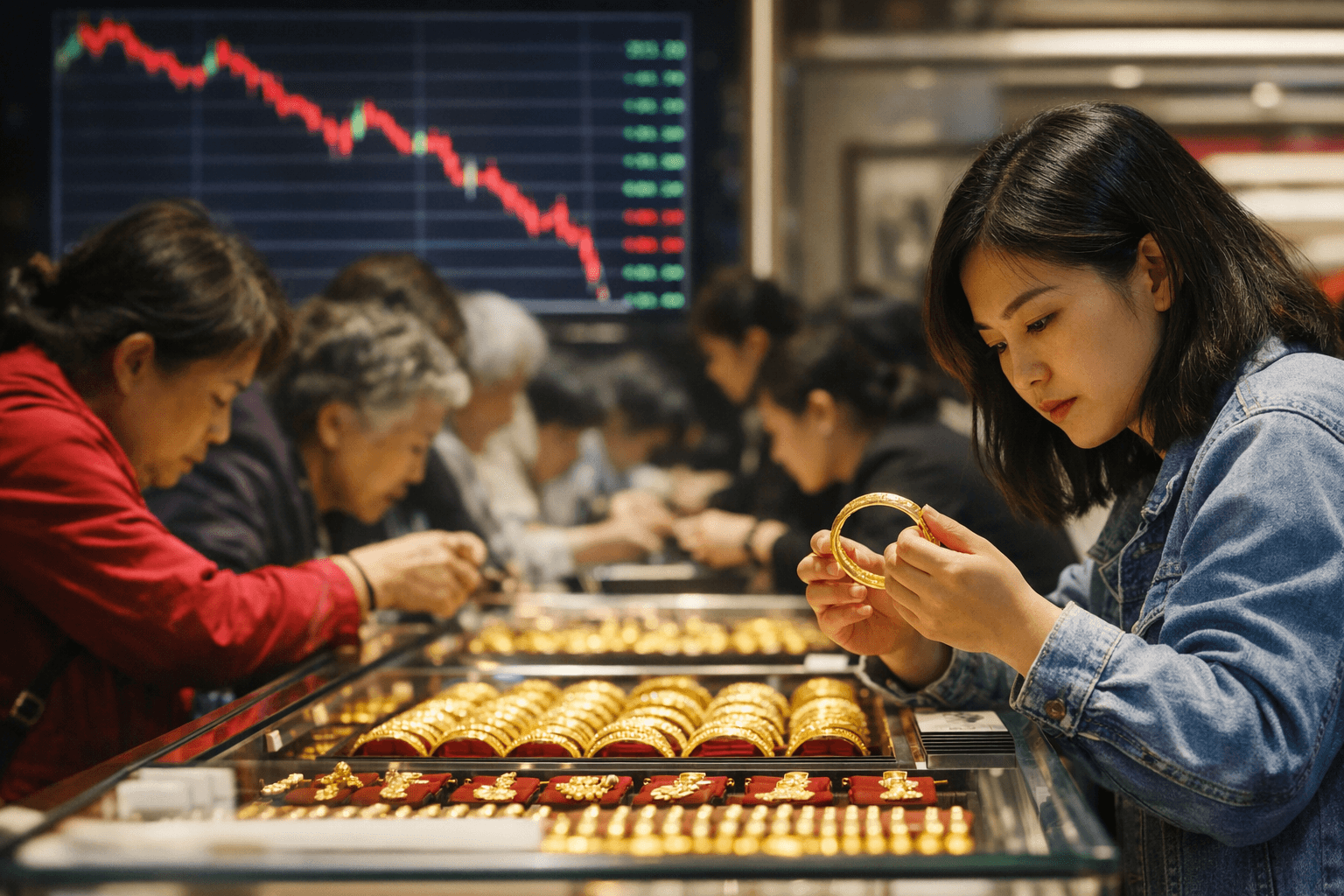
While Shanghai gold futures were hemorrhaging value at a pace market participants described as the sharpest weekly fall in China's domestic gold market in roughly 40 years, shoppers were crowding the jewelry counter. The juxtaposition, striking in its clarity, defined the week ending March 21: futures collapsing, retail humming.
The main contract of Shanghai gold futures fell for five straight sessions, closing the Friday night session around ¥1,016.12 per gram, a weekly drop of more than 8% that erased much of this year's gains. The descent was not gradual. Prices sliced through technical thresholds at ¥1,050 and ¥1,030 in quick succession, confirming what analysts characterize as a decisive downward break rather than a routine correction.
The move did not originate in Shanghai. Internationally, gold futures were hit by a confluence of pressures: a short-term unwinding of safe-haven trades, an acute liquidity squeeze across global markets, and a hawkish shift in expectations around future monetary policy. COMEX gold posted a weekly loss of more than 11%, the steepest since the early 1980s, underscoring that what unfolded in China's domestic market was an amplified local expression of a global repricing.
Against that futures rout, retail jewelry counters in China, particularly those stocked with traditional 3D hard-gold and classic designs, saw brisk consumer traffic. The behavior reflects a pattern familiar to anyone who has watched how Chinese consumers relate to physical gold: paper-gold weakness can translate into physical opportunity, especially when the product carries the dense, sculptural texture of 3D hard-gold craftsmanship that has become a dominant aesthetic in domestic fine jewelry. Unlike gold-plated or gold-filled pieces, 3D hard-gold is solid 24-karat material shaped through electroforming techniques, giving it a lighter feel with a richly worked surface, a format that resonates with both gift-giving traditions and everyday accumulation.
The broader context for this episode is structural, not merely cyclical. Gold, the dollar, and high-grade sovereign bonds have long competed for the role of ultimate refuge; as cross-border capital flows grow more sensitive to policy surprises and liquidity squeezes, none is guaranteed a smooth ascent. Market participants framed last week's repricing as part of the re-rating of traditional safe-haven assets in an era of overlapping shocks, geopolitical, financial, and technological, a reassessment that has been building pressure beneath the surface of gold's extraordinary 2025 and early-2026 run.
For Chinese consumers standing at a jewelry counter, however, macro taxonomy matters less than the moment. A price drop of that magnitude, whether in futures or reflected eventually at retail, is historically the kind of signal that brings a certain buyer off the sidelines and into a purchase they had already been considering.
This article was produced by Prism’s automated news system from verified source data, official records, and press releases, then run through automated quality and moderation checks before publishing. The system is built and supervised by the people who set the standards it runs under. Read our full AI policy.
Did this article answer your question?