Georgian-Set Diamonds Return, Candlelit Gold Settings Win Celebrity Favor
Candlelit Georgian-set diamonds are back, prized for hand-built collets, rose cuts and a softer glow that feels intimate rather than overpolished.
Why Georgian-set diamonds feel newly right now
The allure is not brilliance in the modern sense. Georgian-set diamonds glow, they do not blaze, and that softer light is exactly what makes them feel so current. Set into gold collets and often backed in silver or foil, these stones were designed for candlelight, which gives them a moody, almost skin-close radiance that reads as jewelry, not spectacle.
That distinction matters. Modern high-sparkle settings are built to maximize fire and brightness under every kind of light. Georgian pieces do something subtler: they catch light in fragments, then hold it close. The result feels handcrafted and intimate, with enough romance to read as antique and enough restraint to avoid costume territory.
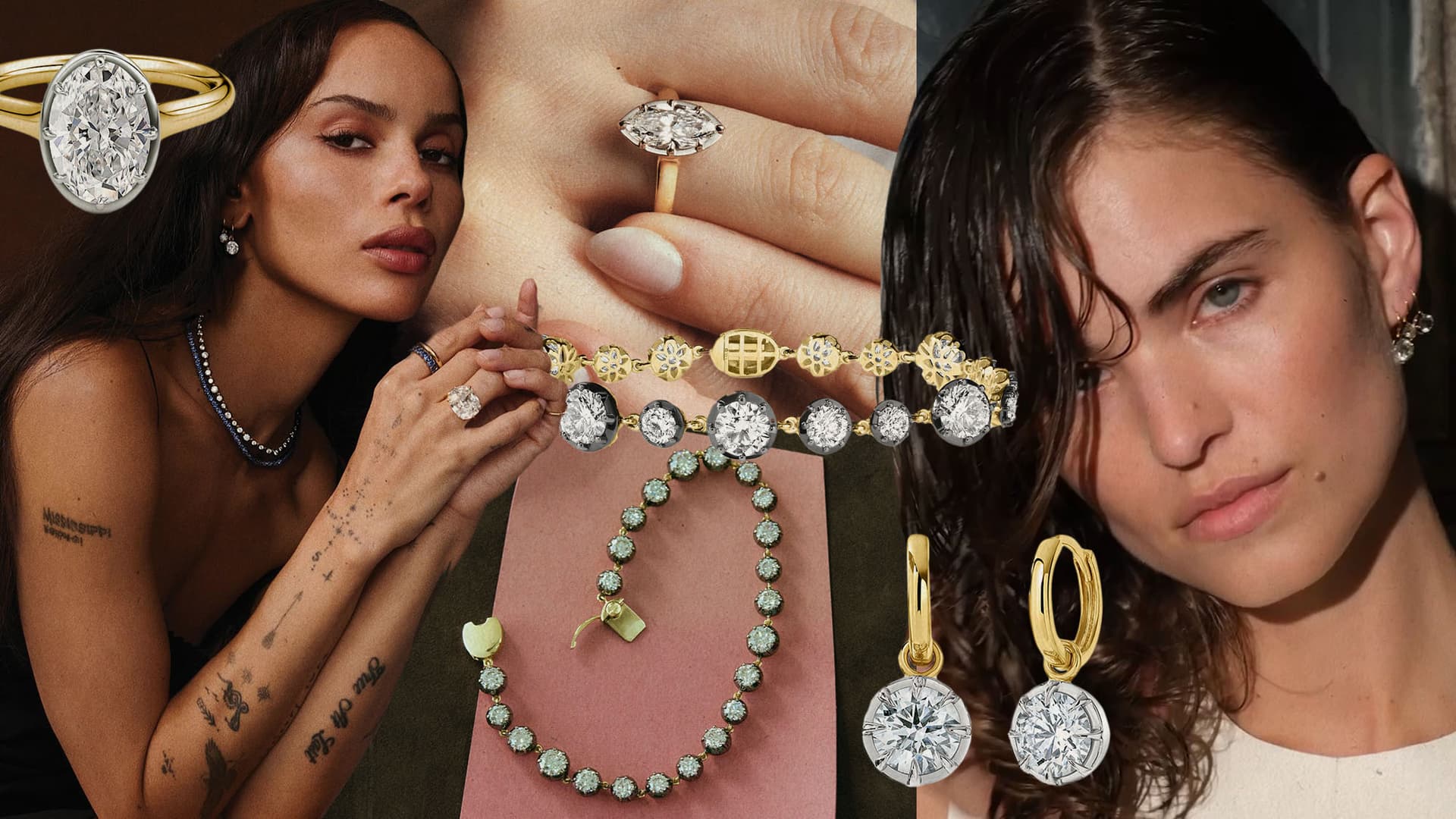
Celebrity visibility has only sharpened the appetite. Zendaya and Zoë Kravitz have pushed antique-looking diamond jewelry into the style conversation, and their influence is easy to understand. The look suggests connoisseurship rather than excess. It also fits a broader 2026 shift toward individuality, heritage craftsmanship and rings with visible history, especially when the stones themselves are antique-cut.
What defines a true Georgian jewel
The Georgian period in jewelry generally runs from 1714 to 1837, and every detail of the construction reflects a world before machine manufacturing. These pieces were entirely hand-crafted, which is why surviving examples often feel slightly irregular in the best possible way. Edges are not mechanically perfect, settings can be delicately idiosyncratic, and the whole object carries the evidence of a maker’s hand.
Three hallmarks define the style. The first is the closed-back collet setting, in which the stone is held in a rim or cup rather than lifted high on prongs. The second is the frequent use of silver-topped gold, a practical and visually clever pairing that helped brighten the appearance of diamonds. The third is the stone itself: rose-cut and old mine-cut diamonds are the signature cuts most closely associated with the period.
There is also a long paper trail to match the romance. A George III rose-cut diamond flowerhead brooch from around 1760 appears in a closed-back silver setting, a reminder that these techniques were already established in the 18th century. That kind of object is the opposite of a trend costume piece. It is proof that the look has a real historical grammar.
Why the candlelit effect reads as luxury now
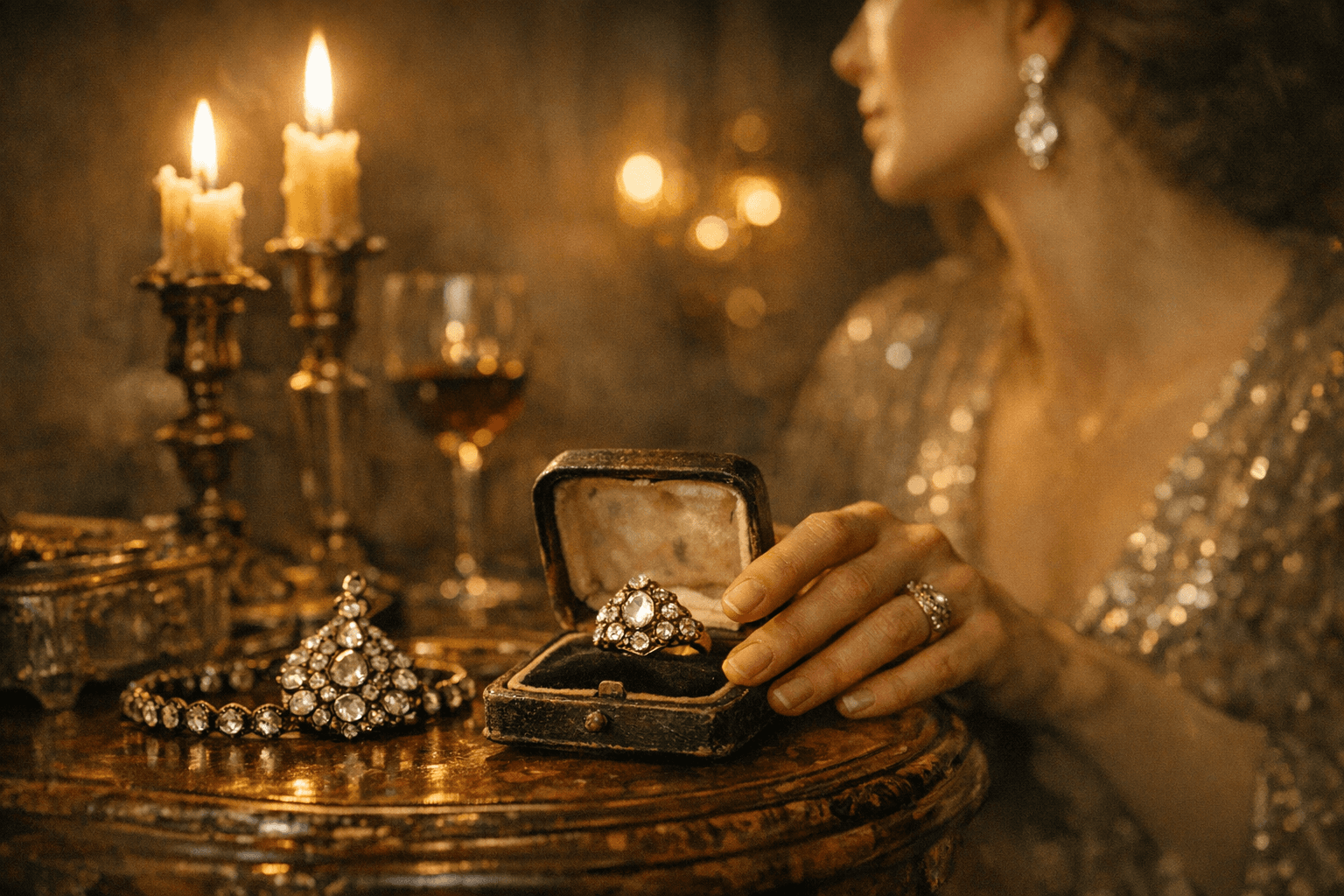
The Georgian aesthetic was engineered for low light, which is part of its modern charm. The Victoria and Albert Museum has noted that advances in cutting techniques increased gemstone sparkle in candlelight, and Georgian jewelers understood that principle intuitively long before electric light changed the game. A rose-cut diamond does not behave like a modern brilliant-cut stone, but that is the point. It gives off a softer shimmer, a quieter pulse of light, and that restraint can feel far more luxurious than overt dazzle.
This is also why the style looks so good against warm gold. The metal frames the stone rather than competing with it. In a high-sparkle contemporary setting, the diamond often dominates the eye. In a Georgian collet, the setting is part of the composition, and the whole jewel reads as an object with atmosphere, not just carat weight.
How to tell an antique from a revival piece
If you want the real thing, the construction tells the story first. Look for closed-back settings, where the underside of the stone is not fully open to the light. Expect rose cuts or old mine cuts rather than modern round brilliants. Expect hand work, too: slightly uneven collets, silver-topped gold, and a scale that feels thoughtful rather than mass-produced.
Revival pieces can be beautiful, but they borrow the language rather than the age. Many contemporary jewelers now echo Georgian silhouettes with antique-inspired goldwork and vintage-style stones. That can be an excellent way to get the look with better wearability, but it is not the same as an 18th-century jewel. If a piece is presented as antique, the construction should match the period vocabulary closely enough to justify that claim.
- Closed-back collets and silver-topped gold point toward the Georgian idiom.
- Rose-cut and old mine-cut diamonds are more convincing than modern brilliant cuts in this style.
- Perfectly uniform finishes, while attractive, often suggest a modern reinterpretation.
- Strong provenance, period-appropriate wear, and a coherent mount usually support authenticity.
A few practical cues help separate the two:
What to know before you buy
The Georgian look is seductive, but it asks for discernment. Antique pieces can be more fragile than modern jewelry because the settings were made for a different era of wear, and closed-back construction can complicate cleaning and repair. That is not a reason to avoid them. It is a reason to buy with your eyes open.
Repair complexity is one of the hidden costs of antique jewelry. A closed-back mount is harder to access, and a hand-made setting may require a specialist who understands period construction. If you are buying a Georgian original, look at the integrity of the collet, the condition of the metal, and whether any replacement parts interrupt the piece’s balance. A jewel that has survived for centuries can still need a great deal of care.
Price premiums make sense here, but only when the construction earns them. True Georgian pieces command more because they are scarce, hand-made and historically significant. Antique diamonds also sit squarely in the 2026 market mood, where vintage and antique stones are driving interest across engagement rings and collected jewels alike. The premium should reflect age, craftsmanship, rarity and condition, not just the romance of the description.
Why the style keeps coming back
The reason Georgian-set diamonds keep resurfacing is that they offer something modern luxury often misses: intimacy. They do not scream for attention. They glow, and that glow feels personal. In an era that prizes provenance, tactile craftsmanship and pieces with a past, that is a powerful proposition.
It also explains why the look feels especially persuasive on celebrities like Zendaya and Zoë Kravitz. Their jewelry never reads as literal period dress; it reads as deliberate taste. That is the sweet spot for Georgian-set diamonds now, whether the piece is a true antique or a carefully made homage. The candlelit setting is not simply a historical curiosity. It is a rare design language that can make a diamond feel both older and more modern at once.
This article was produced by Prism’s automated news system from verified source data, official records, and press releases, then run through automated quality and moderation checks before publishing. The system is built and supervised by the people who set the standards it runs under. Read our full AI policy.
Did this article answer your question?