Gold Bar Scams Are Getting Worse. Here's What the Latest Arrests Reveal.
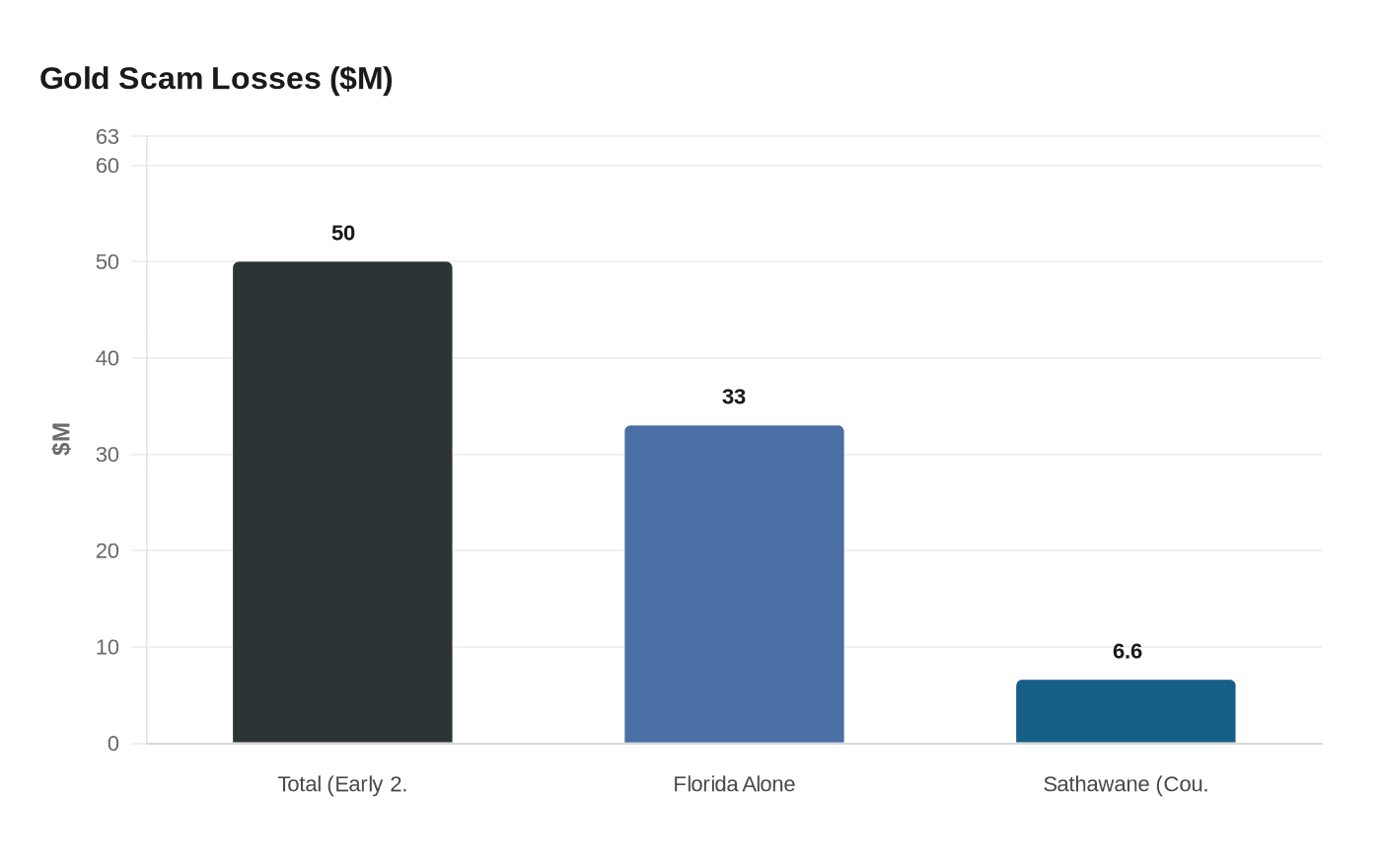
Organized fraud networks stole more than $50 million from over 600 seniors in early 2026, with the stolen gold melted and reintroduced into retail jewelry stores within days of each pickup.

The phone call came first, then came the courier. By the time the gold left the victim's hands, it had been melted, reshaped into bracelets, and moved out of the country within days. This is the production line of a fraud machine that, in early 2026, stripped more than $50 million from over 600 victims through wire transfers, cryptocurrency, and gold bar schemes, according to federal and state court filings.
The enforcement response has been swift and specific. On January 29, 2026, the Collin County Sheriff's Office executed simultaneous tactical raids on Tilak Jewelers in Irving and Saima Jewelers in Frisco, with CBS News Texas present for the operations, during which millions of dollars in cash and gold were seized. Investigators allege Tilak Jewelers purchased stolen gold from couriers and transferred it to Saima Jewelers to be melted down. Court documents further noted that some of the gold was reshaped into bracelets and taken out of the country. By March 2, 2026, the investigation had widened to include Malani Jewelers in Richardson as a third store linked to the operation. Collin County Sheriff Jim Skinner was direct: "You call Collin County and you go to defraud our citizens, we're going to come get you, that's just the bottom line."
The architecture of these operations is precise. Fraudsters contact victims, often seniors, via email or text message, posing as law enforcement officials and claiming the victim's bank account has been hacked or that they are in legal trouble. Victims are then instructed to withdraw their savings, purchase gold bars, and hand them over to couriers. The couriers, some recruited through online job listings and paid per delivery, open the packages on the spot to photograph the contents for their handlers before shuttling the proceeds to co-conspirators at gas stations and fast-food restaurants. In internal communications seized by investigators, participants referred to their own role with the term "gold rusher."
The January 26, 2026 sentencing of Atharva Shailesh Sathawane offered the clearest window yet into how that courier tier operates. U.S. Attorney John P. Heekin of the Northern District of Florida announced Sathawane's 18-year federal prison sentence after a jury convicted him of conspiracy to commit wire fraud and conspiracy to commit money laundering. Sathawane personally took and laundered $6,615,484.66 in cash and gold from elderly victims. FBI Special Agent-in-Charge Jason Carley put the broader pattern in stark terms, noting that "in Florida alone, victims lost more than 33 million dollars last year just to gold bar scams," before adding: "If anyone tells you to buy gold and hand it over to a stranger, it is not an investment, it is a scam."
The fraud has direct implications for anyone buying physical gold, whether bars or jewelry. Because seized gold is frequently melted and re-entered into the retail supply chain, provenance matters more than appearance. Protection starts with documentation: any legitimate gold bar from a recognized mint carries a sealed assay card listing a unique serial number, declared fineness (typically .9999 for 24-karat), weight, and issuing mint name. Cross-referencing that serial against the mint's registry takes minutes. A standard one-troy-ounce bar weighs approximately 31.1 grams and should match the mint's published dimensions exactly; precision digital calipers and a jeweler's scale can expose a tungsten-core counterfeit that a hallmark check alone will miss. Limit purchases to dealers accredited by the London Bullion Market Association's Good Delivery List or to authorized national mint distributors.
When documentation falls short, take the piece to a jeweler for XRF testing, a non-destructive X-ray fluorescence analysis that identifies elemental composition in minutes and can detect when a thin gold coating sits over a different substrate such as copper or tungsten. An acid test is faster and cheaper, and it remains a reliable first screen for surface karat on jewelry sold at pop-ups and online marketplaces where provenance is thin. If a seller resists either test, that resistance is the answer.
Know something we missed? Have a correction or additional information?
Submit a Tip