Gold beads and amulets unearthed in Aegina Middle Bronze Age cache
Eight disc pendants, seven biconical beads and gold leaf emerged from Aegina, echoing the prehistoric pendants of the Aegina Treasure.
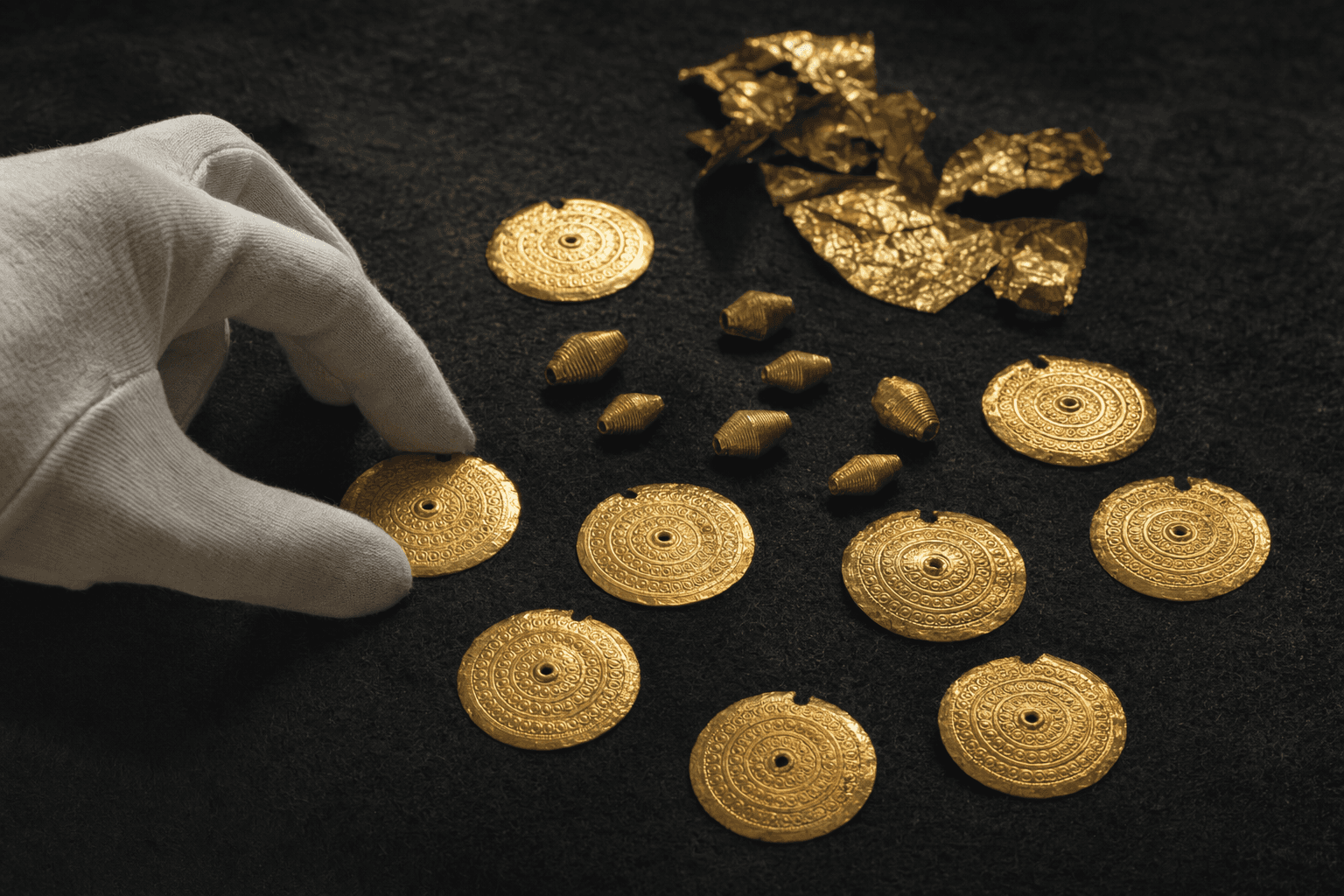
Aegina’s latest gold find looks instantly legible to a modern eye: eight two-sided disc pendants, a single gold disc, seven biconical beads and sheets of gold leaf, all small enough to read like the blueprint for a necklace that still feels current. The 32-item cache surfaced at Kolona, on the island’s northwestern side near the modern harbor and town, inside the ruins of a large stone-built structure close to a wall that once guarded the settlement’s inner zone.
The Greek Ministry of Culture announced the discovery after the 2025 excavation season, and the date range places the pieces in the first half of the second millennium BCE. Archaeologists think the objects may have formed a necklace or pendant assemblage, a composition that would have moved with the body rather than sitting static in a tomb or hoard. That matters because the design language is familiar: circular pendants still anchor charm necklaces today, while biconical beads survive in everything from gold bead strands to carefully spaced layering pieces. The seven round carnelian beads add the same contrast contemporary jewelers still use when they want warmth against yellow gold.
The excavation is being led by the University of Salzburg, working through the Austrian Archaeological Institute in Athens, under Professor Alexander Sokolicek and supervision from the Ephorate of Antiquities of Piraeus and the Islands. The pieces were found exceptionally well preserved, and their condition raises the stakes of the find. Gold leaf sheets suggest a taste for surface shimmer and lightness, a technique that still appears in today’s fine jewelry as textured foil-like detailing, layered finishes, and delicate appliqué rather than heavy mass. The pendants themselves, especially the two-sided discs, read like early medallions, an ancestor to the coin charms and talismanic drops that remain a fixture of gold jewelry counters.
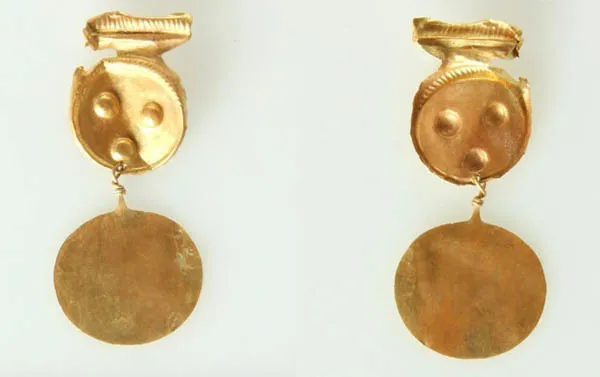
Kolona’s long occupation gives the cache even more weight. The hill has been a prehistoric settlement, later a sanctuary, an acropolis, and a Byzantine settlement, which means this is not an isolated pocket of wealth but part of a place repeatedly remade over centuries. The pendants have also been compared with pieces from the so-called Aegina Treasure, a prehistoric jewelry collection now in the British Museum since 1892. That comparison gives the new discovery a sharper edge: the island’s gold tradition was never just decorative, but a language of status, identity, and trade that still speaks through the same forms today.
This article was produced by Prism’s automated news system from verified source data, official records, and press releases, then run through automated quality and moderation checks before publishing. The system is built and supervised by the people who set the standards it runs under. Read our full AI policy.
Did this article answer your question?