Gold Gains Extended as Traders Weigh U.S. Ceasefire Plan With Iran
Spot gold hit $4,540.92 on March 24 after the U.S. floated a 15-point Iran ceasefire plan — here's what that $200+ swing means for anyone buying a 14k or 18k piece right now.
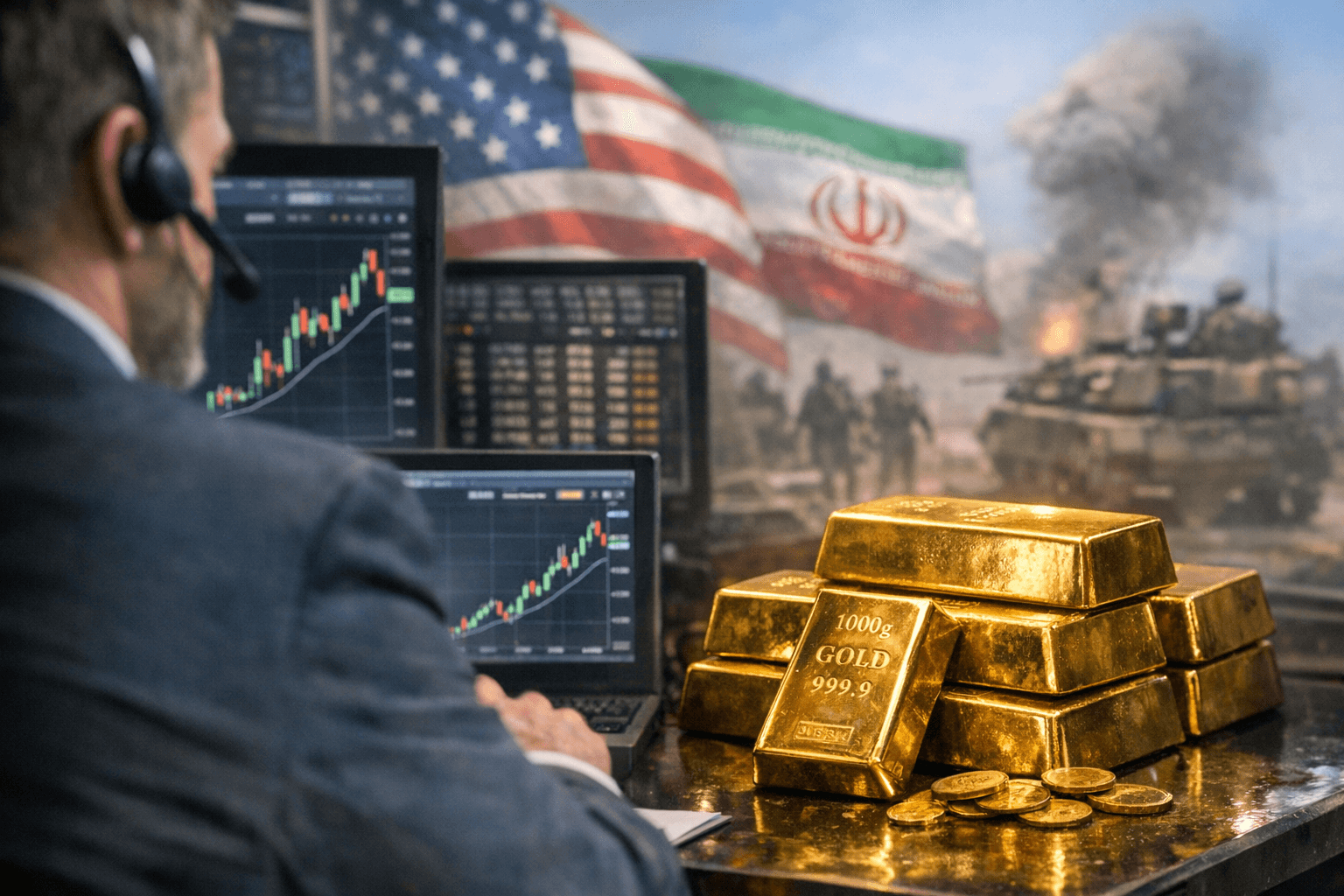
Bullion advanced as much as 2.8% on March 24, adding to a 1.6% jump in the previous session, after a diplomatic development broke a painful streak for gold holders. Nine straight losing sessions and a 13% drop in a single month had rattled the market — until word spread that Washington had moved toward the negotiating table.
The United States sent a 15-point plan to Iran for a possible ceasefire, even as it began moving parachute troops to the Middle East to back up a contingent of Marines heading to the region. There have been no direct Iran-U.S. talks since the war began, but messages have been exchanged through a number of mediators, including Pakistan, which shared U.S. ceasefire demands with Iran. China urged Tehran to engage. Iranian English-language broadcaster Press TV quoted an anonymous official stating Iran had rejected the U.S. ceasefire proposal.
Markets moved fast on the initial reports. Gold climbed for a second day as traders weighed the likelihood of U.S.-Iran ceasefire negotiations, with spot gold rising 1.4% to $4,540.92 an ounce at 9:47 a.m. London time before touching a session high of 2.8%. Silver gained 1.3% to $72.08 after ending the previous session 3% higher, while platinum and palladium also advanced. Crude oil futures fell nearly 4%, equities climbed, and the Bloomberg Dollar Spot Index held steady.
The mechanics behind those moves are worth understanding, because they run directly through the pieces on your jeweler's shelf.
Since U.S. and Israeli forces launched strikes on Iran on February 28, gold has operated in a counterintuitive way. Gold rose from $5,296 to $5,423 per troy ounce after the initial strikes, aligning with the axiom that geopolitical turmoil pushes investors toward traditional safe-haven assets. But then it reversed — sharply. The culprit was oil. The subsequent oil price surge to over $110 put the brakes on bullion's rally, sending stagflation fears around the globe and forcing central banks, led by a hawkish Federal Reserve, to signal that there would be no interest rate cuts in 2026. For gold, a non-yielding asset, that is a direct structural headwind: higher interest rates for longer make holding non-yielding gold even less attractive, leading many investors to rotate into high-yield bonds and the U.S. dollar instead.
There is also a forced-selling dynamic at play that has nothing to do with sentiment. Spot gold's decline of nearly 25% from its January record high represents the sharp unwind of leveraged futures positions and momentum-driven speculation — not a collapse in the underlying thesis. When stocks and bonds sell off simultaneously, institutions liquidate whatever is liquid to raise cash, and gold is highly liquid. That amplifies losses in the metal independent of any fundamental view.

The structural backstop remains central-bank buying. In late January Goldman Sachs raised its year-end 2026 gold target to $5,400. In late February, right before the Iran war broke out, JPMorgan Chase forecast gold would reach $6,300 by year-end, citing strong central bank demand and diversification of the investor base. The pace of central-bank accumulation since 2022 drove the multi-year bull run — though that pace had slowed going into this year. When some central banks have explored using gold reserves in swap arrangements, OCBC strategist Christopher Wong cautioned against misreading the signal: "In fact, the intent to use gold-for-FX swaps actually underscores the role of gold in reserves management." Such moves are not reserve liquidation; they are reserve optimization.
For anyone shopping 14k or 18k gold jewelry right now, that volatility is not abstract. As gold prices rise, the cost per gram rises proportionally. Since 14k gold is 58.5% pure gold and 18k gold is 75% pure gold, higher-karat pieces are even more sensitive to price swings. If gold increases by 20%, the raw metal cost inside a gold ring may also rise roughly 20% — though that doesn't mean the retail price increases 20%, it absolutely puts upward pressure on pricing. To put a number on it: a standard 14k wedding band weighing around 5 grams contains roughly 2.9 grams of pure gold. At $4,540 per troy ounce (approximately $146 per gram), that gold content alone is worth about $424 — before any fabrication cost, design labor, or retailer margin. Gold's current record high was achieved on January 28, 2026, at $5,602.22 per troy ounce; at that peak, the same band's gold content would have been worth approximately $520. That $96 swing in metal cost is the minimum floor shift a buyer absorbs — before the jeweler's markup, which at traditional retail runs considerably higher.
If gold prices surge, 18k pieces feel the pressure most. Many brands shift toward 14k or 10k during high gold cycles to maintain price accessibility. That's not a quality compromise so much as a materials reality: 14k offers enough pure gold to maintain a rich, warm hue while being significantly more durable and scratch-resistant than 18k or 24k gold. At current spot prices, the karat choice is as much a financial decision as an aesthetic one.
A senior Iranian official told Reuters that a U.S. proposal for ending nearly four weeks of fighting is "one-sided and unfair," and on March 26, gold reversed Wednesday's sharp recovery gains, succumbing to a resurgent wave of inflation anxiety as Brent oil prices climbed back above $100 per barrel. The ceasefire window that briefly opened March 24 has, for now, closed — and with it, the temporary reprieve in gold's pressure from rate expectations and energy-driven inflation. The question for gold jewelry buyers is not whether to wait for a bottom; it is whether the piece justifies its metal cost at today's price. On that calculation, the geopolitics of the Persian Gulf are now a direct input.
Know something we missed? Have a correction or additional information?
Submit a Tip