Gold karat guide explains purity, durability, and jewelry value
The stamp inside a gold piece tells you how it will wear: 10K is toughest, 14K balances value and durability, and 24K is pure but soft.
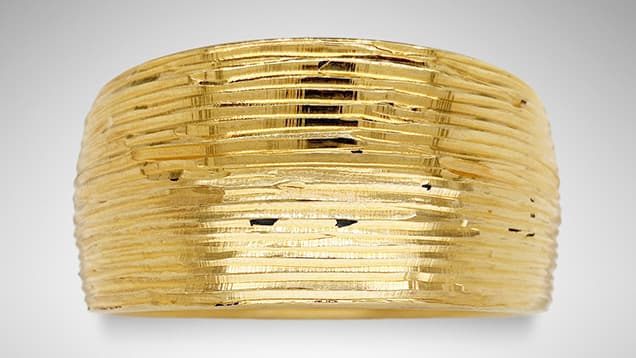
A ring marked 10K, 14K, 18K, or 24K will age differently on your hand, from the scuffs of daily wear to the deep, saturated color that collectors chase. The right karat is less about prestige than about how much scratch resistance, color, and gold content you actually want to live with.
How karat translates into real use
Karat is the fineness, or purity, of gold, with pure gold set at 24 karats. In practical jewelry terms, the scale tells you how much of the alloy is gold and how much is mixed in for strength or color. A 14-karat piece contains 14 parts gold and 10 parts other metals, or about 58.3 percent gold, which is why it has long been the middle ground for people who wear their jewelry hard.
Gold is soft on its own. Alloying pure 24-carat gold with other metals gives the metal more durability and can also change its color. The lower the karat, the more alloy metals are present, and the harder the piece generally becomes. That is why a 10K ring can take more abrasion than a 24K one, while an 18K piece often sits in the softer, richer-looking middle.
Which karat fits which kind of jewelry
For everyday rings and bracelets, 14K is the most balanced choice. It offers enough gold content to look unmistakably gold, but enough alloy to stand up to constant contact with desks, door handles, bags, and skin oils. If you want one piece to wear almost every day and still keep a practical edge on price and durability, 14K is usually the most convincing compromise.
10K is the toughest common solid-gold option, and that makes it especially useful for pieces that get knocked around. The tradeoff is color: with only about 41.7 percent gold, it can look paler than higher-karat pieces, depending on the alloy mix. That lower gold content makes it a smart choice for slim stacking rings, school-day wear, or pieces where resilience matters more than a deep yellow glow.
18K pushes in the other direction. At about 75 percent gold, it gives you a warmer, richer color and more gold content, but it is softer than 14K and 10K. It is a strong fit for heirloom purchases, statement chains, and fine jewelry where the color of the metal is part of the appeal and the piece will not be treated like a daily tool.
24K sits at the far end of the scale and is the purest common benchmark in jewelry discussions. It has the deepest gold color and the highest gold content, but it is also the softest of the usual jewelry categories. That makes it a better choice for cultural jewelry, collectible pieces, or designs where maximum purity matters more than scratch resistance, such as high-color bangles, medallions, or ceremonial adornment.
Why alloy mixes change both color and hardness
The color of gold jewelry is not fixed by karat alone. Because lower-karat alloys include different metals, the same nominal purity can lean yellow, pink, or white depending on whether the maker blends in copper, silver, palladium, or other metals. That is why two 14K pieces can look noticeably different under the same light.
A 14K yellow-gold chain can read brighter or softer depending on its alloy recipe, while an 18K piece often has a more saturated, buttery tone.
How to read fineness marks and hallmarks
Not every market labels gold the same way. Some use fineness marks instead of karat abbreviations, so 585 can indicate 14K, 750 can indicate 18K, and 916 can indicate 22K. That matters when you are shopping across borders or looking at vintage pieces, because a stamp can look unfamiliar even when the purity is ordinary.
The FTC held a public roundtable on June 19, 2013 to examine possible changes to its Jewelry, Precious Metals, and Pewter Industries Guides, and the revised guides took effect on July 24, 2018. In 2013 comments on gold percentages, commenters raised one concern: the U.S. plumb-gold statute allowed a .003 tolerance below plumb, 58.03 percent versus 58.33 percent, while a 585 parts-per-thousand mark was being urged as the cleaner standard.
Why the language around purity still matters
Gold has been used to make jewelry since ancient times, and the word history of “24-karat” reaches back to a carob-seed-based weight tradition.
A karat stamp should guide your choice, but it should not be the only thing you read. A true hallmark points to composition, yet fake stamps exist, and high-value pieces deserve testing if the claim does not feel secure. If you want a ring to survive daily wear, 10K and 14K are the workhorses. If you want richer color and more gold content, 18K makes sense. If you want maximum purity and are willing to accept softness, 24K is the option.
This article was produced by Prism’s automated news system from verified source data, official records, and press releases, then run through automated quality and moderation checks before publishing. The system is built and supervised by the people who set the standards it runs under. Read our full AI policy.
Did this article answer your question?