Gold Vermeil vs Solid Gold: Choosing the Right Option for Your Lifestyle
Gold prices up 40% since 2024 make this choice more urgent than ever. Here's how to decide between vermeil and solid gold without wasting money.

Gold jewelry sits at an interesting crossroads right now. With gold prices having climbed roughly 40% between 2024 and 2025, the distance between solid gold and its alternatives has widened into something that genuinely shapes how you build a collection. Understanding the structural differences between gold vermeil and solid gold is no longer just gemological trivia; it's practical financial literacy for anyone who loves jewelry.
What Gold Vermeil Actually Is (and What It Isn't)
Gold vermeil is often lumped in with standard gold plating, and that comparison does it a disservice. To qualify as true vermeil, a piece must meet specific legal standards: sterling silver as the base metal, with a gold coating of at least 2.5 microns thick and a minimum purity of 10 karats. That last detail matters. Standard gold-plated jewelry can sit on top of brass or copper, metals that conduct heat against skin and can trigger reactions in sensitive wearers. Vermeil's sterling silver base means it's made entirely of precious metals, which makes it hypoallergenic in a way that most gold-plated costume jewelry simply isn't.
The gold layer on quality vermeil is also meaningfully thicker than on basic plating. That thickness is what gives vermeil its durability advantage over standard plated pieces, and what gives it the warm, convincing weight and glow that reads, in most lighting conditions, indistinguishably from solid gold.
What Solid Gold Actually Is
Solid gold contains no base metal layer underneath. The entire piece is a gold alloy, with the karat number telling you the ratio of pure gold to other metals. 14k gold is 58.3% pure gold, mixed with alloys like silver, copper, or zinc for hardness. 18k gold reaches 75% pure gold content, with a noticeably warmer color and slightly softer feel. Neither will tarnish, fade, or wear off, regardless of how many showers, swims, or sleepless nights it endures still on your wrist.
That permanence is the core argument for solid gold: it asks nothing of you except to wear it.
The Durability Gap Is Real
Even the best-cared-for gold vermeil has a finite lifespan. The gold layer thins gradually through contact, friction, and exposure to moisture and oils. Quality vermeil from reputable makers can look beautiful for three to five or more years with attentive care, but it will not last generations. If you remove it before sleeping, before swimming, before applying lotion, and store it properly, you extend its life significantly. If you forget, you accelerate the clock.
Solid gold operates on a completely different timeline. A 14k gold ring worn daily for decades looks essentially the same as it did the day it was bought, perhaps with a soft patina that many collectors prefer. It can be resized, repaired, and passed down. The durability isn't marginal; it's categorical.
The Price Reality in 2026
Here is where the conversation gets uncomfortable for solid gold advocates. With gold prices at current levels, a meaningful solid gold piece, a substantial chain, a well-set stone ring, a pair of real hoop earrings, requires a budget that takes serious saving. Gold vermeil offers 100% precious metal construction, genuine gold appearance, legal quality standards, and a price point that lets you own multiple pieces while your savings stay intact.
This isn't a compromise so much as a different philosophy. Vermeil lets you follow trends, experiment with styles, and build a varied collection without overextending. Solid gold asks you to commit, to choose fewer pieces and live with them long enough that the cost per wear eventually becomes negligible.
Which One Belongs in Your Life
The honest framework comes down to three questions: how you wear jewelry, what you wear it for, and how much maintenance you're willing to do.

If you never remove your jewelry, if you shower, swim, and sleep in the same pieces day after day, solid gold is the only sensible choice for those specific items. The investment amortizes over years of continuous wear in a way vermeil simply cannot match.
If you have a curated wardrobe approach to jewelry, rotating pieces by season, mood, or occasion, vermeil is extraordinarily well-suited to that lifestyle. You can afford more variety, and since pieces aren't on constant rotation, the gold layer holds up longer.
For special-occasion jewelry, pieces worn to weddings and dinners rather than to the gym and the office, vermeil's aesthetics are entirely sufficient and its longevity more than adequate.
Skin Sensitivity and Everyday Comfort
Both solid gold and gold vermeil are hypoallergenic options. Solid gold's alloys occasionally include nickel, which can cause reactions in sensitive wearers, so it's worth asking about alloy composition when buying, particularly for earrings worn directly against pierced skin. Gold vermeil's sterling silver base eliminates that risk by keeping the entire piece within the precious metal family.
How to Care for Gold Vermeil
Extending the life of a vermeil piece requires a few consistent habits:
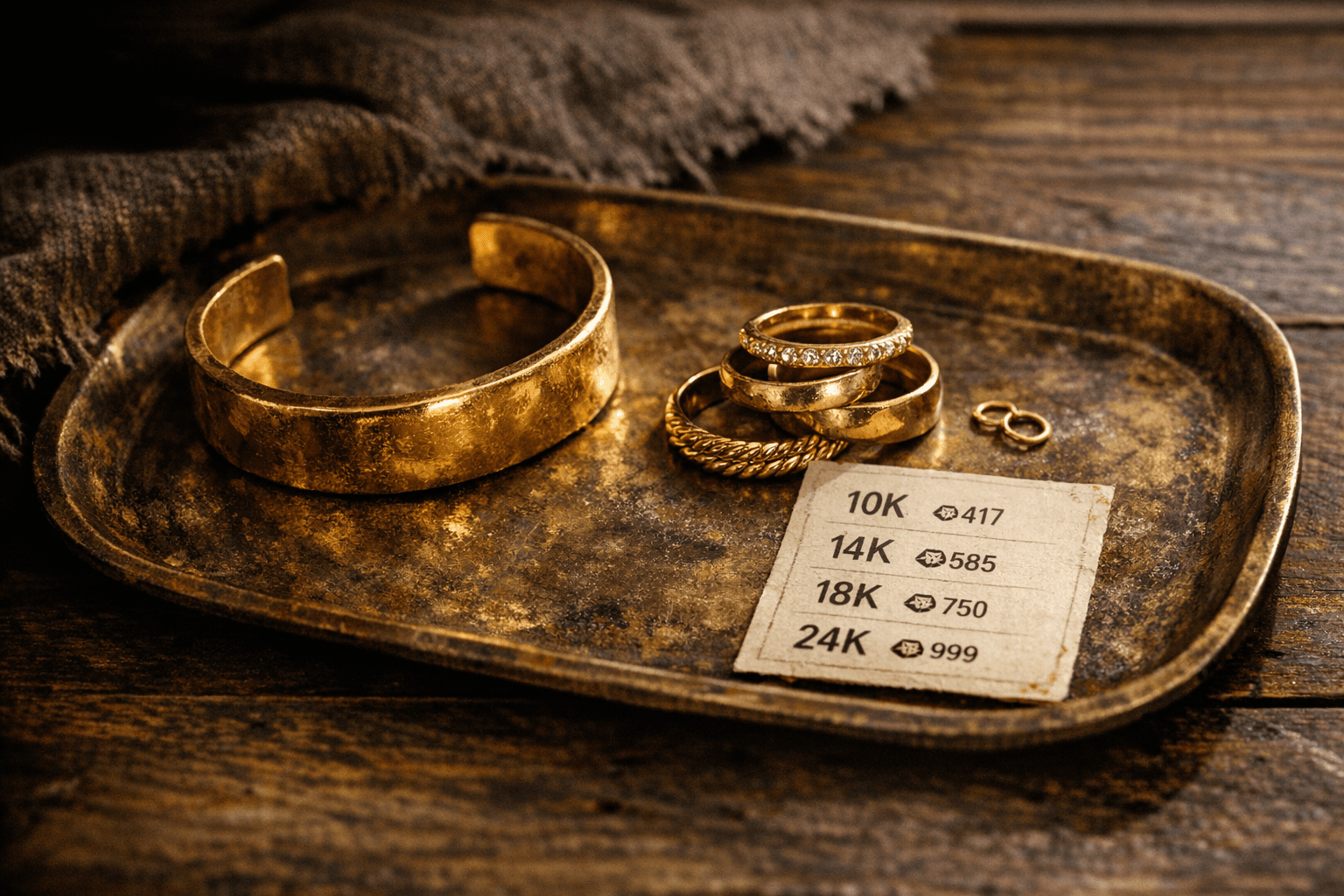
- Store pieces individually, preferably in soft pouches or a lined jewelry box, to prevent scratching
- Remove before swimming, bathing, or applying perfume, sunscreen, or lotion
- Clean gently with a soft, dry cloth after wearing
- Avoid ultrasonic cleaners, which can break down the gold layer
- Keep away from chlorine and harsh chemicals
None of these rules are burdensome if you're already someone who thinks of jewelry as something to care for. If you're not, solid gold's maintenance-free nature is a legitimate advantage worth the higher entry cost.
Building a Collection That Makes Sense
Many experienced jewelry collectors don't treat this as an either-or decision. A solid gold piece, whether a 14k signet ring, a fine chain in 18k yellow gold, or a pair of simple hoop earrings, can anchor a collection that's then expanded with vermeil for trend-driven or seasonal additions. Personalized everyday pieces in 14k gold vermeil, like name necklaces or stackable initial rings from brands including Oak & Luna, Mejuri, and Gorjana, sit comfortably alongside solid gold foundations without looking out of place.
The key is intentionality: buy solid gold for the pieces you'll wear every day for the rest of your life, and buy well-made vermeil for everything you want now and might want differently in five years.
The 40% rise in gold prices hasn't made solid gold a bad investment; it's made the decision to buy it a more deliberate one. That deliberateness, applied thoughtfully, tends to produce the best collections of all.
Know something we missed? Have a correction or additional information?
Submit a Tip