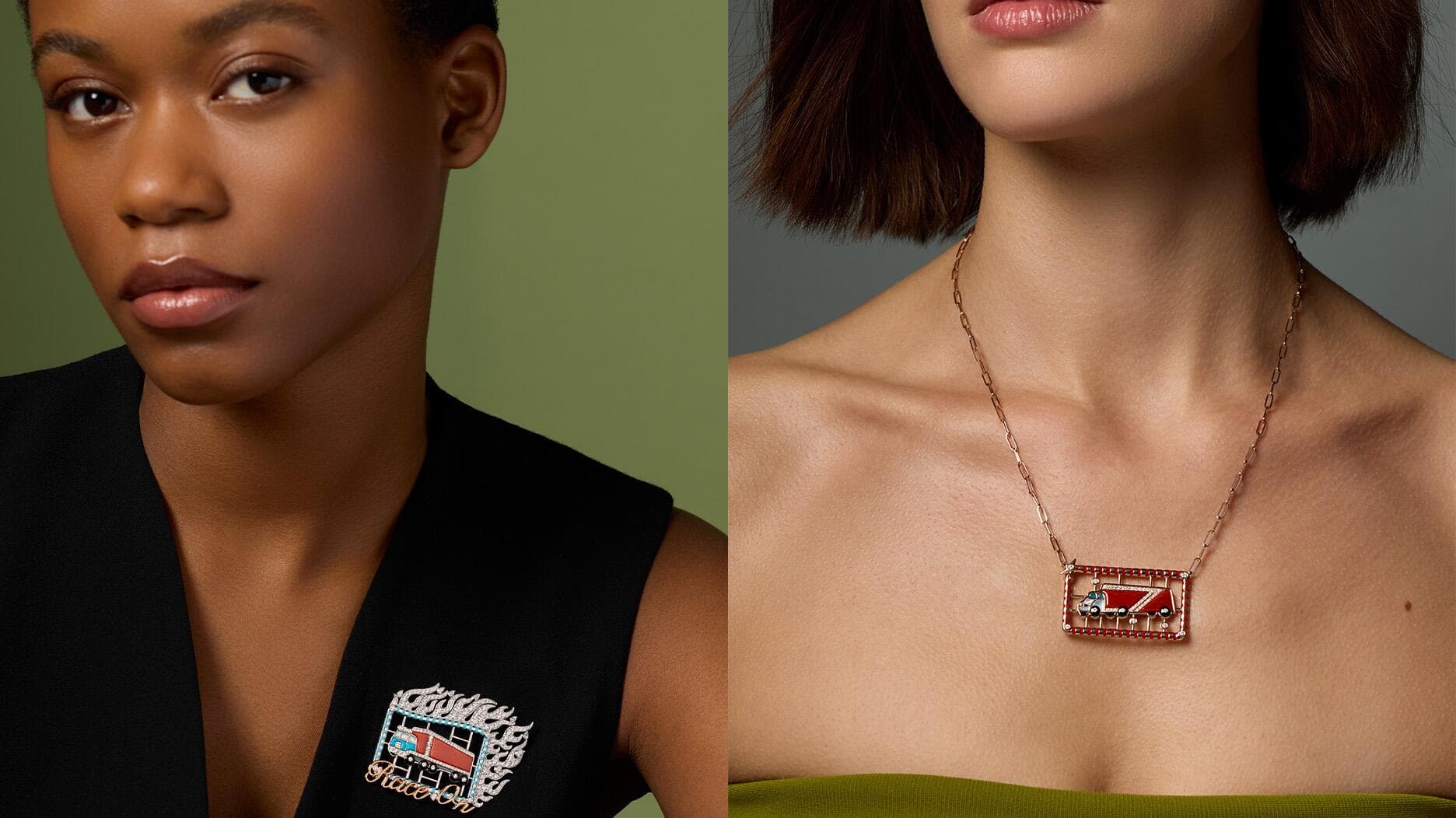
Henna Anil Thadani turns heirloom gold jewelry into personal armor
A Hindi-inscribed necklace and a three-generation champagne-diamond ring show why personal gold has become the new status symbol.
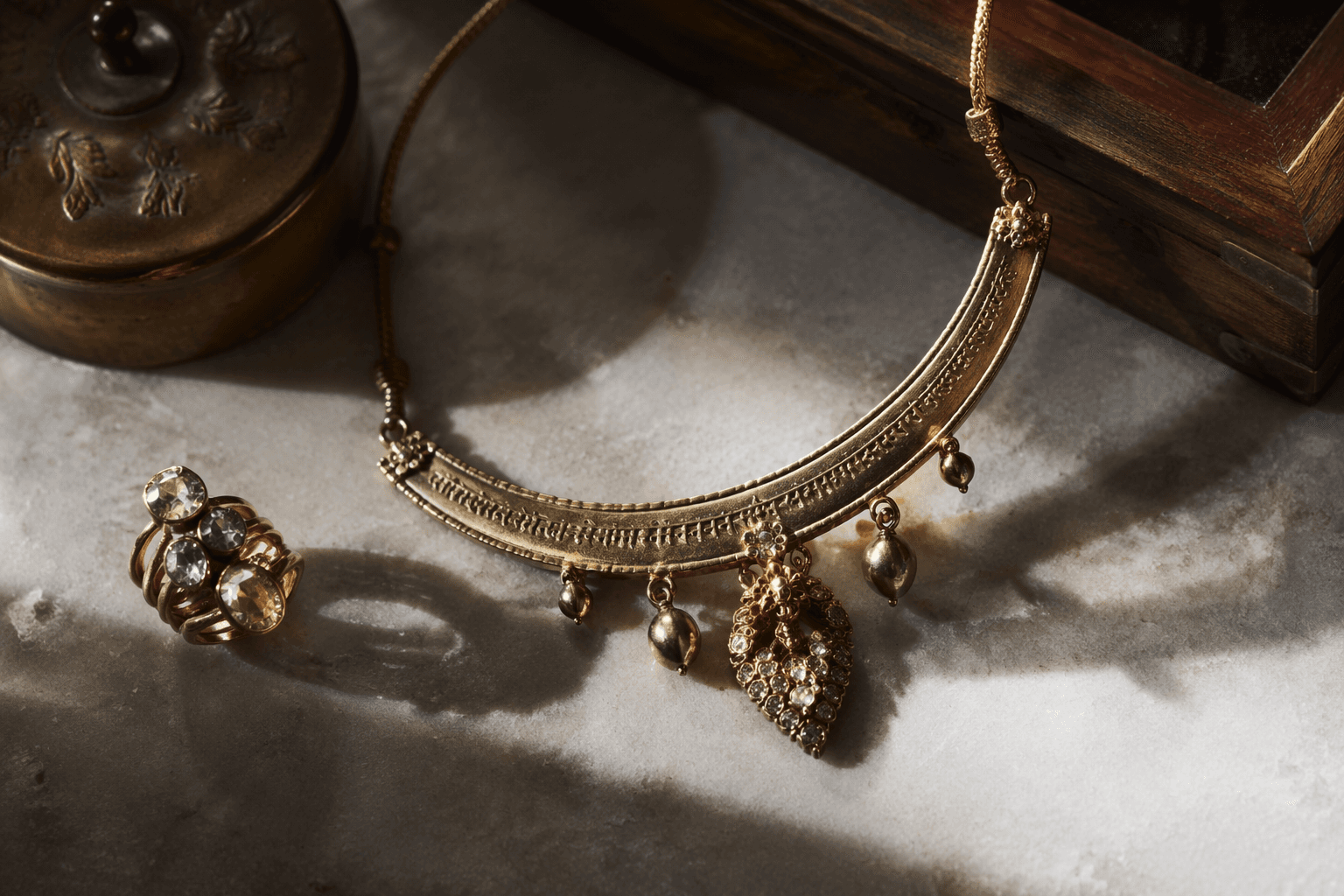
A gold necklace becomes something else when three sons’ names are written into it in Hindi. In Henna Anil Thadani’s case, the piece sits beside a champagne-diamond ring that moved from grandmother to mother to daughter, turning fine jewelry into a private archive of family, language, and inheritance.
Meaning-first gold
Harper’s Bazaar Singapore’s June 18, 2026 profile places Thadani’s collection inside a wider idea of jewelry as armor, and the framing fits the pieces themselves. The custom necklace is not merely decorative; it carries the names of her three sons in Hindi, making the chain a daily-facing record of identity rather than a generic emblem of status. The magazine also describes other treasured pieces as protective, everyday keepsakes, which is exactly where the meaning-first shift in gold jewelry now lives: in objects worn often, not locked away for rare occasions.
The collection is not limited to sentiment alone. It includes diamonds and emeralds, and the champagne-diamond ring adds a softer, warmer note to the mix. Champagne diamonds have an easy affinity with gold because their muted brown-gold color reads as intimate rather than flashy, a useful reminder that the most personal jewelry often works through tone, not scale.
Inheritance as design language
The ring carries the sharpest family narrative in the profile. Thadani received it on her 18th birthday after it passed from her grandmother to her mother and then to her, a sequence that gives the piece both emotional and practical weight. In gold jewelry, that kind of chain of custody matters as much as carat count, because it tells you why the piece exists, who wore it before, and what sort of life it was built to survive.
That lineage also sits inside a broader Thadani family jewelry history. Abhipriya Jewellers says the business was founded in 1975 by Ashok Thadani, while the family’s jewelry roots reach back further through Calcutta’s Satramdas Dhalamal, established in 1930. Those dates matter because they turn “family legacy” from a marketing phrase into a traceable commercial history. When a gold piece is attached to a family that has been in jewelry for generations, the claim of inheritance is not decorative. It is structural.
A jewelry house built on travel and story
Thadani’s personal taste mirrors the design philosophy behind Del Rio Jewels, where she is identified as founder and creative director. The brand describes itself as founded by an ex-scientist, with collections inspired by travel and shaped by stories gathered around the world. Its destination-led names, including Istanbul, Italy, Jaipur, Lisbon, Maldives, and Marrakesh, give the line a geography-driven vocabulary that keeps each piece tethered to a place rather than a trend cycle.
That approach helps explain why her own jewelry reads as lived-in rather than ceremonial. The same mind that treats a ring as a family heirloom also treats collections as portable memories, each one anchored to a city or landscape. For readers looking at gold jewelry now, that alignment is the real signal: luxury is increasingly about whether a piece can carry a narrative with the same ease that it carries a stone.
What meaning-first gold looks like in practice
Thadani’s collection offers a useful test for buyers who want gold jewelry with emotional depth. The strongest pieces usually have one or more of these traits:
- A personal inscription, like the sons’ names in Hindi on her necklace
- A clear inheritance story, like the champagne-diamond ring passed through three generations
- A wearable scale that encourages daily use rather than occasional display
- A gemstone or finish that matches the mood of the story, such as the ring’s champagne tone and the presence of diamonds and emeralds
- A family or brand history that is specific enough to be traced, not just described in vague terms
That last point matters most. A story-driven jewel should be able to tell you something concrete about where it comes from, who chose it, and why it was kept. In Thadani’s case, the details are unusually crisp: a necklace written in Hindi, a birthday ring from a grandmother, a family jewelry business reaching back through 1975 and 1930, and a design label built around travel and memory.
Why this story resonates now
The profile also lands because Thadani’s public life already sits inside a recognizably modern luxury family narrative. Anil Thadani founded AA Films in 1993, married Raveena Tandon on 22 February 2004, and their biological children are daughter Rasha Thadani and son Ranbirvardhan Thadani. Those details place the jewelry in a household where legacy, visibility, and identity are already part of the frame.
That is why this story reaches beyond one collection. The best gold jewelry today is not trying to be anonymous. It is trying to become legible across generations, with names, dates, and inherited stones carrying as much prestige as polish. In Thadani’s hands, gold becomes less about adornment alone and more about proof that memory can be worn.
This article was produced by Prism’s automated news system from verified source data, official records, and press releases, then run through automated quality and moderation checks before publishing. The system is built and supervised by the people who set the standards it runs under. Read our full AI policy.
Know something we missed? Have a correction or additional information?
Submit a Tip