How to Buy Gold Jewelry: Karats, Alloys, and Key Hallmarks Explained
Most buyers don't know that 10K gold contains less than half real gold — and that the number stamped on your ring changes everything about durability, color, and value.
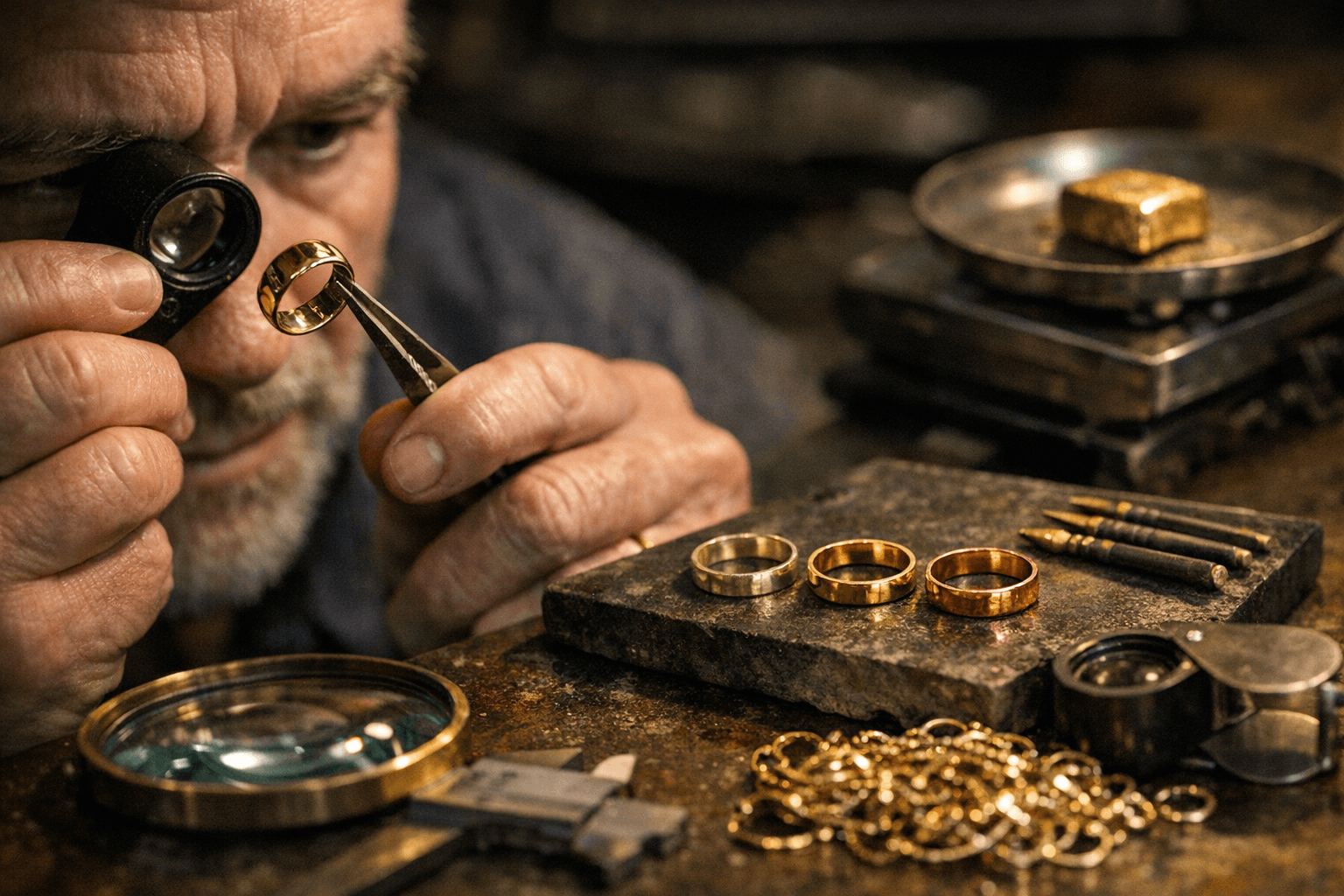
Gold is one of the few materials in fine jewelry that carries meaning before it's ever been shaped. It telegraphs warmth, weight, and permanence the moment it catches the light. But walk into any jewelry case and you'll encounter a dizzying range of options: different colors, different karats, different constructions — some barely containing more gold than a trophy from a school sports meet. Knowing how to read what you're actually buying is the difference between an intelligent investment and an expensive misunderstanding.
Understanding Karats: The Purity Scale
The karat system is the foundation of every gold purchase. The numbers 10K, 14K, 18K, and 24K are markers of the purity of gold, expressed in terms of "karat" — a measurement often confused with carat, which refers to a gemstone's weight. The karat is the standardized unit of measurement for gold purity, measuring the proportion of gold in 24 parts. So a piece stamped 18K contains 18 parts gold to 6 parts alloy metal.
Jewelers of America's gold buying guide covers four primary consumer karats: 10K, 14K, 18K, and 24K. The full spread tells a revealing story about purity versus practicality:
- 10K is the minimum legal karat in the U.S., with 41.7% gold content, providing lower cost and high durability.
- 14K, containing 58.3% pure gold, is the most popular choice in the United States, offering an ideal balance between color, durability, and cost — making it a preferred option for engagement and wedding rings.
- 18K contains 75% gold, balancing rich color with durability for everyday use. It is widely regarded as a global standard for luxury fine jewelry.
- 22K is composed of 91.6% gold, offering better strength while maintaining significant purity. It is used in traditional and ceremonial jewelry, especially in Indian, Middle Eastern, and Asian markets.
- 24K contains 99.9% pure gold, making it highly valuable but less practical for regular wear due to its softness.
The Purity vs. Durability Tradeoff
Jewelers of America explicitly covers the tradeoffs between purity and durability, and for good reason: this is the single most misunderstood decision in gold buying. Higher karat does not mean better quality — it means more gold, which also means a softer metal.
24-karat gold is rarely used in making jewelry, as pure gold is too soft and can be easily damaged. Gold blended with more alloys is stronger, and the lower karats make a piece of jewelry more durable. On the Mohs scale of mineral hardness, gold scores just 2.5 to 3, making it softer than even a fingernail. This means 24K gold rings would quickly become misshapen, while bracelets and necklaces would easily bend or break with regular wear.
The question James Allen poses on their buying guide — "Can you wear 24K gold jewelry every day?" — has a nuanced answer. You can wear 24K gold jewelry every day, but it is not always recommended due to its softness and malleability, as it is more prone to bending, scratching, or denting with frequent use. For rings and stone-set pieces in particular, clasps, links, and pendants can warp, and settings for gemstones may loosen because pure gold cannot support prongs or fine settings well over time. For most wearers, 14K or 18K strikes the right balance.
Yellow, White, and Rose: What Alloy Determines Color
The color of a gold piece isn't a surface treatment — it's a function of which metals were mixed into the alloy. Understanding this matters because it affects both appearance and skin sensitivity.
Yellow gold's warm tone comes from its natural composition, maintained at higher karats like 18K and 22K. As the karat drops and the proportion of silver and copper alloys rises, the yellow becomes paler and cooler.
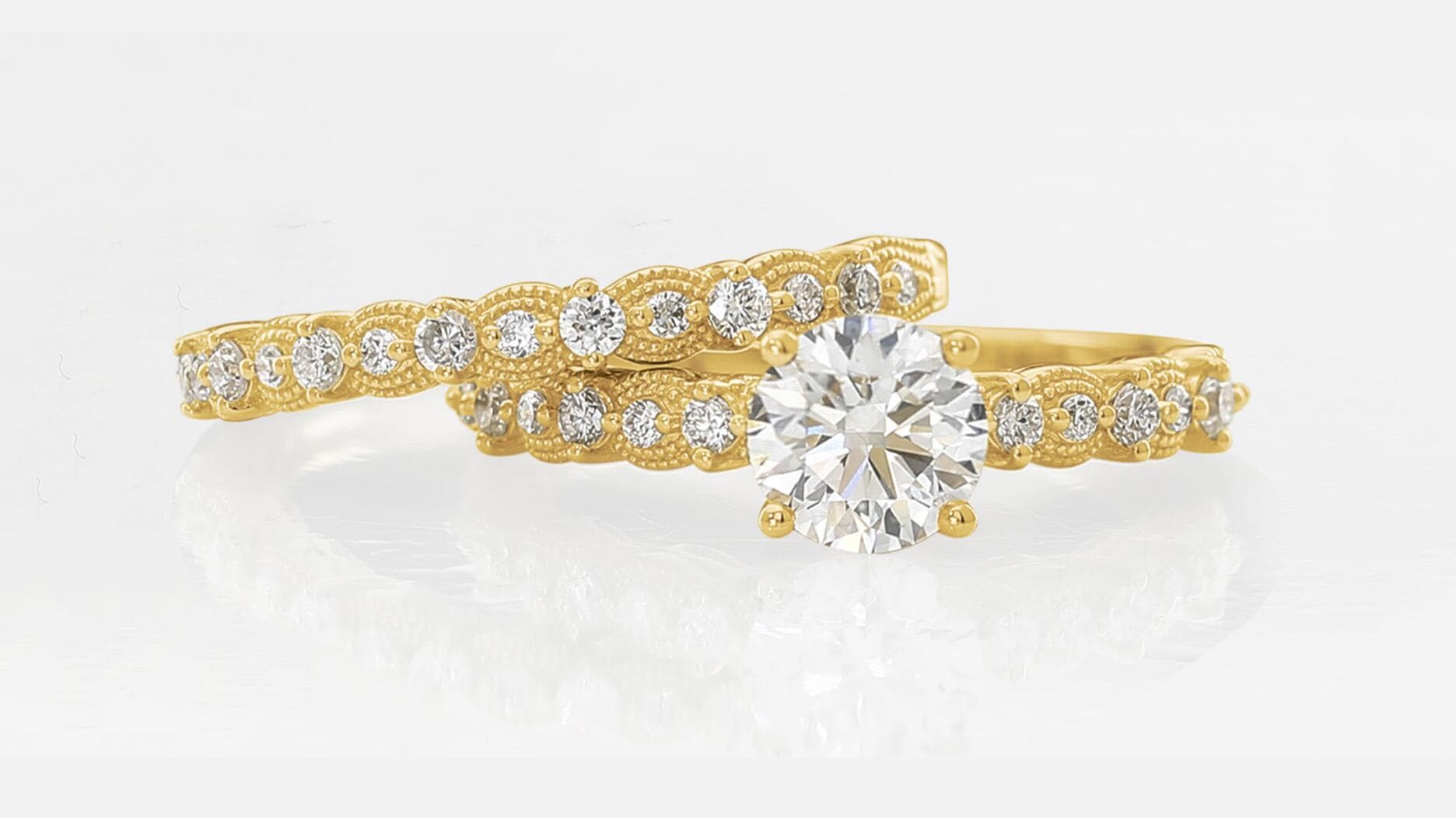
White gold has a different construction entirely. When designing your perfect engagement ring, deciding on metal choice may at first seem like a choice between colors. But if you're going with gold, you have a wide variety of options, and each can make a huge impact on the appearance, durability, and feel of a ring. White gold is "produced by mixing pure gold with white metals such as silver, nickel, palladium and often rhodium-plated for extra shine," as James Allen's guide describes. White gold will need re-application of rhodium over time to maintain its icy appearance, while rose gold will maintain its shine for a lifetime. 14K white gold and 18K white gold with rhodium plating will initially look the same.
Rose gold carries its own consideration for buyers: "Rose gold has a unique pinkish hue which is created by mixing gold with copper. This gives it a romantic and contemporary appeal. Differences are based on the ratio of gold to copper and whether or not silver is added." Crucially, James Allen's guide adds a clear warning: "Since rose gold contains copper, it is not hypo-allergenic, so be sure you or the recipient will be comfortable wearing it." If you or a recipient has sensitive skin, this is not a detail to overlook. Some lower-karat alloys may also contain nickel, which can irritate sensitive skin — a reason some buyers specifically seek out higher-karat or nickel-free formulations.
Gold-Plated, Vermeil, Gold-Filled, and Solid Gold: Know What You're Buying
Beneath the headline karat number lies another layer of decisions that significantly affects a piece's longevity and price. These four categories represent very different constructions:
- Gold-plated: A base metal coated with a thin layer of gold. "The biggest pro of gold-plated jewelry is the low cost." It's the most accessible entry point but the least durable over time.
- Vermeil: Similar in concept to gold-plated, but "crafted by plating a thicker layer of gold as compared to gold-plated jewelry, on pure or sterling silver." The silver base makes it a step up in quality.
- Gold-filled: Has a thick layer of gold bonded to a base metal. "The gold content of gold-filled jewelry is about 100 times more than gold-plated jewelry" — a meaningful difference in terms of how long the gold surface will hold.
- Solid gold: "Made entirely using a gold alloy. They are very long-lasting and can prove to be a great investment." This is the category where karats become the primary lens of evaluation.
The difference between gold-plated earrings and a solid gold ring isn't merely price — it's an entirely different product category in terms of durability, resale value, and how the piece will age against your skin.
Reading Hallmarks and Verifying Authenticity
Whilst it is possible to come across some pieces of gold that are not stamped with purity, most gold, especially jewelry, will come stamped with what is known as a "hallmark." Most authentic gold jewelry is stamped with some form of number or letter to indicate its karat and gold content.
These stamps can appear in different formats. For example, 585, 14kt, and 14K all mean 14 karat gold. The hallmark numbers represent purity in thousandths: 375 equals 9K, 585 equals 14K, 750 equals 18K, 916 equals 22K, and 999 equals 24K. Karat stamps are typically found on the inside of rings, the back clasps, or the backs of pendants and earrings.
James Allen's buying guide is direct on the verification question: "To ensure gold jewelry is of good quality, check the karat rating for purity and look for hallmarks that verify its authenticity. Reputable jewelers should provide clear details on gold purity and authenticity, ensuring their pieces meet high craftsmanship and ethical standards." Aurusjewels adds the regulatory dimension: knowing the purity "tells you that your gold jewelry is authentic and in line with the standards set by the government of your country."
Where and How to Buy
The channel through which you buy affects the quality of decision you'll make. James Allen describes the in-store experience well: "Experiencing the weight, color, and craftsmanship of each piece first hand allows you to truly appreciate the quality and detail. In-person shopping also offers the opportunity to consult with knowledgeable experts who can guide you through your options, ensuring you find the perfect piece that matches your style and preferences."
Holding a piece matters more with gold than almost any other jewelry material. The heft of a well-made 18K ring versus a lightweight gold-plated band is immediately perceptible in the hand. That tactile information — the density, the way the finish catches and diffuses light — tells you things a product listing cannot.
Gold as Investment: The Honest Case
James Allen's guide frames the investment case plainly: "Buying gold jewelry is considered to be a good investment both financially and personally. Valued for its natural worth and stability, gold combines timeless style and practicality with potential for long-term value." Solid gold, in particular, carries intrinsic metal value that lower-construction alternatives do not. Rings with higher gold content generally carry stronger resale and investment value.
That said, gold jewelry carries making charges and retail markups that pure bullion does not. The investment case is strongest when the piece itself has lasting material quality: solid construction, a high karat, and craftsmanship that holds its integrity over decades. A well-chosen 18K piece bought from a reputable jeweler who provides clear purity documentation is both a pleasure to wear and a durable store of value — which is, ultimately, what gold has always promised.
This article was produced by Prism’s automated news system from verified source data, official records, and press releases, then run through automated quality and moderation checks before publishing. The system is built and supervised by the people who set the standards it runs under. Read our full AI policy.
Did this article answer your question?