India Expands Mandatory Gold Hallmarking to 380 Districts in Sixth Phase
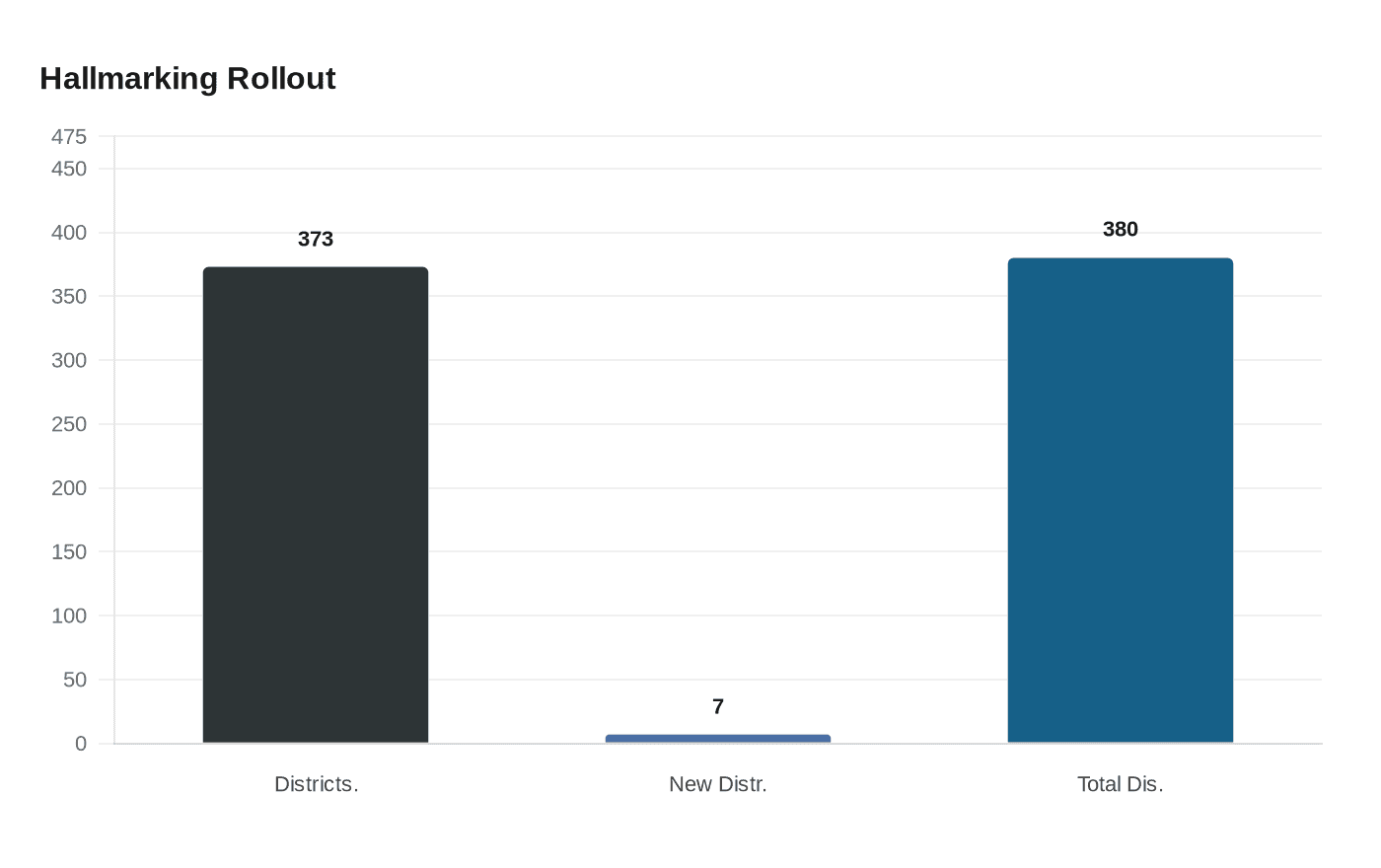
India's hallmarking net now covers 380 districts after seven new additions, with 60 crore gold items already stamped since 2021.

Seven districts spanning six Indian states came under mandatory gold hallmarking on March 2, 2026, as the Bureau of Indian Standards rolled out the sixth phase of its nationwide purity certification program, bringing total coverage to 380 districts under the Hallmarking of Gold Jewellery and Gold Artefacts (Amendment) Order, 2026.
The newly notified districts are Rupnagar in Punjab, Banda in Uttar Pradesh, Beed in Maharashtra, Gomati in Tripura, Katihar in Bihar, Beawar in Rajasthan, and Neemuch in Madhya Pradesh. "With the roll out of the sixth phase of mandatory hallmarking from March 2, 2026, seven additional districts have been included, taking the total number of districts covered under mandatory hallmarking to 380," the BIS said in a statement. The bureau described the expansion as part of a phased implementation designed "to ensure the purity of gold jewellery and protect consumer interests."
The scale of the underlying effort is significant. BIS reported that more than 60 crore gold items, roughly 600 million pieces, have been hallmarked with a Hallmark Unique Identification number between July 1, 2021 and March 5, 2026. Each HUID functions as a traceable fingerprint for an individual piece of jewellery, allowing consumers to verify authenticity and purity through the Verify HUID feature on the BIS CARE App.
The mandatory framework currently covers six caratages: 14K, 18K, 20K, 22K, 23K, and 24K, according to BIS. Hallmarking for 9K gold is available as a voluntary grade under IS 1417:2016. Jewellers in all covered districts who wish to sell hallmarked gold must first obtain registration from BIS, a prerequisite that applies equally to newly notified areas.
For buyers, the practical consequence of the sixth phase is direct: gold jewellery sold in shops across Rupnagar, Banda, Beed, Gomati, Katihar, Beawar, and Neemuch must now carry BIS certification, offering a structural defense against adulterated or misrepresented metal. The HUID system makes that assurance legible and verifiable, shifting the burden of proof from the customer's eye to a scannable code.
With 380 districts now covered and the program clearly structured for continued expansion, India's mandatory hallmarking rollout is becoming one of the most far-reaching consumer protection frameworks in the global gold trade.
This article was produced by Prism’s automated news system from verified source data, official records, and press releases, then run through automated quality and moderation checks before publishing. The system is built and supervised by the people who set the standards it runs under. Read our full AI policy.
Did this article answer your question?