India raises gold import duty to 15% to curb overseas purchases
India's 15% gold import duty could lift jewelry prices, cool bullion demand, and widen the gap between formal and informal supply.
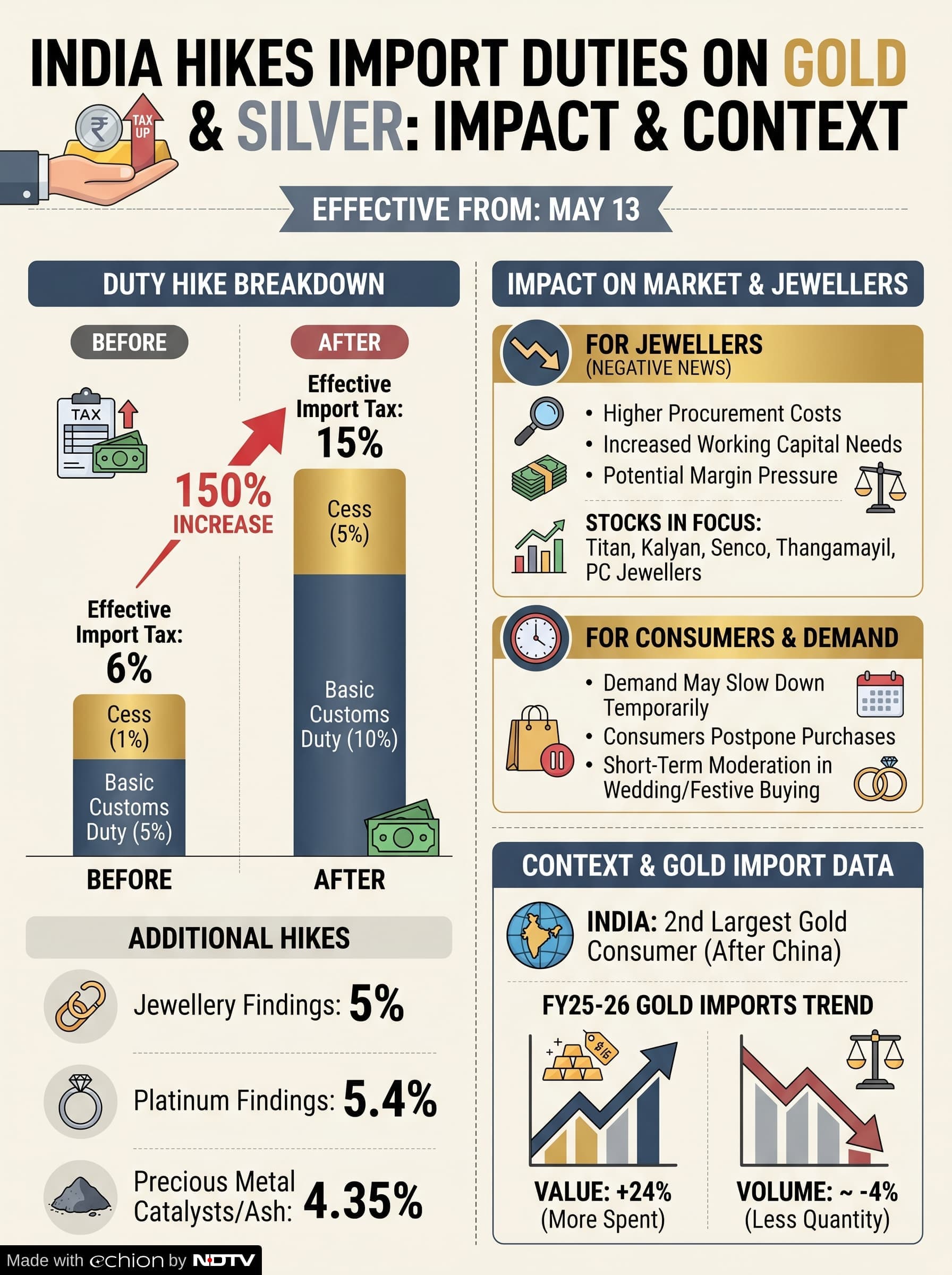
India’s jump in gold import duty to 15% is set to ripple through jewelry counters, bullion desks and wedding buying benches far beyond New Delhi. The higher levy, effective May 13, 2026, raises the cost of bringing in gold and silver at a time when India is the world’s second-largest gold consumer, making legal imports more expensive just as households, traders and wedding buyers weigh every rupee of value.
The new duty is built from a 10% basic customs duty and a 5% Agriculture Infrastructure and Development Cess. That reset is meant to curb overseas purchases and ease pressure on foreign-exchange reserves, but the practical effect is simpler to see: higher landed costs for bars, coins and jewelry stock, with retail prices likely to firm as the tax flows through the supply chain. For a market where gold is bought for weddings, festivals, investment and household savings, a steeper border tax can change not only what people pay, but what they choose to buy.
The move reverses the July 24, 2024 cut that brought the total customs duty down from 15% to 6%, the sharpest reduction on record and the lowest level since June 2013. That earlier cut had been designed to pull imports back into formal channels and reduce smuggling incentives. Industry reporting later said official bullion imports rose after the reduction, while unofficial inflows eased. The 2026 hike restores a higher-duty regime after less than two years, and jewellers are already warning that the old shadow channels could reopen if the price gap between official and informal supply widens again.
The policy also arrives with a currency message attached. Coverage around the change framed it as support for the rupee during a period of external pressure, and Reuters-linked reporting said Prime Minister Narendra Modi had urged citizens to curb bullion purchases for a year because overseas buying was adding strain to the currency and the external account. That matters because gold in India is not a casual discretionary splurge. It is a store of value, a bridal staple and, for many families, a balance sheet in metal form.
For the jewelry trade, the question now is not whether demand disappears, but how it reshapes. Higher duties often push buyers toward lighter designs, smaller ticket purchases and delayed shopping, while making recycled gold and old-jewelry exchange more attractive. They can also lift the perceived value of existing holdings, even as they squeeze fresh legal supply. In a market this large, a tax change at the border rarely stays there; it changes the price of adornment, the economics of inventory and the path gold takes from import to wrist, neck and vault.
This article was produced by Prism’s automated news system from verified source data, official records, and press releases, then run through automated quality and moderation checks before publishing. The system is built and supervised by the people who set the standards it runs under. Read our full AI policy.
Did this article answer your question?