India’s gold buyers shift to investment as jewelry demand falls
Indian shoppers chased gold as a store of value, pushing investment demand past jewelry for the first time while lighter, lower-carat pieces gained favor.
Gold in India has stopped behaving like adornment first. In the March quarter, investment demand overtook jewelry consumption for the first time on record, a stark sign that rising prices and unease in financial markets are changing what buyers want from the metal and what jewelers can realistically sell.
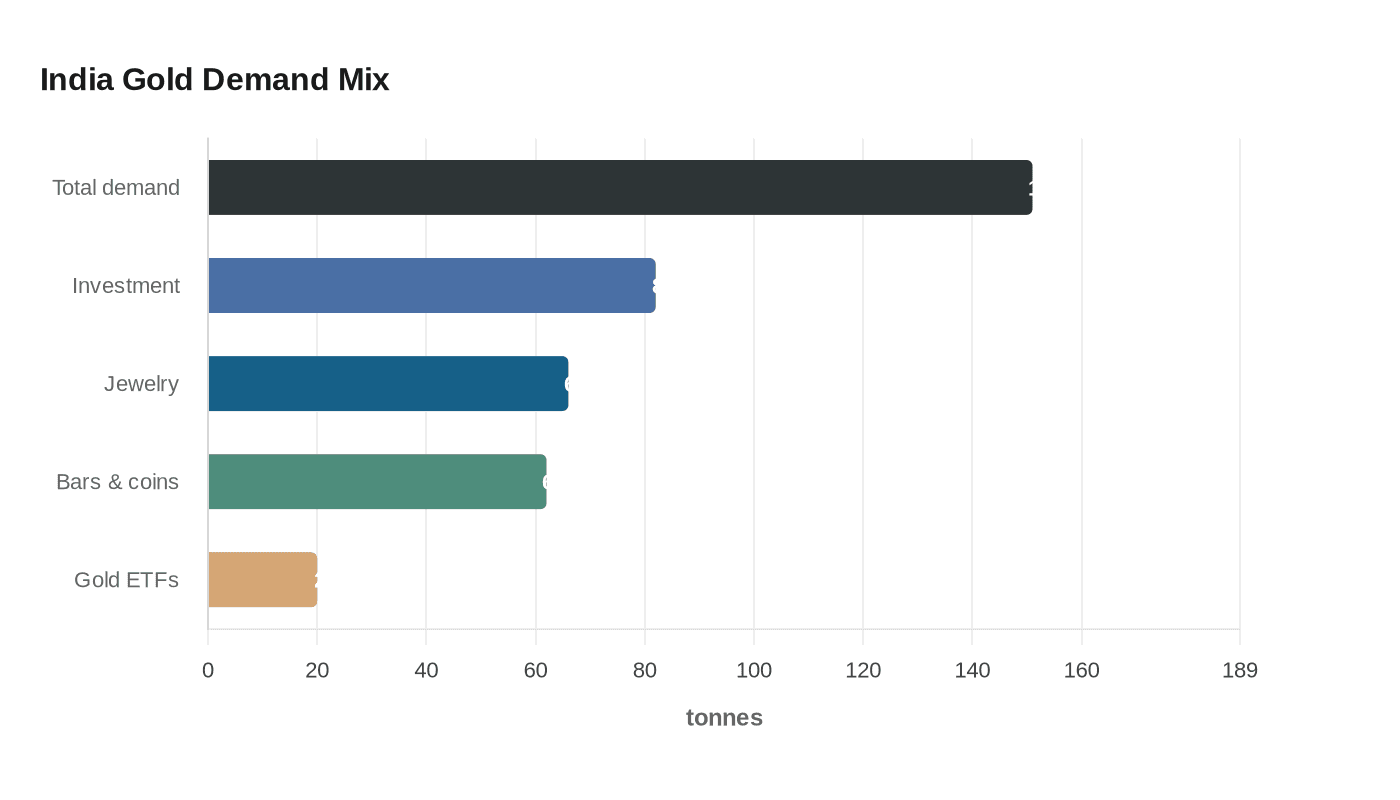
Total gold demand in India rose 10% year-on-year to 151 tonnes in the January-March quarter, but the composition of that demand told the real story. Investment demand jumped 54% to 82 tonnes, while jewelry demand fell 19% to 66 tonnes. Gold bars and coins accounted for 62 tonnes, almost matching jewelry volumes, and gold exchange-traded funds reached a record 20 tonnes. The World Gold Council said its India records go back to 2000, making the quarter the first in which investment demand surpassed jewelry demand.
Prices explain much of the shift. Domestic MCX gold spot prices rose 20% quarter-on-quarter and 81% year-on-year to a record quarterly average of INR151,108 per 10 grams. They touched INR175,231 per 10 grams during the quarter before easing, a level that made heavier necklaces, broad bangles and elaborate bridal sets far harder to absorb for many households. In value terms, total gold demand nearly doubled to INR2,275 billion, or about US$25 billion, even as physical jewelry volumes shrank.
The market has begun to split in two: one strand driven by tradition and occasion, the other by balance-sheet logic. Kavita Chacko, the World Gold Council’s India head of research, said investment demand is likely to underpin the market even as jewelry demand stays under pressure from economic and inflationary headwinds. Sachin Jain, the council’s India chief executive, said investment demand will become increasingly prominent in coming quarters, with both financial and retail investors showing more interest in gold.
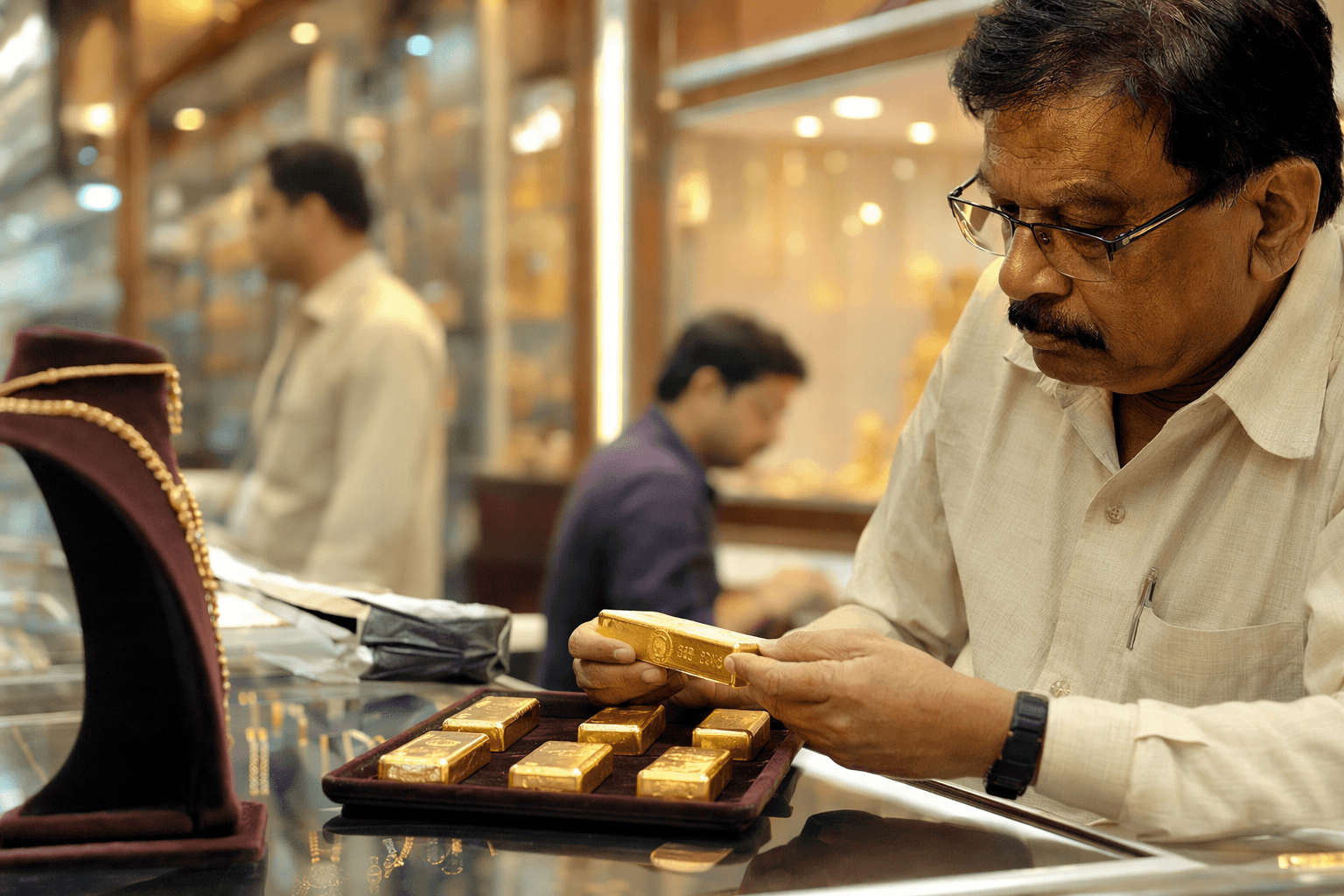
That shift is already visible in the cases and counters. Buyers are moving toward lighter designs, lower-carat pieces and studded jewelry that gives the look of occasion wear without the metal weight. Old-gold exchange also remains an important part of the business, letting households trade legacy pieces for fresh designs while keeping value tied up in the metal. Even with the change in mix, India remained the world’s second-largest jewelry market and second-largest market for investment gold demand, underscoring how deeply gold still runs through both consumption and capital preservation in the country.
The comparison with equities is telling. India’s benchmark Nifty 50 rose only about 2.4% since early 2025, while domestic gold prices nearly doubled over the same period. For many buyers, that has turned gold from a festive purchase into a financial refuge, and it is reshaping the retail playbook in the process.
This article was produced by Prism’s automated news system from verified source data, official records, and press releases, then run through automated quality and moderation checks before publishing. The system is built and supervised by the people who set the standards it runs under. Read our full AI policy.
Did this article answer your question?