Met Gala 2026 spotlights gold jewelry as sculptural body art
At the Met Gala, gold moved beyond ornament and became contour, with collars, torques and diamond-heavy suites tracing the body like wearable sculpture.
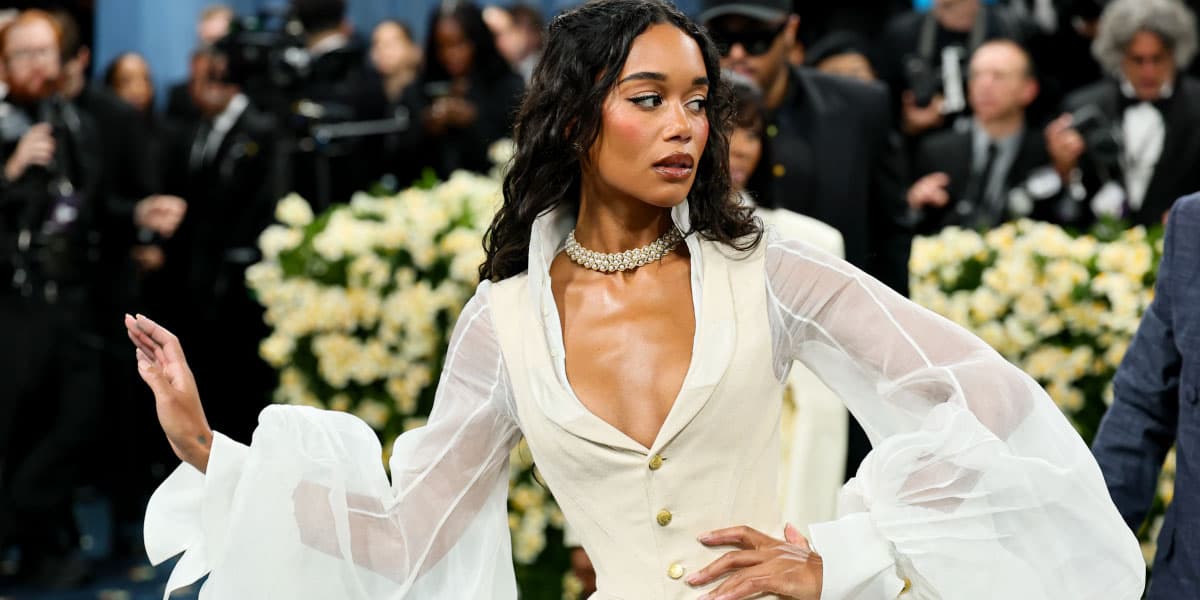
Gold did not sit on the body at the 2026 Met Gala. It followed it, framing shoulders, skimming collars and turning jewelry into a structural line rather than a finishing touch. That shift matched the night’s dress code, Fashion is Art, and the Metropolitan Museum of Art’s spring Costume Institute exhibition, Costume Art, which is built around “the centrality of the dressed body.”
The gala raised a record $42 million for the Costume Institute, surpassing last year’s $31 million and underscoring how the event has become the largest museum fundraiser in the world. Max Hollein announced the total on Monday night, while Jeff Bezos and Lauren Sánchez Bezos served as lead sponsors and honorary chairs. The exhibition opens at The Met Fifth Avenue on May 10 and runs through January 10, 2027, with nearly 400 objects and the debut of the new Condé M. Nast Galleries.
The red carpet made that curatorial idea tangible. Beyoncé arrived in an embellished skeleton gown paired with a diamond-studded Chopard high-jewelry suite, a look that fused anatomical line with high-wattage sparkle. Sabrina Carpenter wore two Chopard necklaces in 18k white gold, one set with 54.84 carats of diamonds and the other with 48.15 carats, plus a diamond ring, a reminder that the most persuasive luxury statement often comes from pieces that map cleanly against the neck and chest.
Zoë Kravitz’s bespoke Cry Baby earrings, set with 14.77 carats of emerald-cut and pear-shape diamonds, showed how precision can carry drama without excess bulk. Teyana Taylor’s silver fringed Tom Ford gown and matching fringed headdress pushed the same idea further, using movement as part of the silhouette. Janelle Monáe’s Rainbow K ring, Sarah Paulson’s Boucheron jewelry and Sudha Reddy’s 550-carat Queen of Merelani tanzanite each added their own note of scale, color and visual authority.
The most commercially interesting takeaway is not spectacle for its own sake, but the shift toward pieces that read like design, not decoration. Gallery Magazine had already identified collars, torques and backlaces as the kind of body-defining forms that would resonate with this year’s theme, and the Met’s emphasis on body categories such as Naked Body and Classical Body made that forecast feel exact. In practical terms, the red carpet suggested a market for gold jewelry that hugs the body, sharpens posture and behaves almost like tailoring. That is where high jewelry and luxury ready-to-wear are headed now: toward pieces that do not simply accessorize a look, but complete its architecture.
This article was produced by Prism’s automated news system from verified source data, official records, and press releases, then run through automated quality and moderation checks before publishing. The system is built and supervised by the people who set the standards it runs under. Read our full AI policy.
Did this article answer your question?