JCK spotlights Black in Jewelry Coalition designers at Las Vegas shows
Knife-edge huggies, stackable rings, and modern signets are the clearest gold signals in Las Vegas, where BIJC designers are turning personal stories into smart, shoppable shape language.
The shapes that matter now
The gold story coming out of Las Vegas is not about volume for its own sake. It is about precision: knife-edge huggies that sharpen the ear, stackable rings that invite personal editing, and signets that feel newly current because they trade heraldic formality for easy, everyday wear. At JCK and Luxury by JCK, the Black in Jewelry Coalition designers on view make that shift visible in three distinct voices, each using gold to suggest identity rather than just decoration.
That matters because the most persuasive gold jewelry right now is built to move between roles. It can be polished enough for a business lunch, expressive enough for a night out, and simple enough to layer without looking overworked. The designers BIJC placed across The Venetian Expo are working in that sweet spot, where craftsmanship, symbolism, and wearability overlap.
Dorian Webb’s gold feels architectural, not decorative
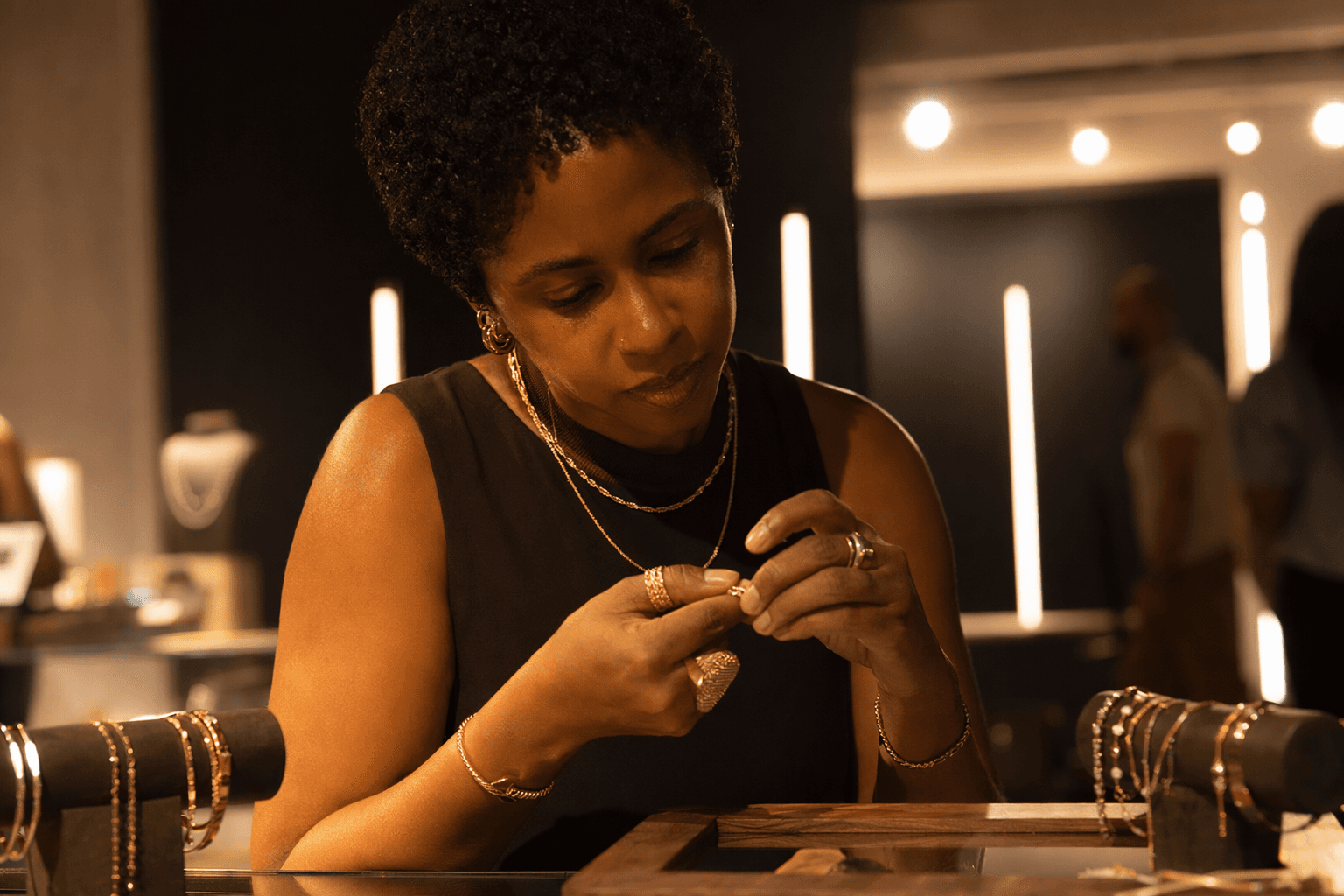
At the Luxury show, Dorian Webb’s 18k-gold knife-edge huggies and stackable rings capture one of the strongest currents in fine jewelry: clean geometry with a tactile edge. Knife-edge forms matter because they catch light in a more directional way than a rounded profile, giving even small hoops and bands a sense of structure. The effect is subtle, but that subtlety is exactly what makes the pieces feel modern.
Webb’s point of view has always been informed by form. She founded her eponymous company while studying architecture at Yale University, after being inspired by Venetian glassblowing, and her earliest work used Murano glass and semiprecious gems before expanding into gemstones. That background explains why her gold pieces do not read as merely pretty. They feel considered, almost drafted, with proportions that suggest a designer thinking like an architect and a jeweler at once.
Her trajectory also gives the jewelry added weight. Webb has been carried by Neiman Marcus and sold in the United States, Canada, and Japan. She has won the Artisan’s Award at the NY International Gift Fair and the Madam CJ Walker Entrepreneur Award, and she was a finalist in the 2021 The Next Now international competition for emerging jewelry designers. In Las Vegas, that history sharpens the appeal of the current work: the huggies and stackable rings are not trend-chasing pieces, but the distillation of a practiced design language.
Lauren Newton’s signets and sea stars bring wit back into gold
In the Design Collective at JCK, Lauren Newton is pushing gold in a different direction. Her 18k-gold signet and sea-star pieces suggest the return of forms that carry meaning, but with a less stiff hand than the classic family crest ring. A signet matters now because it has become a canvas, not just a symbol of inheritance. Newton’s version feels playful, which is exactly what keeps the silhouette from tipping into nostalgia.
Her background helps explain the balance. Newton is a Brooklyn-based designer whose path into fine jewelry began in zoology, and she has spent 12 years in the industry. That combination of scientific training and long apprenticeship gives her work a distinctive polish: the pieces carry a sense of observation, but they are not clinical. The sea-star motif in particular softens the formality of gold, giving the collection a marine, slightly whimsical energy without abandoning sophistication.
This is a useful reminder of where gold jewelry is strongest right now. Buyers are not only looking for carat weight or status signals. They want symbols that feel personal, and they want familiar forms like the signet revived with enough wit to feel lived-in. Newton’s work suggests that a well-made gold piece can still surprise, especially when it carries an unexpected reference point.
Rejected Hearts Club makes gold-filled jewelry emotionally legible
In the Fashion/Bridge pavilion, Rejected Hearts Club shows how far gold jewelry can travel when narrative and accessibility are part of the design brief. Jamie Batiste founded the brand in 2010 after losing her brother to a rare autoimmune disease and going through a breakup, and the brand describes itself as “turning pain into power.” That origin story is not a marketing garnish. It is the reason the heart motif lands with more force than a generic symbol of love.
The brand’s heart language is unusually layered. Rejected Hearts Club says the motif represents three hearts: the heart that was given away, the rejected heart, and the heart returned to the customer. That is a stronger concept than the usual romance shorthand, because it treats emotion as something complicated and lived-in. A directory listing also says the brand supports the Myositis Foundation, extending the meaning of the line beyond adornment and into care.
JCK describes the jewelry as emotionally resonant fine jewelry at an accessible price point, and that combination explains why the brand belongs in the conversation about gold right now. Gold-filled jewelry opens the category to more buyers than solid 18k pieces do, while still offering the warm visual appeal that draws people to gold in the first place. In a market where meaning has to justify purchase decisions, Batiste’s work offers both sentiment and entry-level practicality without flattening either.
Why BIJC’s JCK presence keeps widening the frame
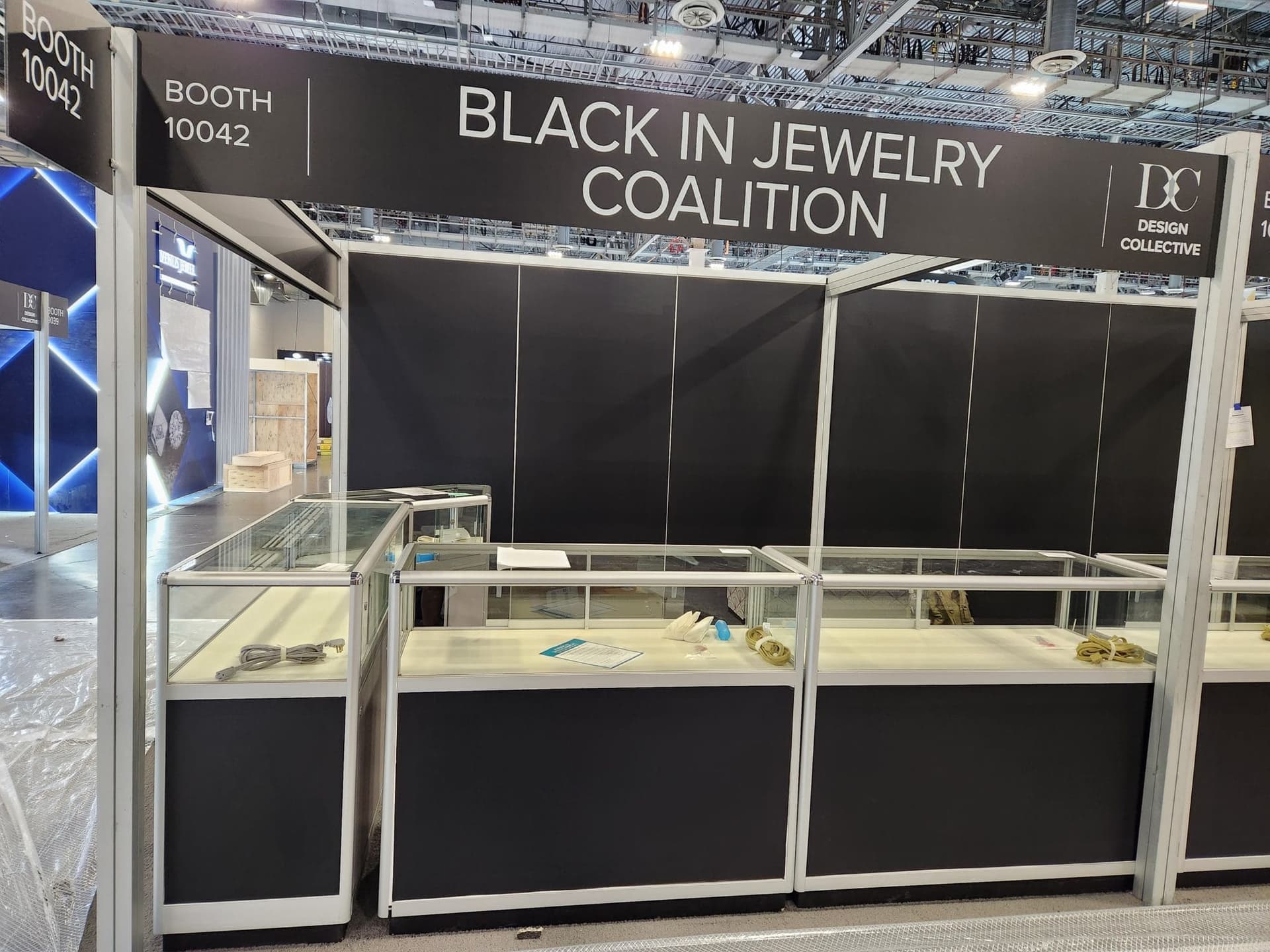
The larger significance of these designers is that BIJC is not simply adding names to a booth map. Founded in 2020, the Black in Jewelry Coalition has had a presence at JCK Las Vegas since 2022, and its collective first exhibited that year with six jewelry designers. BIJC describes JCK Las Vegas as the world’s largest and most reputable jewelry trade event, which helps explain why the coalition’s visibility there carries weight beyond one season’s floor plan.
The numbers from that first appearance show the scale of the platform. The 2022 JCK show drew over 17,000 attendees, 1,800 exhibitors, and participants from 130 countries. That is the kind of wholesale environment where design talent can become distribution, and where emerging brands can meet retailers who shape the next year of the market. The collective’s aim is not only exposure, but advancement through networking, education, representation, and resources.
JCK’s placement of the three designers across Luxury, the Design Collective, and the Fashion/Bridge pavilion also says something about the current gold landscape. The strongest stories are no longer confined to one aesthetic lane. One designer is refining sculptural 18k essentials, another is updating signets with charm and sea-life imagery, and another is proving that gold-filled jewelry can carry real emotional value. Together, they show a category moving toward pieces that are smarter in shape, sharper in identity, and more fluent in the way people actually wear jewelry now.
This article was produced by Prism’s automated news system from verified source data, official records, and press releases, then run through automated quality and moderation checks before publishing. The system is built and supervised by the people who set the standards it runs under. Read our full AI policy.
Did this article answer your question?