Kanpur Police Arrest Five for Selling Fake Gold Necklaces to Rural Villagers
Five arrested in Kanpur after flashing real gold to trick rural women into buying fake necklaces at bazaars; ₹24,500 in cash and doctoring tools were seized.

Kanpur police dismantled a five-member gang on March 30 that had been working the city's grain markets, village fairs and open bazaars with a con as old as the trade itself: show buyers a piece of real gold, then sell them something else entirely.
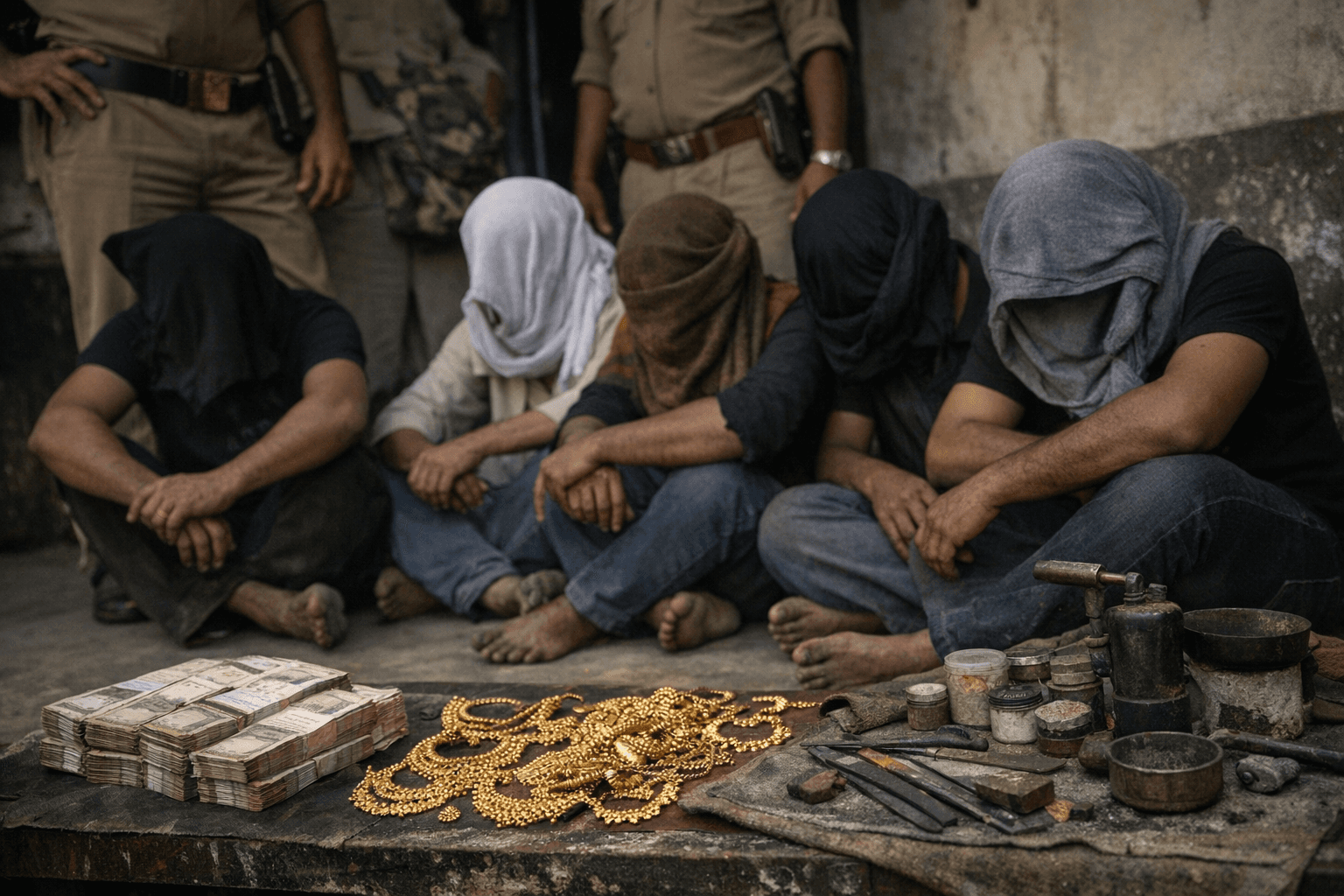
The group targeted rural villagers and women shopping in crowded market settings, where the noise and momentum of commerce work against careful scrutiny. The accused would produce a small, genuine piece of gold to establish credibility, then complete the transaction with imitation necklaces dressed up to pass. Investigators from the local surveillance team tracked the operation to a temple area before making the arrests. Police seized fake gold necklaces, approximately ₹24,500 in cash and, critically, the tools the gang used to doctor and present counterfeit pieces as authentic. All five have been charged and legal proceedings are underway.
The case is a precise illustration of how fake gold reaches buyers who have no reason to distrust what they see. Rural women shopping at a mela or a grain bazaar are not browsing — they are buying for specific occasions, often with limited time and real money saved for the purpose. That urgency is a feature, not a coincidence, of where these gangs choose to operate.
The most reliable defense is paperwork. Any legitimate gold purchase in India should come with a proper invoice showing the seller's name, the item's weight, purity and making charges. Since 2021, the Bureau of Indian Standards has required all hallmarked gold jewelry to carry a six-digit Hallmark Unique Identification number, known as an HUID. That number can be verified instantly through the BIS Care app, which is free and available on both Android and iOS. A seller who cannot produce an HUID, or who deflects the question, is providing an answer of its own kind.
Temporary stalls and street vendors operating outside permanent shop premises carry no regulatory accountability. For any purchase above the most modest value, a registered jeweler with a fixed address and a BIS hallmarking license is not a luxury consideration — it is the minimum standard. The "festival discount" framing that scammers often deploy to create urgency should be read as precisely that: pressure designed to prevent the kind of pause that would expose the fraud.
If a piece purchased in good faith turns out to be suspect, the steps are straightforward. Preserve the original bill, packaging and any contact information the seller provided. Take the item to a government-recognized assay and hallmarking center for independent testing, not back to the seller. File a complaint with the local police and, if the seller misrepresented hallmarking credentials, with the Bureau of Indian Standards directly. The ₹24,500 recovered in Kanpur is a fraction of what victims likely paid. The real cost of a fake necklace is rarely just the money.
This article was produced by Prism’s automated news system from verified source data, official records, and press releases, then run through automated quality and moderation checks before publishing. The system is built and supervised by the people who set the standards it runs under. Read our full AI policy.
Did this article answer your question?