Kashmir jewelers display gold amid price swings and muted demand
Gold necklaces still gleamed in Srinagar as spot prices jumped 1.7% to about $4,887, but Akshaya Tritiya buying stayed muted and shoppers turned cautious.
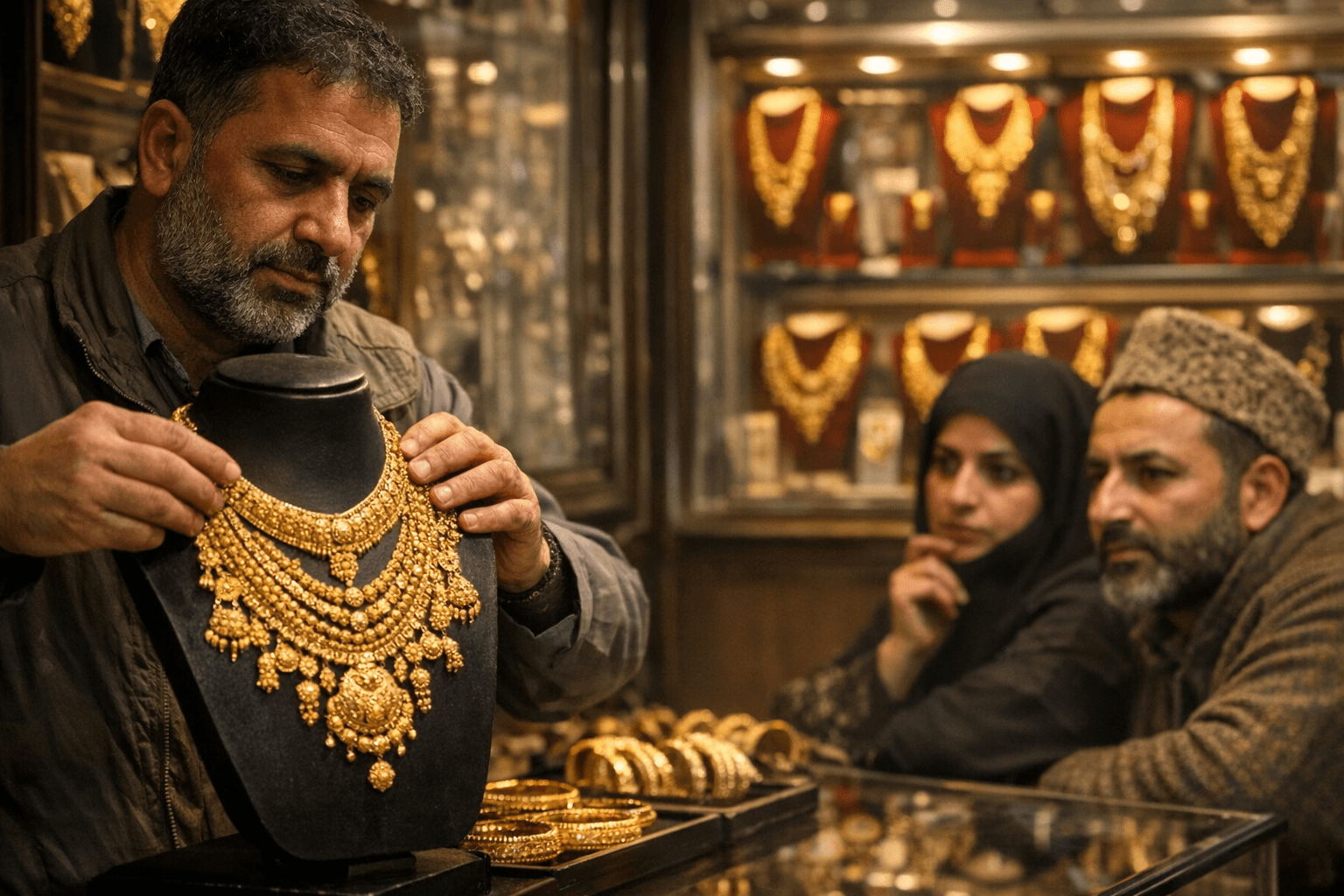
A row of gold necklaces and ornate bangles still caught the light in Srinagar, but the real story in Kashmir’s jewelry cases was caution. Spot gold climbed 1.7% to about $4,887 an ounce as the Strait of Hormuz reopened, and silver rose more than 5%, yet the jump in bullion did not translate into easy buying at the counter.
The Strait of Hormuz carries nearly a fifth of global oil supply, so its reopening eased some fears about disruption and inflation. For India, a major oil importer and one of the world’s largest gold consumers, softer energy prices can help calm costs in the broader economy. That does not erase the pressure on jewelry shoppers, who are still confronting record metal prices and a market that has become far more selective.
That tension showed up again on April 19, when India’s gold demand during Akshaya Tritiya stayed muted as record prices curbed jewelry purchases. Investment demand, by contrast, rose modestly. The split is telling: bullion can jump in a single session, but necklaces, rings and bridal sets change more slowly, filtered through store premiums, making charges and the weight and purity of each piece.
The World Gold Council said in January that India’s gold demand could fall to 600 to 700 tonnes in 2026 after an 11% drop in 2025. Kavita Chacko and her colleagues have pointed to the same shift many jewelers are seeing on the floor: higher prices are nudging buyers toward lighter jewelry and lower-purity 18K and 14K pieces, while wedding-related purchases remain steadier than discretionary buys. In practice, that means slimmer chains, smaller settings and less appetite for heavy, high-karat sets.
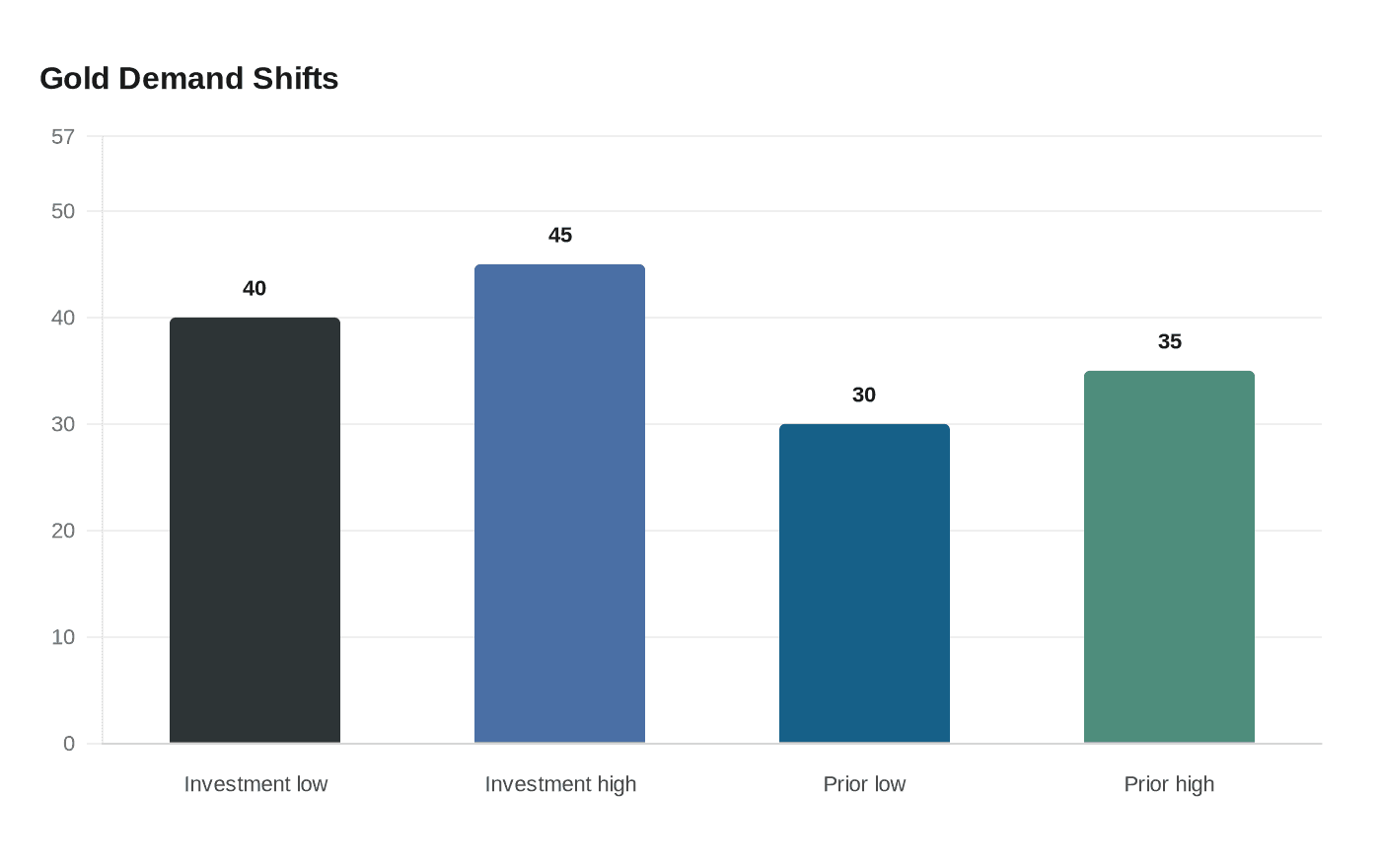
Deloitte India added another marker of the changing market in mid-April, saying investment demand had risen to 40% to 45% of total gold demand from 30% to 35%. The same price spike that makes a bridal necklace harder to sell is also pushing more money toward bars, coins and digital gold. Gold still reads as a store of value, but in Srinagar and across India, it is looking less like an impulse purchase and more like a decision weighed against every rupee.
This article was produced by Prism’s automated news system from verified source data, official records, and press releases, then run through automated quality and moderation checks before publishing. The system is built and supervised by the people who set the standards it runs under. Read our full AI policy.
Did this article answer your question?