Oscar Heyman blooms with floral gold jewelry in spring lookbook
Oscar Heyman turns spring florals into sculptural gold statements, led by a $400,000 tourmaline flower necklace and 35 hand-finished one-of-a-kind pieces.
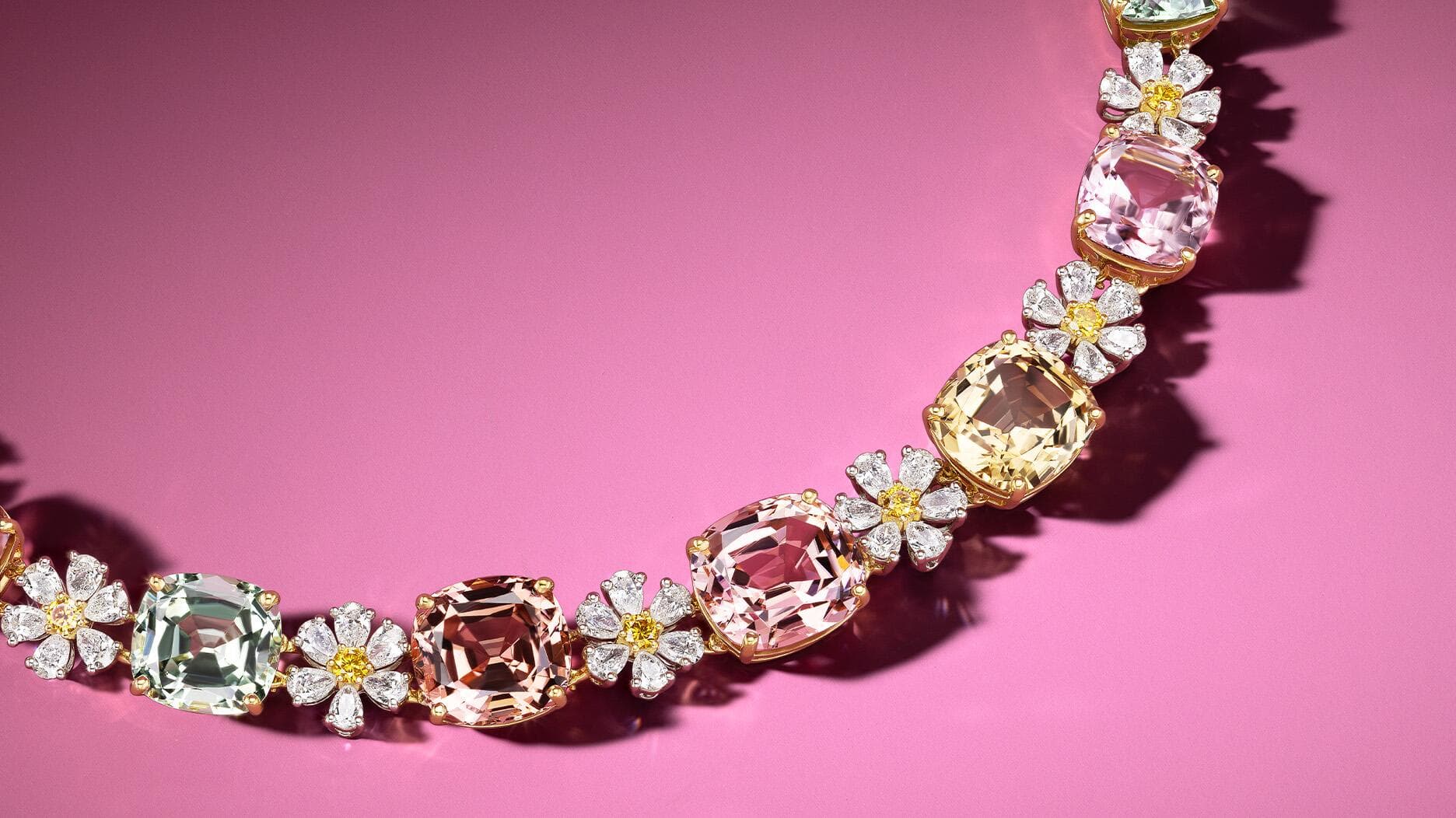
A platinum-and-18-karat yellow gold flower necklace anchors Oscar Heyman’s Spring 2026 lookbook. Petals arrive with sharper edges, richer color, and the kind of scale that reads across a room, not just at the wrist or collarbone.
Florals, recut in gold
The strongest floral jewelry for 2026 is not dainty. It is bigger, more architectural, and more dimensional, with blossoms that feel engineered as much as they are inspired by nature. In gold, warm metal gives petals volume and definition, especially when the design pairs yellow gold with cooler platinum or bright diamond accents.
Oscar Heyman’s approach sits squarely in that territory. The house built its spring story around sculptural blooms, including a flower necklace in platinum and 18-karat yellow gold set with multi-color tourmalines, white diamonds, and fancy-color diamonds. It is a far cry from the tiny blossom motifs that typically signal spring; this is floral design with the weight and presence of fine evening jewelry.
A lookbook made like a jewelry wardrobe
The Spring 2026 book, which debuted in late March 2026 as Oscar Heyman’s first spring catalog, contains 35 one-of-a-kind pieces. The collection feels like a tightly edited wardrobe rather than a product drop, with each jewel chosen to show a different facet of the house.
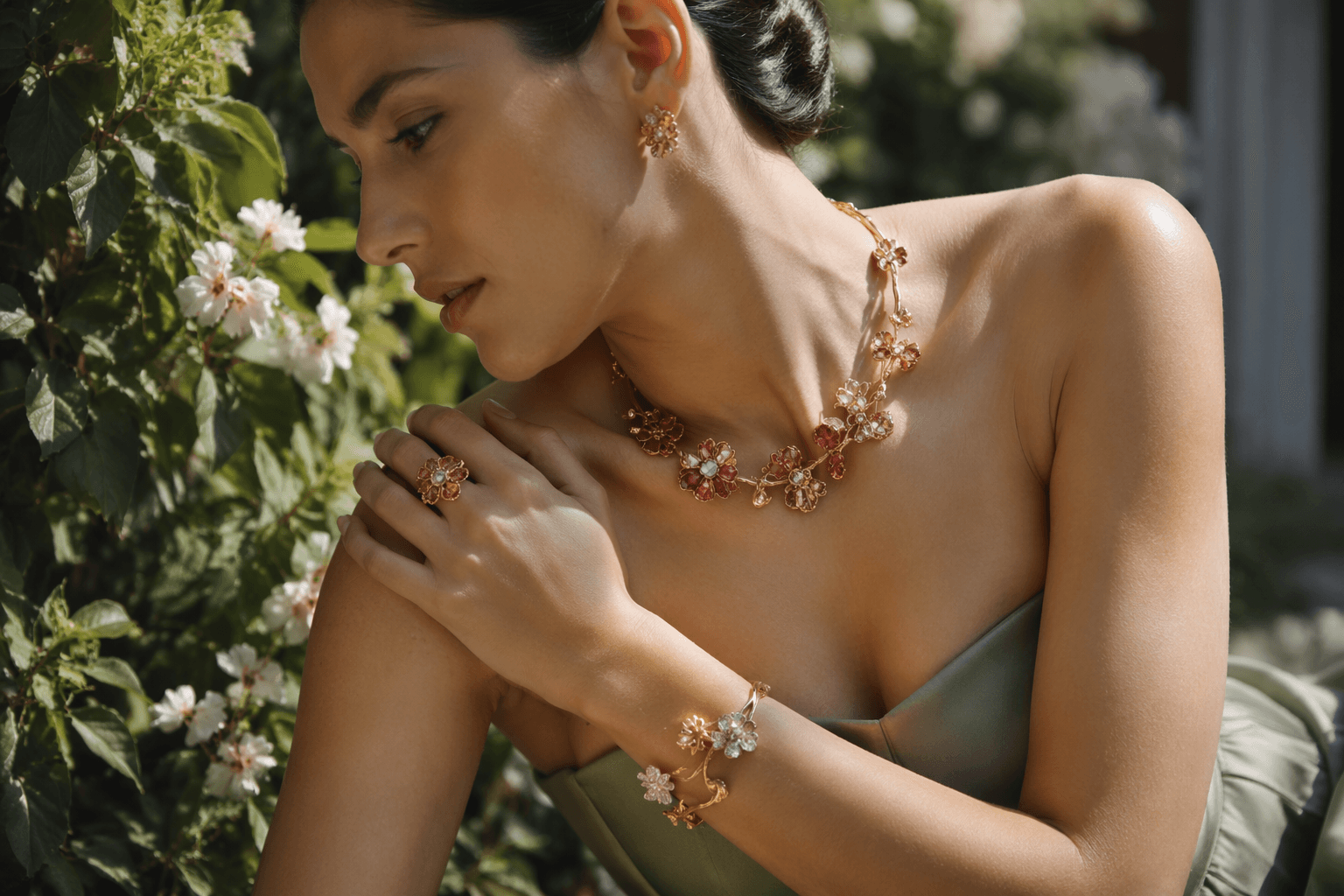
The timing is just as deliberate as the design. Oscar Heyman positions the spring publication as an editorial preview for 2026 and as a warm-up for Couture in Las Vegas, while also tying it to Mother’s Day, graduation, and the wedding-and-anniversary season. The line’s most expressive pieces have the polish and sentiment expected of gifting jewelry, but enough craftsmanship to justify serious collecting.
The necklace that defines the mood
At the center of the floral story is a 111-carat multi-color tourmaline and diamond flower necklace, priced at $400,000. The composition rewards close looking: platinum gives the structure a cool, clean outline, while 18-karat yellow gold adds warmth around the petals and settings. Multi-color tourmalines bring a painterly effect, and the mix of white diamonds with fancy-color diamonds keeps the flower from feeling flat or literal.
The yellow gold is not a background metal here, but part of the silhouette, helping the flower read as sculpted jewelry first and botanical reference second.
Craft, not just concept
Oscar Heyman has been making jewelry since 1912, and the spring collection leans on that history without looking backward. Tom Heyman says the design team works with the house’s gem experts and its lapidaries, setters, engravers, jewelers, and polishers to create what the brand calls “modern classics.” The pieces balance old-world bench skill with a sharper, more contemporary profile.
The brand says the work is made in its Madison Avenue workshop and atelier in New York City. Oscar Heyman also emphasizes that its designs are intended to be beautiful from both front and back. In floral work especially, the back of a petal, the curve of a stem, and the underside of a setting are all part of the finished object.
Beyond blossoms: the stones that widen the story
The spring lookbook does not stop at flowers. It also brings in a 4.61-carat no-oil emerald ring, a new edition of the house’s pansy earrings, and rare stones including sphene, unheated spinel, Paraíba tourmaline, cat’s eye, star rubies, star sapphires, and black opals. Oscar Heyman’s floral narrative is part of a broader gemstone language that values unusual material as much as recognizable form.
The collection does not feel overly sweet. A pansy motif can easily tilt sentimental, but paired with rarities like black opal or Paraíba tourmaline, it becomes more jewel-like, more collectible, and more specific to the house. The same is true of the no-oil emerald, whose absence of treatment adds another layer of desirability for collectors who prize natural color and clarity in their most important stones.
This article was produced by Prism’s automated news system from verified source data, official records, and press releases, then run through automated quality and moderation checks before publishing. The system is built and supervised by the people who set the standards it runs under. Read our full AI policy.
Did this article answer your question?