why white gold can irritate skin, and how to choose safer pieces
White gold’s bright finish often hides nickel and rhodium, which is why higher-karat yellow gold is usually the calmer choice for reactive skin.
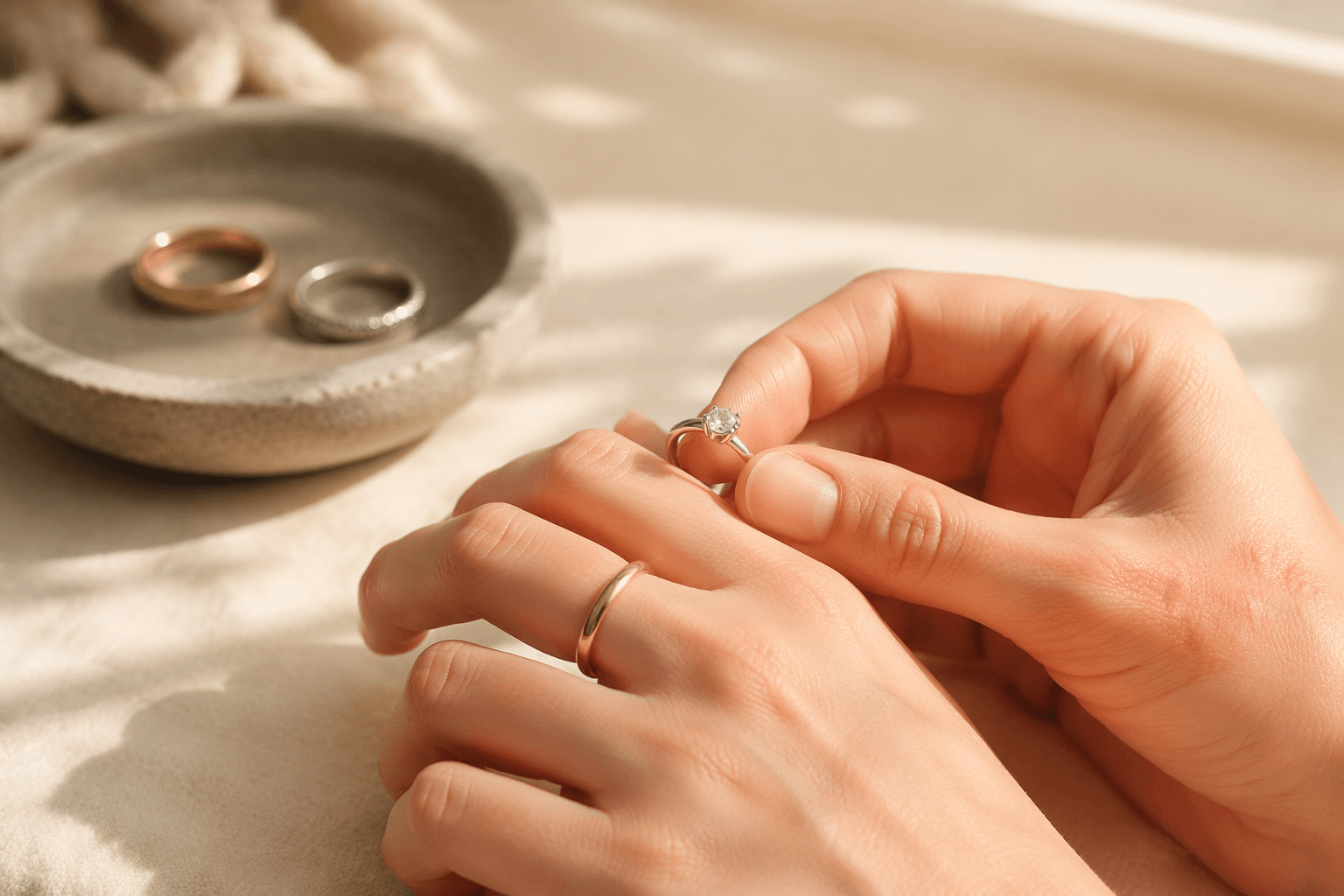
If your ears, fingers, or wrists have ever flushed, itched, or broken out after a new piece, the safer-looking choice is often not the whitest one at all, but the warmest: yellow gold with a higher gold content and fewer alloy metals. White gold can look clean, modern, and beautifully bright, but that pale finish is often built from a mix of metals that sensitive skin does not always welcome.
Why white gold can bother skin
White gold is not a single material. It is made by alloying pure gold with white metals such as nickel or palladium, and in some recipes copper and zinc enter the mix as well. In the United States it is commonly sold in 14K or 18K forms, which means the gold has already been diluted with other metals before it reaches the case. That matters because the metal that touches your skin is not just gold, but the full alloy beneath the surface.
The finish complicates things further. White gold is often rhodium-plated to create extra shine, a brighter white color, and added scratch resistance. That plating is part of the appeal, but it can wear over time, and when white gold is not rhodium-plated it can read warmer in tone. It is also why a ring that looked icy and cool in the display tray may later need maintenance to keep that look. White gold has been part of jewelry design for more than a century, with the first white-gold alloy traced to a patent filed in 1913.
Why yellow gold is usually the gentler starting point
For skin that reacts easily, the American Academy of Dermatology recommends nickel-free or hypoallergenic jewelry and specifically names 18-, 22-, and 24-karat yellow gold among the metals that may be better for people trying to avoid nickel exposure. The higher the karat, the more gold is present and the less room there is for potentially irritating alloy metals.
That is why yellow gold often looks like the safer first move for earrings, rings, and bracelets that will sit against skin for hours at a time. It does not guarantee a reaction-free experience, because alloys still vary, but it reduces the odds that nickel, or a nickel-containing white metal blend, is part of the equation. If costume jewelry has ever left you with a rash, yellow gold at 18K, 22K, or 24K gives you a cleaner starting line than a bright white piece whose exact alloy is not clearly disclosed.
What the karat tells you about the metal
Karat is not just a luxury label. It is a map of how much gold is actually in the piece. In 14K white gold, 583 parts are pure gold and 417 parts are other metals, while 18K white gold is 750 parts pure gold and 250 parts other metals. That difference affects more than price. It changes hardness, color, and how much room there is for the alloy metals that may trigger irritation.
Fourteen-karat and 18-karat are the most popular white-gold choices, with 14K often preferred for everyday wear because it balances durability and gold content. Eighteen-karat white gold carries more gold but is somewhat softer. For a reactive wearer, the lower the gold content, the more the piece depends on the rest of the alloy to deliver its color and structure.
Why nickel is the metal to watch
Nickel is the usual culprit when jewelry causes an itchy, angry rash where metal touches skin. The American Academy of Allergy, Asthma and Immunology calls nickel a leading cause of allergic contact dermatitis, and Mayo Clinic describes nickel allergy as an immune-system reaction that typically causes an itchy rash at the point of contact. That is why the problem often shows up at the backs of earrings, under a ring, or along the underside of a bracelet clasp.
A PubMed review cites worldwide prevalence at around 8.6 percent and reports about 17.5 percent nickel patch-test positivity in one large North American dermatology group. Another review found that about 81.5 percent of nickel-positive women tested had pierced ears. The majority of people sensitized to nickel became sensitized after ear piercing, and European Commission materials put nickel allergy from items worn next to the skin at about 1 percent of men. A 2023 systematic review concluded that piercing remains a significant risk factor and that many earrings still release nickel at levels that can cause dermatitis.
What to check before you buy
The smartest purchase is the one whose materials are clearly named. In the United States, the Consumer Product Safety Commission says there are no mandatory federal requirements specifically for jewelry, although ASTM consensus standards are treated as industry best practices. ASTM F2999 covers adult jewelry, and ASTM F2923 covers children’s jewelry, which is especially important because children’s pieces address nickel sensitization concerns directly.
- Confirm the karat. For yellow gold, 18K, 22K, and 24K are the most reassuring options if nickel is your concern.
- Ask what the white gold is alloyed with. Nickel-free white gold exists, but the alloy should be stated plainly.
- Check whether the piece is rhodium-plated. That finish changes the look and can require future replating.
- Look for the words nickel-free or hypoallergenic, especially on earrings and rings that stay in constant contact with skin.
- If you are buying for a child, ask whether the jewelry is intended to meet ASTM F2923. For adult pieces, look for ASTM F2999 language when available.
This article was produced by Prism’s automated news system from verified source data, official records, and press releases, then run through automated quality and moderation checks before publishing. The system is built and supervised by the people who set the standards it runs under. Read our full AI policy.
Did this article answer your question?