Pandora Expands Lab-Grown Diamond Collections to Reach Younger, Broader Markets
Lab-grown diamonds now claim 52% of US engagement ring center stones, and Pandora's latest expansion is pushing gold jewelry buyers to rethink where value actually lives.
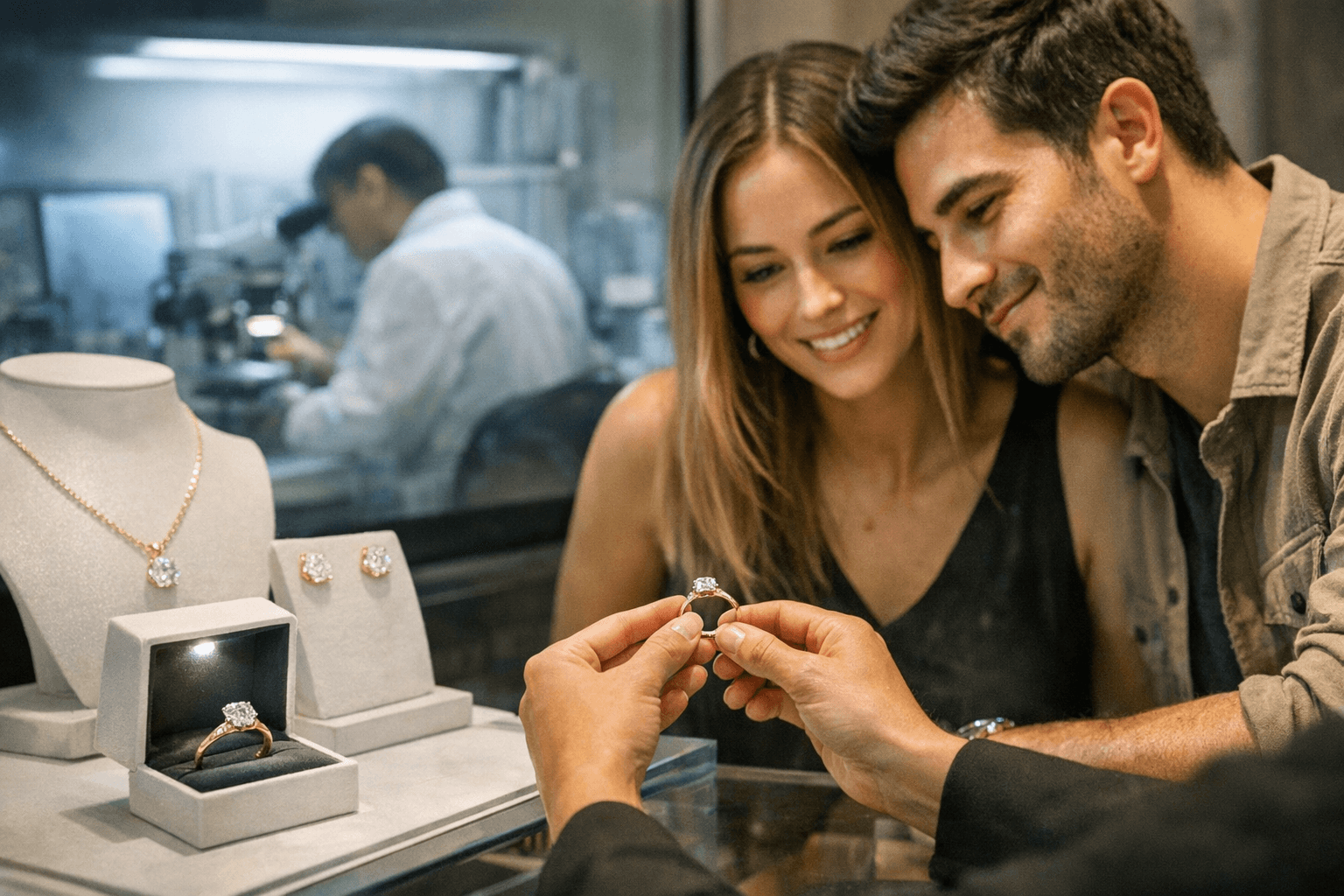
When Pandora priced its one-carat lab-grown diamond ring in 14k solid gold at $1,850, it set a reference point the rest of the fine jewelry industry cannot ignore. The world's largest jewelry brand has expanded its lab-grown diamond portfolio to broaden both its geographic footprint and its product assortment, citing affordability, sustainability, and stronger resonance with younger buyers. The ripple lands squarely on the gold side of the equation.
Lab-grown diamonds now sell at 70 to 90 percent less than mined stones of equivalent quality. A one-carat stone that would retail for $5,000 to $9,000 if extracted from the earth runs $1,200 to $2,200 in lab-grown form. That repricing compresses the stone's share of total cost and forces the real conversation to the metal underneath. As CEO Alexander Lacik has noted, younger consumers have been the most decisive adopters, and the data bears him out: lab-grown stones now account for 52 percent of engagement ring center stones sold in the US, up from just 12 percent in 2019.
Pandora, which stopped using mined diamonds entirely in 2021, added lab-grown stones to existing collections and built standalone ranges around them. Its gold-tier offerings span 14-karat yellow gold and 14-karat white gold, with the Nova collection featuring a distinct, four-prong setting that reveals more of the diamond, so each round brilliant or princess cut stone can capture the light with more dimension, brilliance and warmth, as if floating in mid-air, and the Talisman line presenting five pendant designs priced from $390 to $990, each crafted in 14k gold with a 0.25 or 0.75-carat round brilliant-cut lab-grown diamond at the center.
Where a buyer places their budget within the gold-karat spectrum determines how resilient the piece's long-term value actually is.
At 10k gold (41.7 percent pure gold), the per-gram intrinsic value sits around $42 at current market rates, making it the most affordable entry into solid gold. For a casual daily-wear piece centered on a smaller lab-grown stone, the combination keeps the total price accessible, but the secondary market for 10k is thin and resale returns rarely cover what it costs to have a stone professionally reset later. Think of it as the right choice for fashion-forward buying, not portfolio building.
At 14k (58.5 percent pure gold, roughly $58 per gram), the math becomes more defensible. This is Pandora's own benchmark for its lab-grown lines, and for good reason. A four-gram 14k setting holds about $232 in gold content at melt, provides the durability that daily-wear demands, and trades easily on the secondary market. With a lab diamond bringing the total to under $2,000 for a one-carat piece, the karat tier justifies the spend both for sentiment and for material substance.
At 18k (75 percent pure gold, approximately $75 per gram), the stone almost becomes incidental to the math. A modest five-gram 18k band carries around $375 in gold at melt. Pair it with a one-carat lab-grown diamond at $1,500 and the total piece cost sits well below what a comparable mined-stone ring in 14k would have run five years ago. The premium over 14k is real, but so is the metal quality: 18k resists tarnishing, commands stronger secondary pricing, and signals craftsmanship in a way mass-market pieces rarely can.
Pandora's expansion has permanently shifted the baseline. The question for anyone buying a diamond-in-gold piece today is not whether the diamond is large enough. It is whether the gold beneath it has enough weight, purity, and setting quality to carry the piece's value forward. In that context, a smaller stone in 18k with careful hand-finishing beats a larger stone in a thin 10k prong setting nearly every time.
This article was produced by Prism’s automated news system from verified source data, official records, and press releases, then run through automated quality and moderation checks before publishing. The system is built and supervised by the people who set the standards it runs under. Read our full AI policy.
Did this article answer your question?