Robbery suspect nabbed in KK with jewellery worth RM50,000
Six stolen gold bracelets worth RM50,000 were found on a 45-year-old arrested in Kota Kinabalu, revealing a pattern of serial thefts targeting gold shops across Penampang and Putatan.
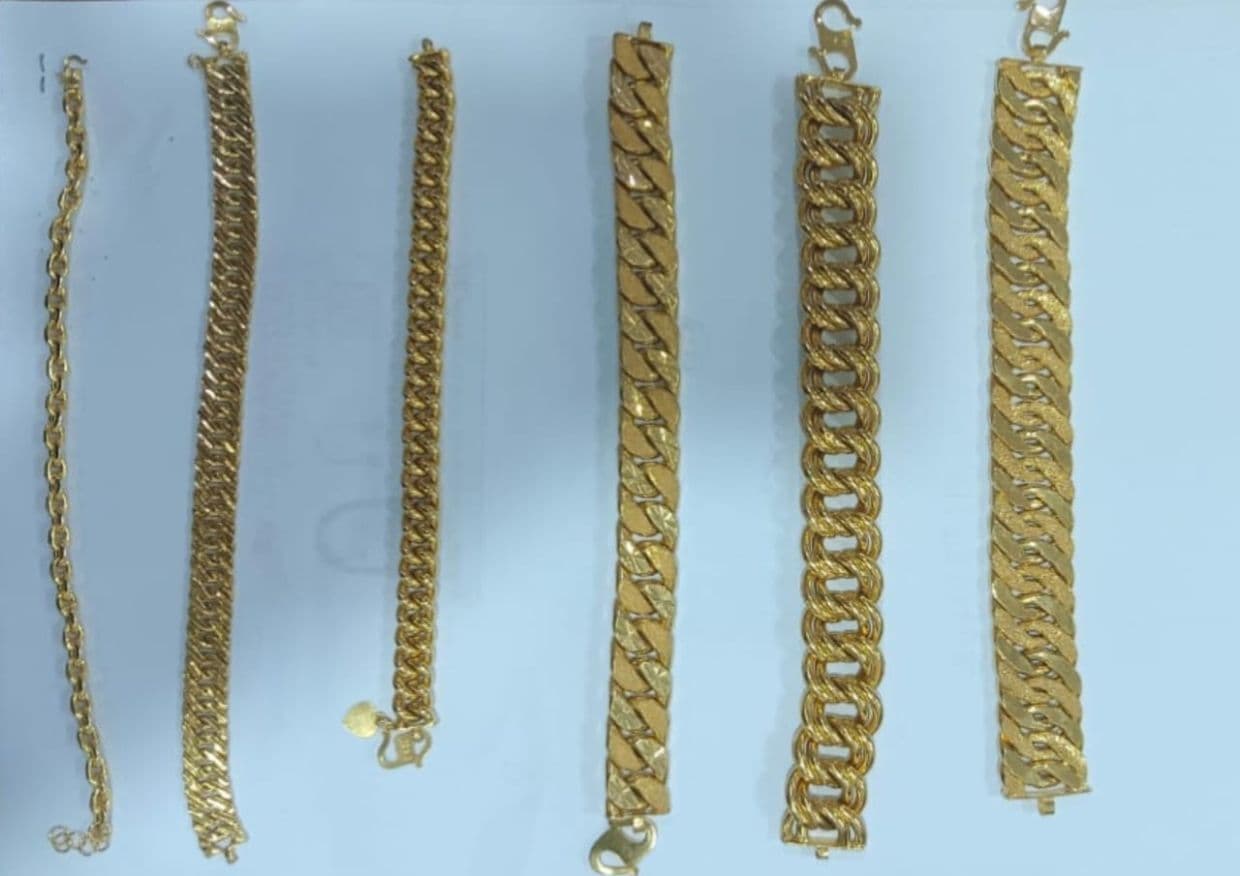
Six stolen gold bracelets of various sizes, collectively valued at around RM50,000, were found on a 45-year-old man arrested near a commercial building in Kota Kinabalu on March 31, as Penampang district police unravelled what they believe is a pattern of serial thefts at gold shops across Penampang and Putatan.
Penampang OCPD Supt Sammy Newton confirmed that a Criminal Investigation Department team acting on intelligence leads detained the suspect at around 1pm. "We found six pieces of gold jewellery on the suspect, and also confiscated a car and mobile phone, among other things, to facilitate investigations," he said. Police also seized clothing and related documents to support the inquiry. Records showed the suspect had several prior convictions for property crimes and drug abuse.
The case is being investigated under Section 380 of the Penal Code for theft within a building, which carries a jail sentence of up to 10 years with a fine, and caning for repeat offenders upon conviction.
The six bracelets of varying sizes seized in this arrest are precisely the category of piece that makes gold retail vulnerable, inside shops and beyond their doors. Gold bangles in the 22- and 24-karat ranges common in Malaysian gold retail carry their value almost entirely in raw weight rather than in craftsmanship or provenance, which means a thief needs no specialist buyer to liquidate them. They can be worn away from a scene inconspicuously, pawned at short notice, or sold by gram weight with minimal documentation. That is the calculation an experienced opportunist runs in seconds.

The same weight-to-value ratio that makes high-karat bangles so attractive to thieves makes them attractive to buyers. But understanding how targets get selected, whether inside a shop or on the street outside one, is becoming a more relevant part of how people approach wearing gold in public. Chunky bangles worn in multiples, or heavy chains layered at the neckline, read immediately to a practised eye as portable wealth. Stacking amplifies the signal far beyond aesthetic intent.
A more considered approach need not compromise the look. A single, well-proportioned bracelet commands as much presence as three stacked pieces, without the inventory effect. Pairing one substantial 22-karat yellow gold piece with a lower-profile two-tone or white gold setting distributes the visual weight across metals rather than concentrating it in one identifiable category. Shortening a chain by even one length brings a pendant closer to the body and out of immediate sightline. The goal is impact that reads as intention, not accumulation.
Gold has never needed stacking to make a statement. One deliberate piece, worn with conviction, carries more authority than a display that announces its own vulnerability.
Know something we missed? Have a correction or additional information?
Submit a Tip