Simple Steps to Clean and Care for Your Gold Jewelry at Home
Mild dish soap and a soft toothbrush do more for your gold than most commercial cleaners — here's exactly how to use them without causing damage.
Gold has a reputation for being indestructible, and that reputation is mostly earned. Solid gold won't tarnish the way silver does, and it doesn't corrode. But it's not invincible either. Grime builds up in settings, scratches accumulate on polished surfaces, and gold-plated pieces can chip when treated carelessly. The good news: a few deliberate habits keep most gold jewelry looking the way it did the day you bought it.
What Happens to Gold Over Time
Even 14k and 18k gold pieces are alloys, meaning they contain other metals alongside pure gold. Those secondary metals, copper, silver, or zinc depending on the alloy, are what make gold jewelry vulnerable to dulling and, in gold-plated pieces, surface breakdown. Solid gold is durable and genuinely won't tarnish, but gold-plated jewelry, where a thin gold layer sits over a less expensive metal base, absolutely can chip and cloud. The higher the karat, the more pure gold is present and the more resistant the piece is to everyday wear. A 14k yellow gold bracelet holds up well for daily use; an 18k piece is slightly softer but more chemically stable.
How to Clean Gold Jewelry at Home
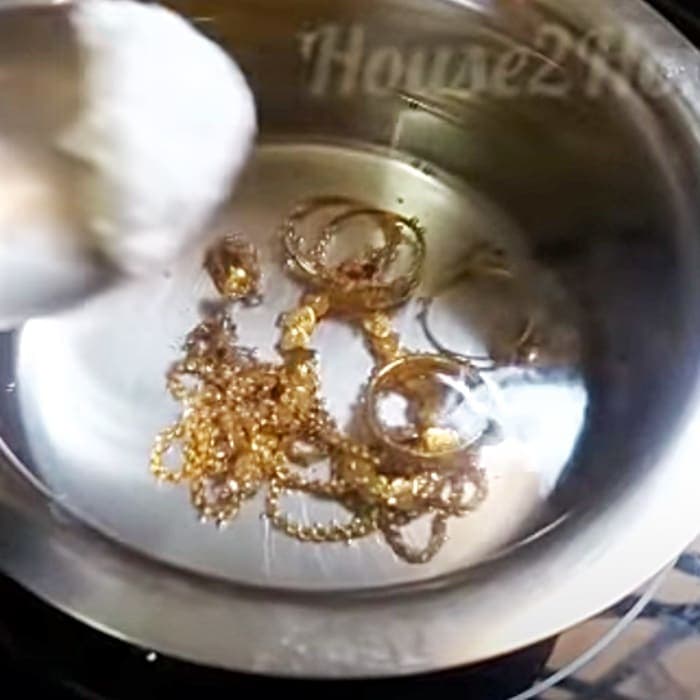
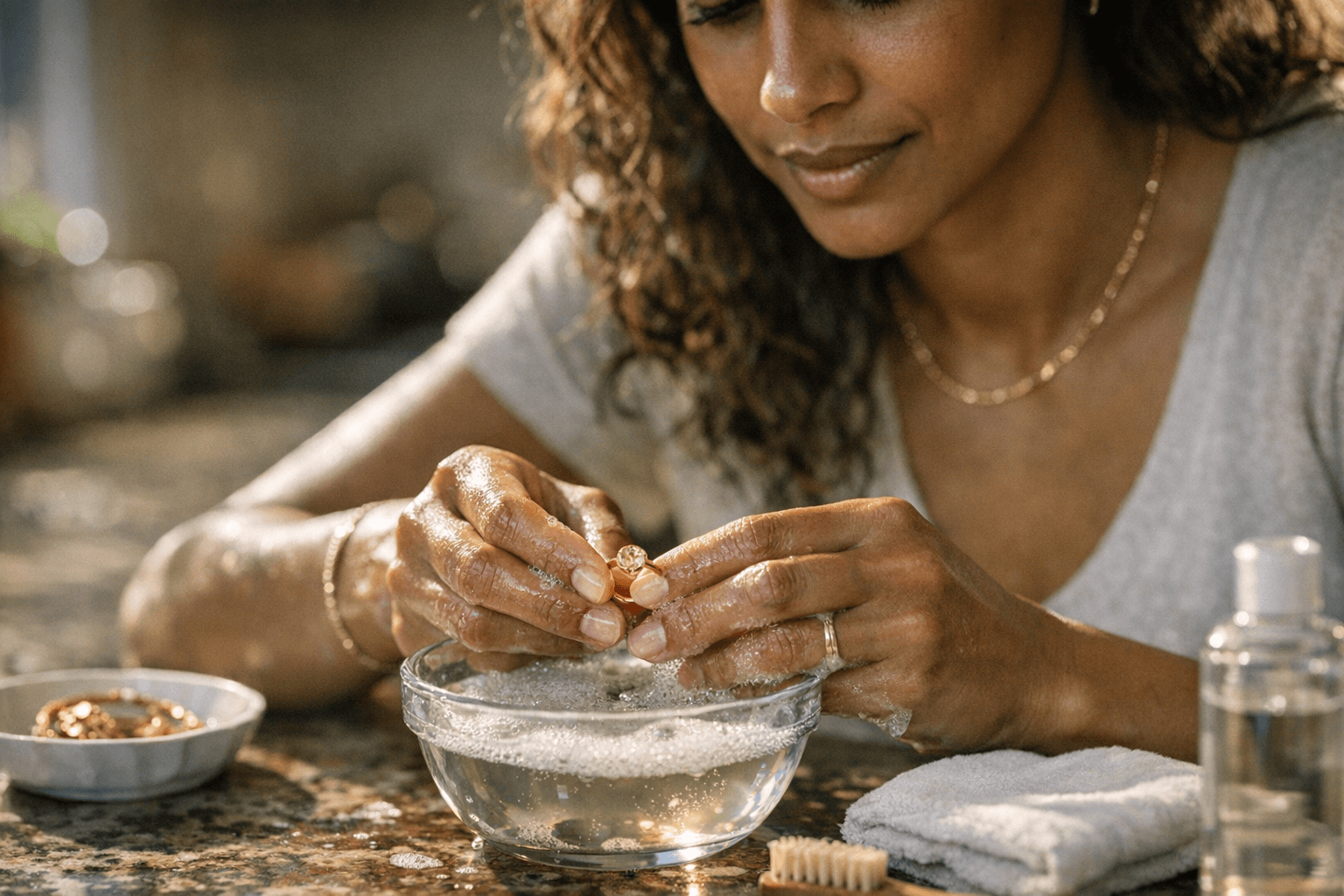
The most effective home cleaning method is also the simplest. Fill a clean bowl with lukewarm water and add a few drops of mild dish soap. Mild soap is crucial: anything containing bleach or chlorine can discolor gold and, with prolonged exposure, cause it to disintegrate. Place your gold pieces in the solution and let them soak for at least five minutes. For heavily soiled pieces, some jewelers recommend extending that soak to three hours before scrubbing.
After soaking, remove the pieces and lay them on a soft cloth. Use a soft-bristled toothbrush to gently work away any remaining dirt or debris, paying attention to the undersides of settings and the links of chains, where oil and grime tend to collect. Rinse each piece under warm running water, then blot dry with a soft cloth. Paper towels and tissues feel harmless but are abrasive enough to leave fine scratches on polished metal surfaces, so stick to fabric.
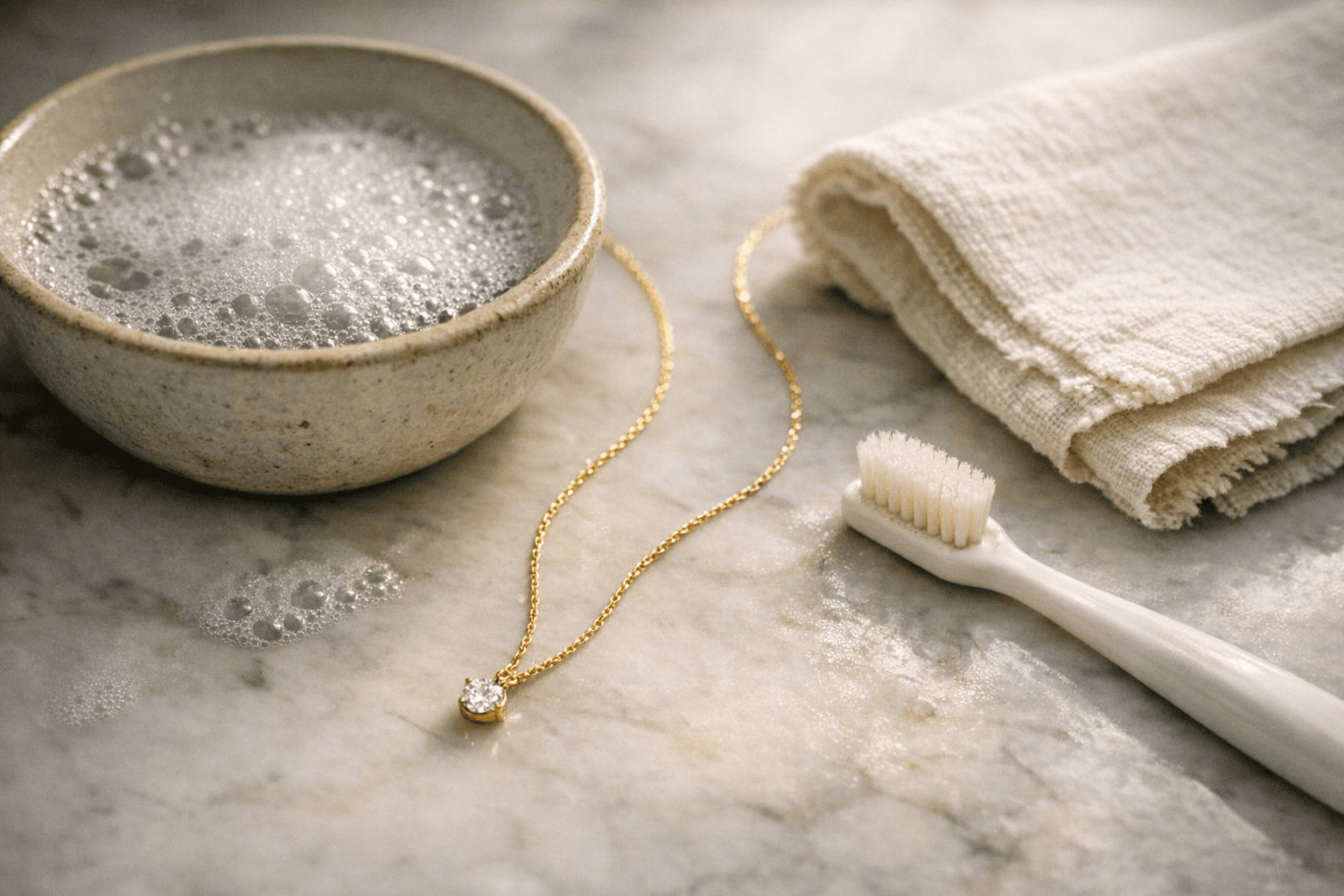
For an extra layer of shine after the cleaning process, a jewelry polishing cloth finishes the job well. Rubbing alcohol is also a jeweler-approved option for cleaning and sanitizing between deeper cleans.
One caution worth repeating: if your gold jewelry contains gemstones, the cleaning process needs to account for the stone, not just the metal. Softer or treated stones, including many pearls, emeralds, and opals, can be damaged by soaking in water or soap. When in doubt, consult a jeweler before submerging any piece with a stone you're uncertain about.
What to Avoid Wearing Gold Around
The daily habits that do the most damage to gold jewelry aren't dramatic events; they're routine ones. Sweat, chlorine, perfume, lotion, and even body spray can cloud the surface of gold and accelerate wear on plated pieces. Tiffany's care guidelines recommend removing gold jewelry before any of the following:
- Performing household or outdoor chores, including cleaning and gardening
- Showering, bathing, or swimming in pools, hot tubs, and the ocean
- Applying lotion, hair products, fragrances, or other cosmetics
- Exercising at the gym or playing contact sports
- Preparing meals (kitchen chemicals and acids are more damaging than most people expect)
Household bleach is the most serious offender. Even brief contact with bleach can discolor gold and, with repeated exposure, begin to break down the metal itself. Take rings off before cleaning the bathroom or doing dishes with strong detergents.
How to Store Gold Jewelry to Prevent Tarnish
Proper storage does as much work as regular cleaning. The goal is to limit your jewelry's exposure to air and moisture, both of which accelerate oxidation in the alloy metals present in gold. Airtight containers or zip-top bags are among the most effective solutions. Adding anti-tarnish strips or silica gel packets inside the storage container absorbs moisture and further slows the tarnishing process.
Avoid storing jewelry in bathrooms, where humidity from showers and baths creates exactly the kind of damp environment that accelerates tarnish. A bedroom drawer lined with a soft cloth, or a dedicated jewelry box with individual compartments, keeps pieces separated (which prevents scratching) and away from the moisture that degrades them over time.
Storing pieces individually also matters for a mechanical reason: gold chains scratch each other, pendants tangle, and rings with stones can chip softer neighboring pieces. Keep pieces apart, ideally in separate pouches or compartments.
Caring for Gold Vermeil and Gold-Plated Pieces
Gold vermeil deserves its own care routine because the construction is fundamentally different from solid gold. In vermeil, a layer of 14k or 18k gold sits atop sterling silver, which means the gold surface is more vulnerable to abrasion and chemical exposure than a solid gold piece would be. The gentle-wipe method works especially well for vermeil, since the gold layer sits atop sterling silver and responds best to soft, dry cleaning. Pieces from Oak & Luna — whose name necklaces and initial rings are finished in 14k gold vermeil — benefit from this gentle routine.
Rather than soaking vermeil in water, wipe it down after each wear with a soft, lint-free cloth to remove oils and residue. When a deeper clean is necessary, dampen the cloth slightly with warm water and a drop of mild soap, but avoid submerging the piece entirely. Pat dry immediately and store it in a dry, airtight environment.
When to Take Gold Jewelry to a Professional
Home cleaning handles the vast majority of maintenance, but there are situations where a jeweler's tools are the right call. If a piece has developed significant tarnish that won't lift with soap and water, or if a gold-plated piece has begun to chip or show the base metal beneath, professional restoration is the appropriate next step. Jewelers have access to ultrasonic cleaners and professional polishing equipment that can remove deeper grime and re-polish scratched surfaces without damaging the metal.
It's also worth having fine pieces, especially those with prong-set stones, checked periodically by a jeweler to ensure the settings are secure. Cleaning at home is excellent for surface maintenance, but a professional eye catches structural issues before a stone is lost.
How Often Should You Clean Gold Jewelry
Cleaning gold more than it needs isn't beneficial. Clean pieces only when they're visibly dirty or beginning to look dull, rather than on a fixed schedule. Pieces worn daily, like a gold necklace worn against skin or rings that see constant use, will need attention more frequently than occasion jewelry kept in a box. A quick rinse with warm water after a particularly sweaty day does more good than waiting until a heavy clean is necessary.
The pieces that hold their beauty longest are the ones whose owners pay attention to context: taken off before the pool, stored away from humidity, cleaned gently when needed. Gold rewards care with decades of wear.
This article was produced by Prism’s automated news system from verified source data, official records, and press releases, then run through automated quality and moderation checks before publishing. The system is built and supervised by the people who set the standards it runs under. Read our full AI policy.
Did this article answer your question?