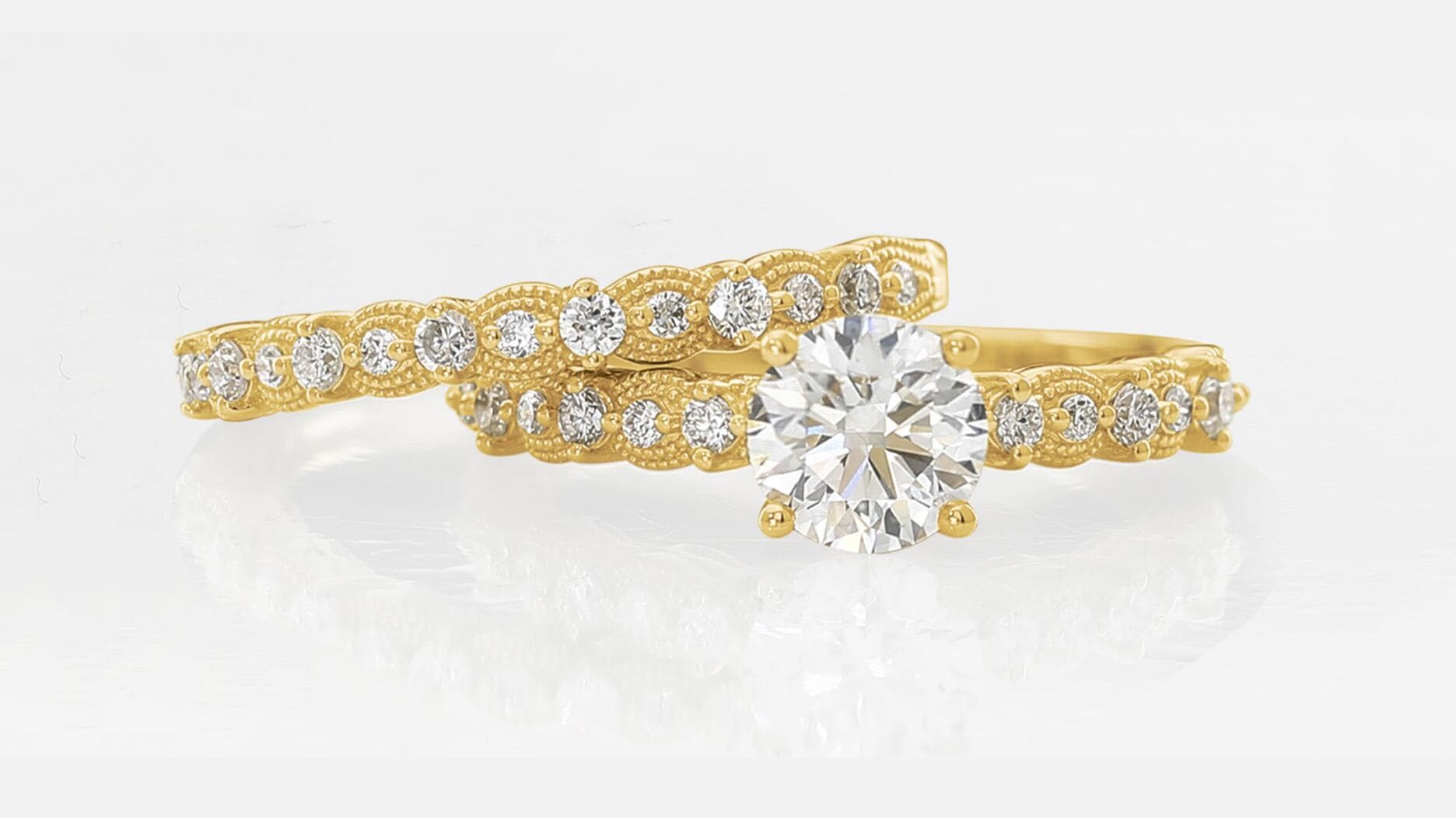
Surging 2026 Gold Prices Force Jewelers to Rethink Production and Pricing
Spot gold touched the high-$5,000s in late January and was trading around $5,188 on Feb. 26–27, squeezing replacement costs and forcing jewelers to change pricing and production.

Gold’s climb into the high-$5,000s in late January and its continued volatility have moved beyond market chatter and into storefront economics. TradingEconomics reported that “Gold rose to 5,278.01 USD/t.oz on February 27, 2026, up 1.80% from the previous day,” while CoinCodex listed a “Current Price | $ 5,188.66” as of Feb. 26, 2026. Those snapshots capture a metal that has traded sharply higher year-over-year and is altering the cost base for makers of fine jewelry.
The scale of the move is stark. TradingEconomics records an all-time high of 5608.35 in January 2026 and notes that the metal was still roughly 84.75% higher than a year earlier on its CFD benchmark; TheStreet also reported “Spot prices touched an all-time high near $5,589 in late January 2026” before a February pullback to the low-5,000s. Even short-term swings matter: TradingEconomics shows a monthly dip of 2.62% alongside four-week losses of 3.21%, underscoring a market that can quickly widen cost volatility for inventory and custom work.
Banks and macro houses are sending mixed signals that complicate planning. Goldman Sachs raised its 2026 forecast to $5,400 per ounce and, as TheStreet noted, “attributes the rally to central bank buying and investor hedging against macro risks.” By contrast J.P. Morgan raised its year-end target to $6,300 on Feb. 2 and projects central bank and investor demand to average 585 tonnes per quarter; Deutsche Bank reiterated a $6,000 target while UBS set $6,200 for the first three quarters with an upside scenario at $7,200. Those divergent targets leave jewelers with wide potential ranges to price against.

Independent retailers and designers are already reacting. Picup Media cautioned that “Gold prices in 2026 have surged to historic highs, reshaping replacement costs, pricing cycles, and customer expectations. For independent jewelers, volatility is no longer theoretical. It directly impacts margins and sales conversations.” The same piece prescribes operational changes, advising that “you must integrate high-clarity product visuals into your pricing, quoting, and selling workflows so that customers evaluate quality and craftsmanship first, not just the cost of gold.”
Model-driven forecasts add further uncertainty for production planning. TradingEconomics projects gold at about 5315.28 USD/t.oz by the end of the quarter and 5724.53 in 12 months, while CoinCodex’s models, last updated Feb. 26, 2026, show a “Price Prediction | $ 5,871.36 (13.16%)” and an aggressive end-2026 scenario of $ 10,817, with an end-2030 projection of $ 15,837. CoinCodex also reports technical metrics such as a 50-day SMA of $ 4,875.13 and “Volatility | 3.00%,” metrics that jewelry operations teams can use to stress-test margins.

Context matters: the move follows a 2025 run in which the World Gold Council data cited by Men’s Journal and republished by Finance Yahoo shows the metal set 53 new all-time highs and “surpassed 5,000 tons for the first time in recorded history,” with the annual average price ending 2025 at $3,431 per ounce, up 44% versus 2024. With institutional targets ranging from $5,400 to $6,300 and model houses publishing far higher scenarios, jewelers must now reconcile supplier replacement costs, labor-intensive settings, and retail positioning. The practical result will be tighter metal budgets, revised minimums for custom orders, and an increased premium on craftsmanship communicated through clearer imagery and better grading rather than raw metal weight alone.
This article was produced by Prism’s automated news system from verified source data, official records, and press releases, then run through automated quality and moderation checks before publishing. The system is built and supervised by the people who set the standards it runs under. Read our full AI policy.
Did this article answer your question?