Tudor Heart: A Renaissance gold necklace reveals a French‑English pun and Tudor‑era details
A gold necklace circa 1518, linked to Henry VIII and Katherine of Aragon, hides a bilingual pun in its motto: "toujours" reads as "tous yours."
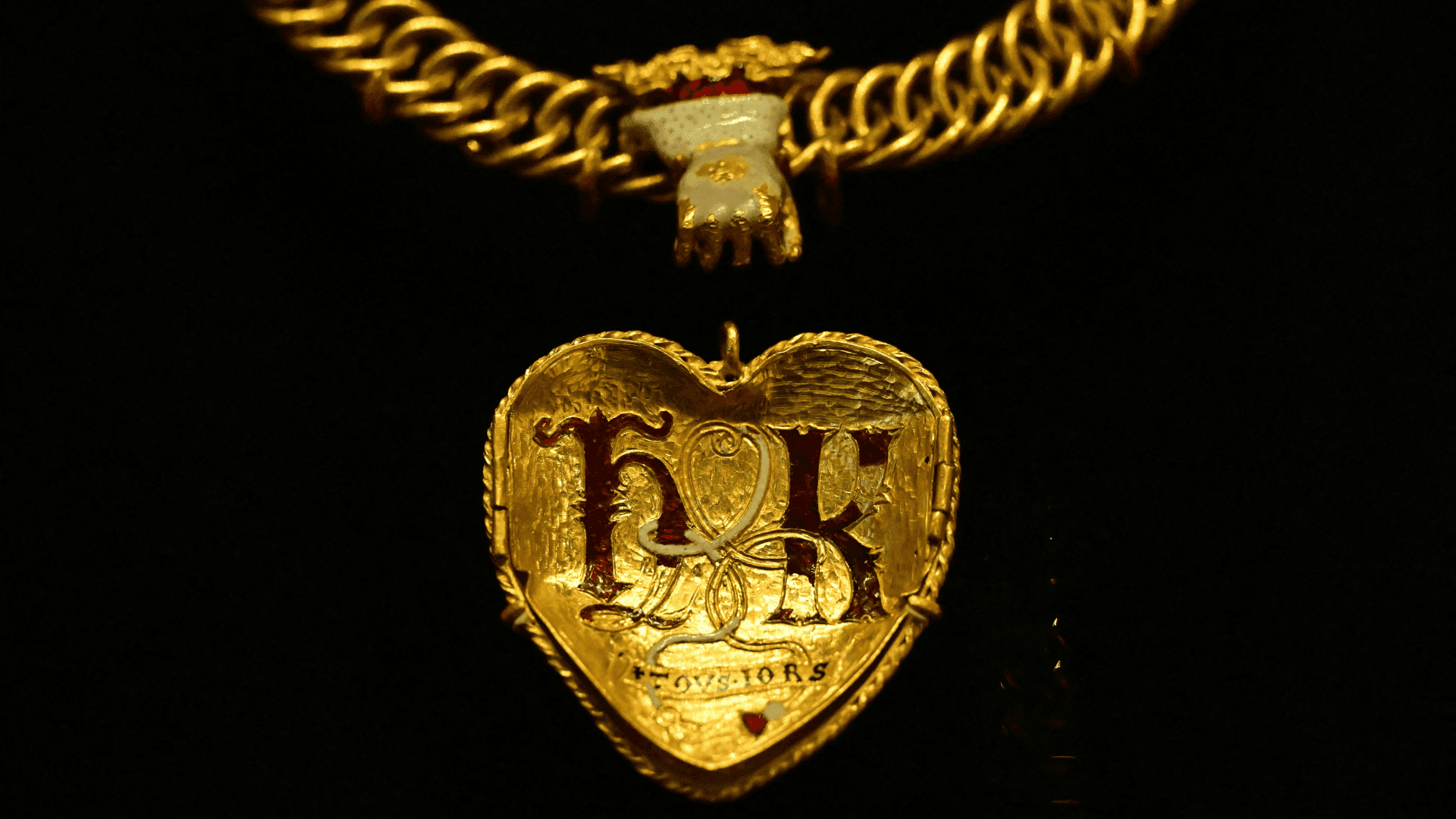
The word "toujours" means "always" in French. Read aloud with a slight pause, it also sounds like "tous" (French for "all") followed by "yours," a bilingual declaration compressed into a single inscription. The British Museum identified exactly that pun engraved on both faces of a heart-shaped gold pendant likely made circa 1518, a piece of early Tudor goldsmithing now known as the Tudor Heart.
The necklace came to light through a chance discovery and comprises three components: a 24-karat gold chain of 75 links measuring 17.1 inches (43.4 centimeters) and weighing 9.4 ounces (267 grams); a clasp formed in the shape of a hand emerging from a cloud, which both closes the chain and holds the pendant in suspension; and the heart-shaped pendant itself, 2.3 inches (5.9 centimeters) long and weighing 1.8 ounces (50 grams). The chain's 24-karat purity is a meaningful detail. Pure gold is soft, and specifying it for a wearable piece signals that this jewel was made for ceremony or intimate gift-giving rather than daily use.
The pendant's decoration is where the piece becomes historically compelling. The initials H and K appear in red enamel, linked by researchers to Henry VIII and Katherine of Aragon. A rose and a pomegranate accompany the letters; the pomegranate was Katherine's personal heraldic device, carried from her Spanish royal lineage to the English court when she became Henry's first wife. British Museum analysis placed the likely manufacture date at circa 1518, when the king's marriage to Katherine was still intact.
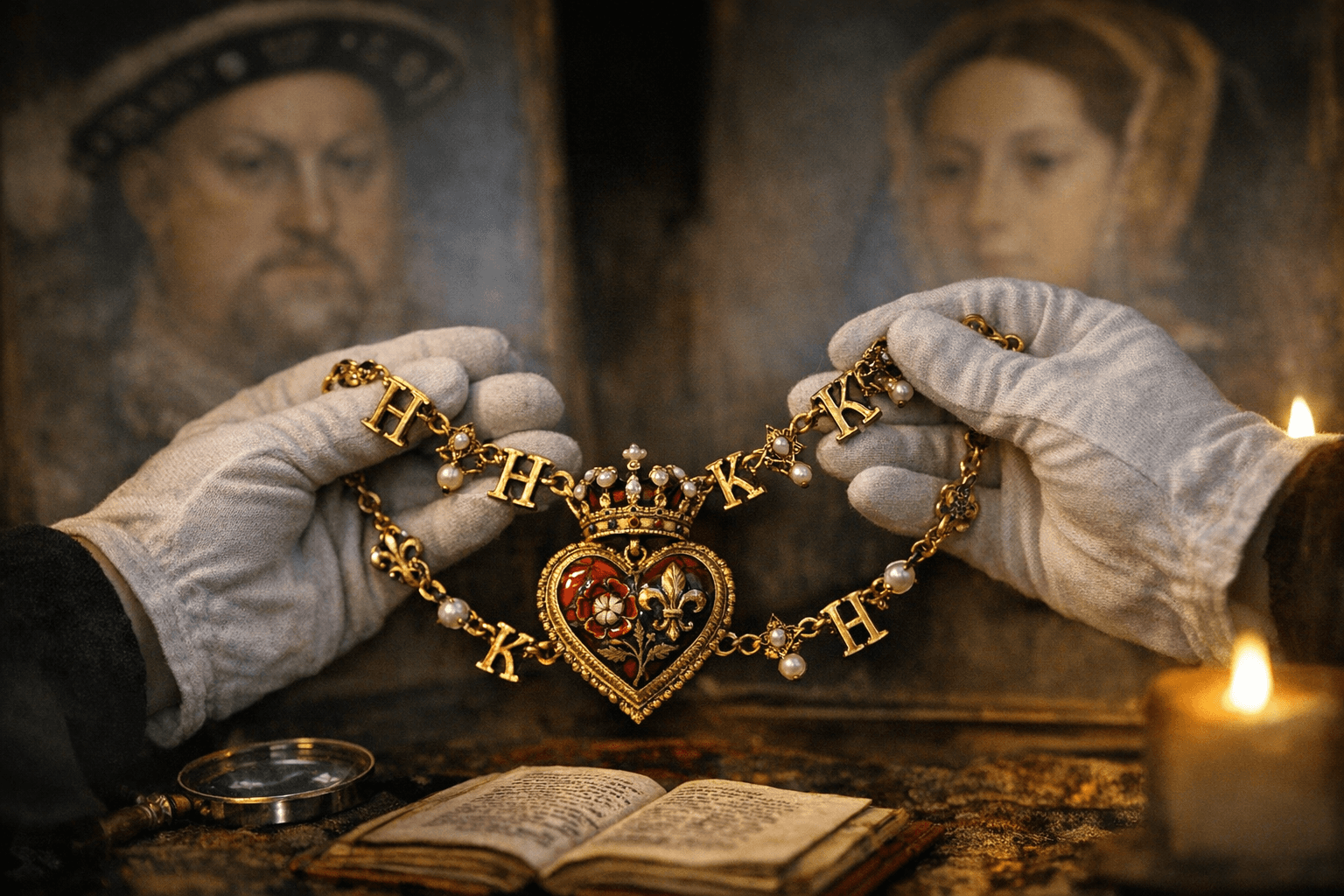
It is the decoration on the pendant, rather than the necklace itself, that makes the artifact historically significant. The layering of personal initials worked in enamel, dynastic plant motifs, and a motto that functions simultaneously as a French promise of constancy and an English declaration of devotion suggests a jewel made for private exchange rather than court display.
Few Tudor jewels survive intact. Most were melted for their metal value, stripped during upheavals of taste or religion, or simply lost. The Tudor Heart's preservation, along with its legible iconography and unbroken 24-karat chain, makes it a rare material witness to the early years of one of history's most documented marriages. That the sentiment encoded in its motto turned out to carry two meanings adds one more layer to an object that was always designed to mean more than its surface revealed.
This article was produced by Prism’s automated news system from verified source data, official records, and press releases, then run through automated quality and moderation checks before publishing. The system is built and supervised by the people who set the standards it runs under. Read our full AI policy.
Did this article answer your question?