Van Cleef & Arpels Zip necklace-bracelet tops Phillips Geneva sale
A coral-and-chrysoprase Van Cleef & Arpels Zip necklace-bracelet fetched CHF619,600, a sharp signal that signed jewels with provenance still draw serious money.

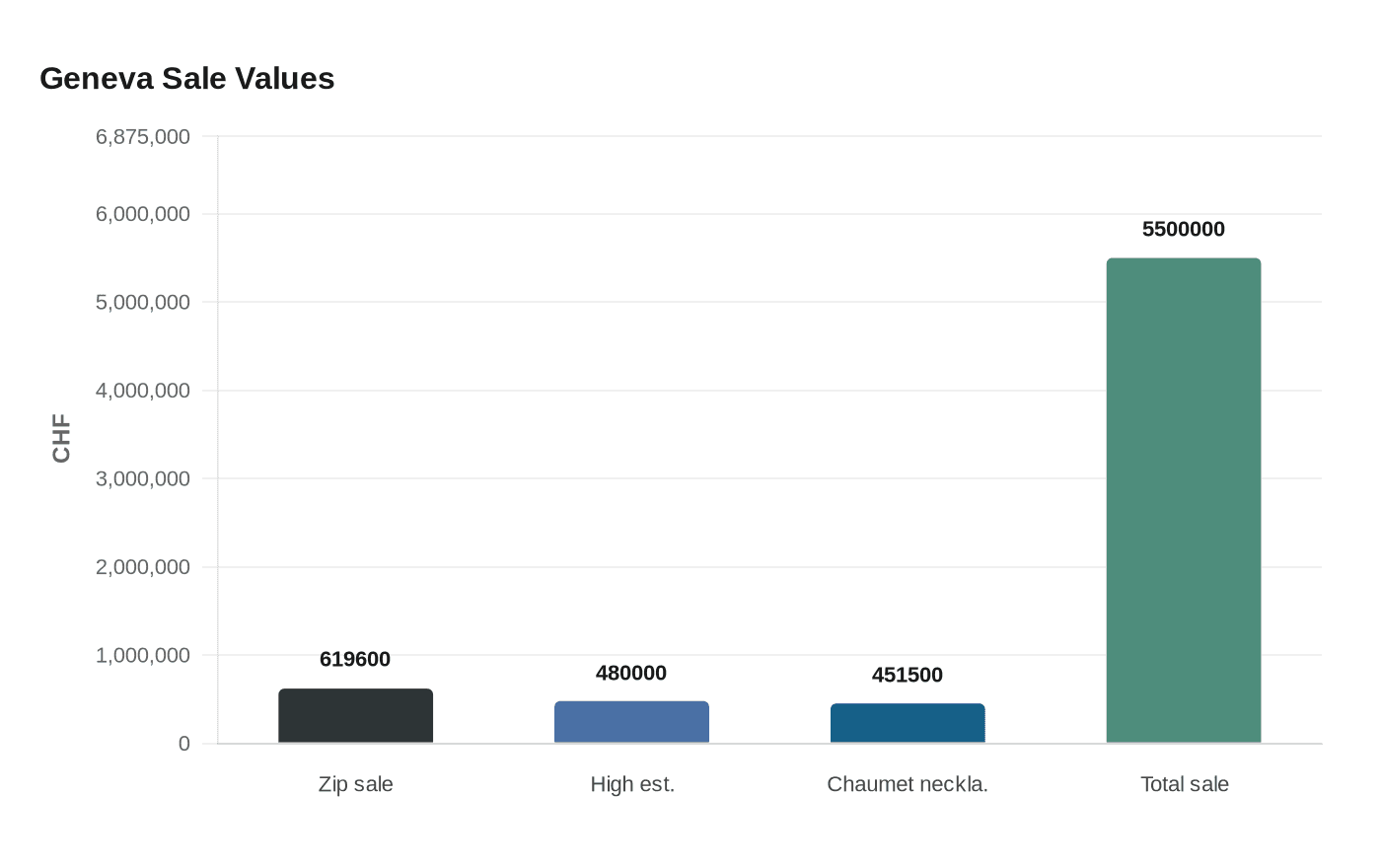
A coral, chrysoprase, diamond and gold Van Cleef & Arpels Zip necklace-bracelet led Phillips’ Geneva Jewels Auction: VI, selling as lot 399 for CHF619,600, about $793,346, and sailing past its CHF480,000 high estimate. The result was the clearest sign in the room that collectors still pay up for signed vintage jewelry when rarity, craftsmanship and a clean provenance story line up.
The 99-lot sale, held Monday, May 11, 2026, at the Hôtel Président Wilson in Geneva, brought in about CHF5.5 million, or $7 million. Phillips said 86% of lots sold and 85% sold by value, a healthy finish for a sale that it positioned as part of its 230th anniversary year. The house also used Geneva to launch a new Collections & Provenance section, a smart move in a market where documented ownership and period significance are increasingly part of the price conversation.
The Zip is built for that kind of demand. Van Cleef & Arpels says the first Zip necklace came out of its workshops in 1950 after more than 10 years of research and development, turning the zipper itself into jewelry. When fully zipped, the design converts from necklace to bracelet, which is exactly the sort of transformable construction that today’s buyers seem willing to reward. Sotheby’s has tied the design back to a 1938 commission from the Duchess of Windsor to Renée Puissant and noted that only a limited number were made in the 1950s, with fewer than 10 appearing at auction in recent years. Scarcity is not a marketing slogan here. It is the market.
The winning piece itself had the drama to match the price. Rapaport described a tassel of coral and chrysoprase beads capped with carved chrysoprase and carré-cut diamonds, while the zipper section was set with carved chrysoprase, coral cabochons and square- and brilliant-cut diamond motifs alternating with pear-shaped diamond and coral-bead accents. It was not just a necklace-bracelet hybrid. It was a compact demonstration of Van Cleef & Arpels’ signature engineering and stone-cutting restraint, with color and movement working against the hard geometry of the zipper form.
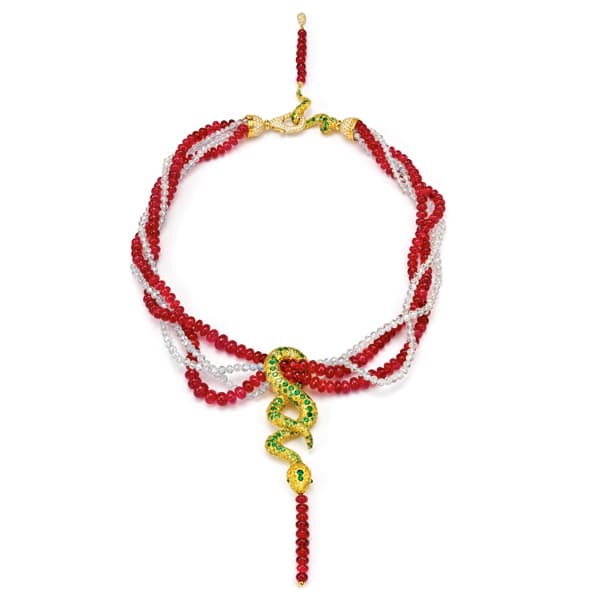
The second-highest result reinforced the same signal. A Chaumet ruby and diamond necklace from around 1902 sold for CHF451,500, showing that the bidding was not limited to one headline lot. What sold in Geneva was not only beauty, but proof: signed names, documented history and designs that can still function as both wearable objects and hard assets.
Know something we missed? Have a correction or additional information?
Submit a Tip