2026 Jewelry Trends: Baroque Pearls & Sculptural Silver
Quiet luxury is over. Baroque pearls, sculptural silver, and mixed metals are the layering language of 2026, and here is exactly how to stack them with intention.
There is a particular tension in the jewelry moment unfolding right now: the years of restraint, the single delicate chain, the studied nonchalance of quiet luxury, are bumping hard against something louder, more sculptural, and considerably more alive. The SS26 runways resolved that tension with a clear verdict. At Prada, pearl-encrusted collars showed up on heavy satin tunics, worn not as accent but as architecture. At Dior, jewelry was sculptural and architectural, worn like part of the garment itself, reinforcing the idea of the singular statement. At Loewe, pearls appeared partially submerged in molten, flowing metal, an aesthetic that collapsed the boundary between stone and setting. These were not finishing touches. They were the point.
The shift is cultural as much as sartorial. TikTok has driven fashion away from "quiet luxury" toward loud, expressive styling, and even the maximalist aesthetic that surged in 2025 thanks in part to TikTok is sticking around, but in more mature interpretations. Pinterest trend data is signaling the same direction. What began as social-platform noise has arrived, fully formed, on the wrists, necks, and ears of the SS26 runway. Jillian Sassone, founder of Marrow Fine Jewelry, puts it plainly: "Jewelry in 2026 feels sculptural, statement-making and personal."
Baroque Pearls: The Anchor Layer
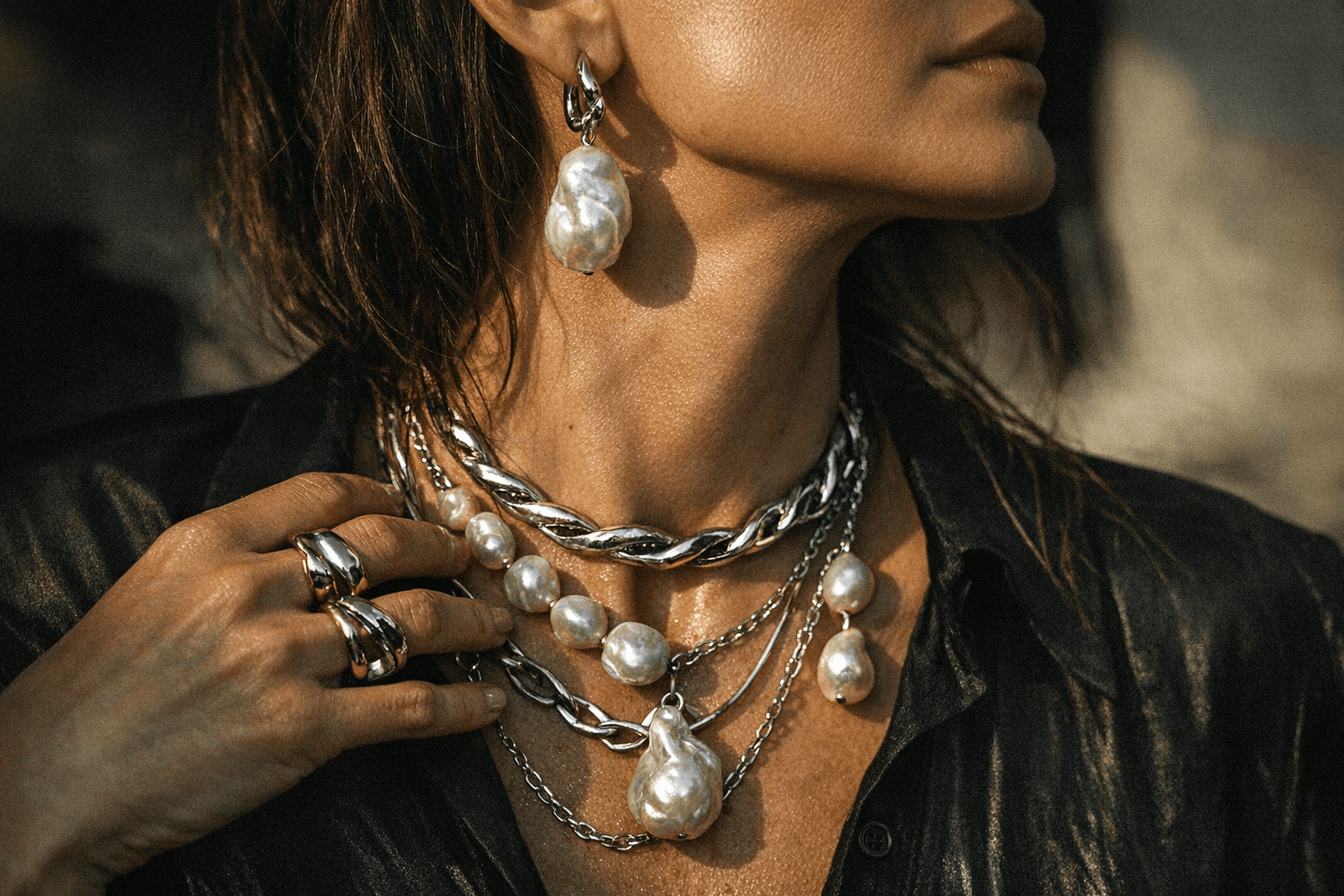
Baroque pearls are shaping pearl jewelry trends in a defining way this year. They look organic and irregular, nothing feels mass-made, and that texture is precisely why they read modern. The asymmetry that once kept them out of the fine jewelry mainstream is now the whole appeal. In 2026, pearls are evolving from reserved symbols of elegance into spirited, character-driven pieces: baroque forms, uneven surfaces, sliced or halved pearls, and strands interrupted by raw metal, leather cords, or contrasting beads.
In a layered stack, they function as the anchor. Their nacre catches light at every angle differently, creating a depth that a polished chain link or smooth beaded cord cannot generate alone. The practical move is to wear a baroque strand at choker or collarbone length (14 to 16 inches) and layer medium-weight and fine chains above and below it. The pearl strand provides the organic, irregular texture that holds the composition together; the chains add length graduation and metallic contrast. The classic single strand has been replaced by layered, textured, and architecturally interesting pearl jewelry that feels updated in modern proportions.
A sourcing note worth raising: baroque pearls are typically freshwater or South Sea cultured pearls, and the market spans everything from responsibly farmed pieces with traceable origins to mass-market imports with no disclosed provenance. Reputable freshwater pearl farming operations in China and South Sea programs in Australia and the Philippines have made measurable advances in environmental stewardship, but disclosure is inconsistent. When the irregular shape is the point of the piece, the origin story should be equally honest. Ask for it.
Sculptural Silver: Architecture You Can Wear
Silver made a confident return on the SS26 runways in architectural, polished shapes. Wide cuffs with structural curves, chunky links with deliberate gauge, abstract forms that look designed rather than decorated: these are pieces that hold their silhouette rather than draping softly around the wrist or neck. The styling logic is counterintuitive but effective. Pair a broad sculptural cuff with the most delicate chain in your stack. The scale contrast does the work. A wide, curved cuff on the wrist against a thread-fine necklace chain creates a composition that reads as considered rather than accumulated.
Construction matters here as much as form. Sterling silver (925) is the baseline standard, but pieces vary enormously in wall thickness and finish. A brushed finish tends to hide wear better than high polish, and heavier gauge holds its architectural shape across years of wear rather than gradually softening. When a sculptural cuff is priced significantly below comparable pieces, gauge is typically the first economy made. Hold the piece; it should have weight in the hand.
Mixed Metals: One Rule Replaces Another
The era of perfectly matching metals is behind us. The most modern approach is to mix both, and the runways are showing it in sculptural gold cuffs alongside silver chains, warm-toned rings beside cool-toned bracelets. What has replaced the old rule is not freedom from rules altogether but a more specific one: contrast intentionally.
The formula that works is one textured piece against one polished piece, in different metals. A brushed gold cuff beside a high-polish silver chain. An oxidized link paired with a satin-finish bangle. The eye needs rhythm to read a mixed-metal look as intentional rather than scattered. Repeating one metal across an entire body zone (gold at the fingers, silver at the neck) or blocking metals by area entirely creates the repetition that makes the combination read as designed. Let one metal lead, echo the other in smaller doses, and use baroque pearls as the connector between the two: nacre responds to warm and cool tones equally, which makes it the natural bridge across a mixed stack.
Three Layering Recipes to Copy
*The baroque anchor stack:* Start with an irregular pearl strand at 16 inches. Add a medium-weight chain at 18 to 19 inches, then a fine pendant chain at 21 to 22 inches. Graduate lengths by at least two inches between each layer so the pieces hold their individual identities. Keep earrings restrained: a single baroque pearl drop or a small stud, not a competing hoop.
*The sculptural contrast:* Wear a wide silver cuff alone at the wrist to establish the architectural statement. Add two or three fine chain bracelets on the same arm, leaving space between the cuff and the delicate layers so neither overwhelms the other. At the neck, one medium-weight chain, left bare. The wrist leads; the neck supports.
*The mixed-metal composition:* Three gold pieces, two silver, one baroque pearl pendant bridging the two tones. Gold link bracelet at the wrist, silver cuff two fingers up the arm. A fine gold chain with small pendant at 17 inches, a slightly longer bare silver chain at 20 inches. The pearl pendant hangs from the gold chain and visually ties the metals together.
Try It With What You Own
You do not need to rebuild a collection from scratch. Five targeted swaps close most of the distance:
- Swap one perfect-round pearl strand for one irregular baroque strand. Even a single piece recalibrates the aesthetic from traditional to current.
- Add one bold silver cuff. Wear it alone first. Let it establish its architectural weight before adding finer pieces around it.
- Introduce one textured metal piece into a previously all-polished stack. A hammered band or an oxidized chain among smooth links creates contrast without a full overhaul.
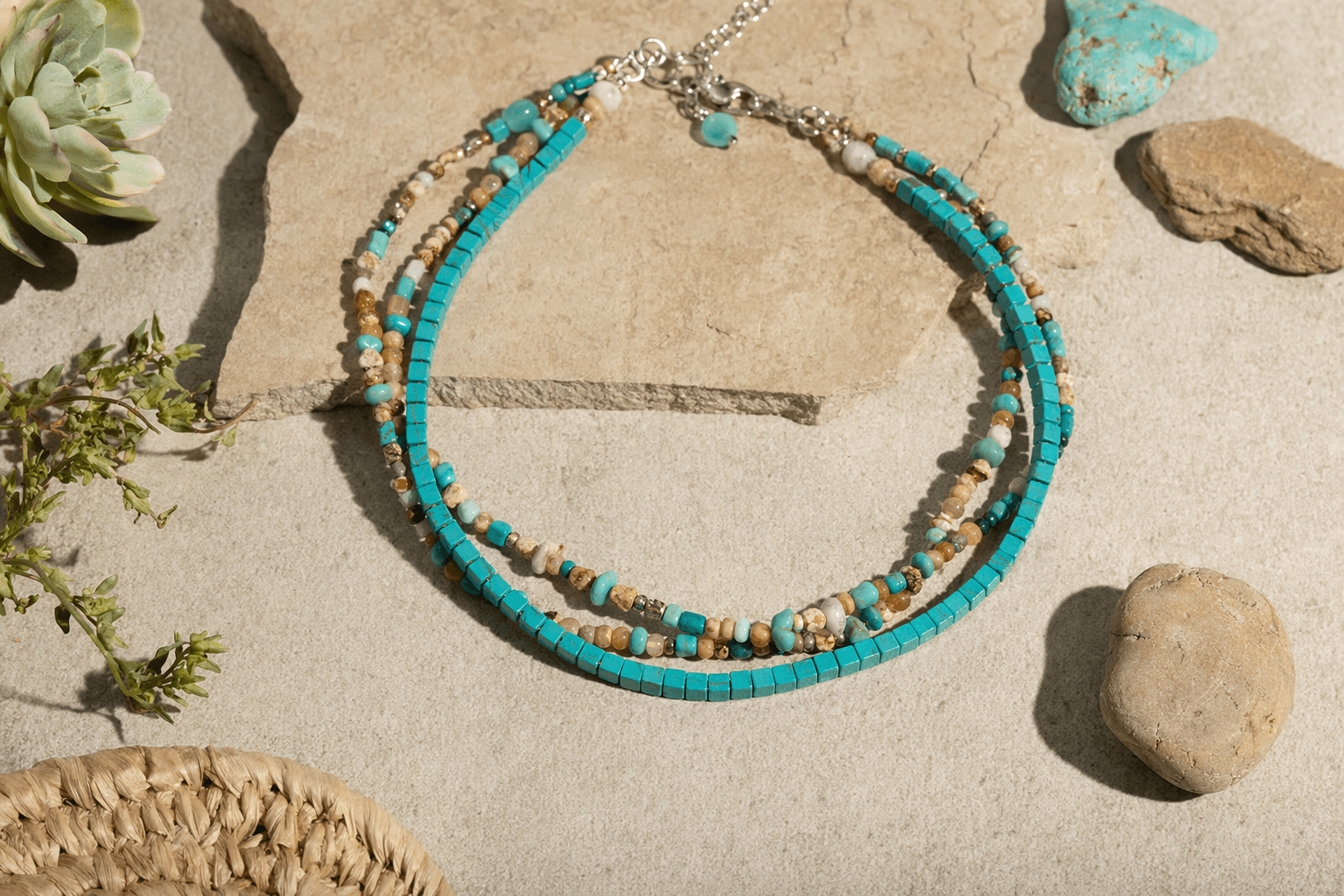
- Layer a beaded strand under a chain at the neck. Beaded jewelry is viral again, with TikTok boosting hashtags around bracelet and beaded styles into mainstream circulation. Glass, semi-precious stone, or lacquered wood all provide the organic texture that anchors a chain layer beautifully.
- Commit to one intentional mixed-metal pairing. Put on a gold piece and a silver piece in the same body zone and leave them there. The only internal rule: they should differ in texture as well as metal, so each piece has two reasons to be registered.
Do and Don't: Proportions and Texture
Do graduate necklace lengths by at least two inches between each layer. Chains at the same length collapse together and lose definition.
Don't compete at both the neck and the ears simultaneously with oversized pieces. One zone owns the maximalism; the other plays counterpoint.
Do use baroque pearls as a texture bridge between rough and smooth metalwork. Their nacre surface is neither fully matte nor fully reflective, which makes them an unusually versatile connector.
Don't layer more than two metals without a deliberate connector piece to anchor the combination visually.
Do invest in one well-made piece before buying multiples of lesser construction. Sassone notes that truly sculptural, bold pieces need to feel "timeless all at once" to justify the investment, and that standard holds whether the piece is a Bombé ring or a sculptural cuff.
The jewelry conversation of 2026 is, at its most honest, about two things at once: the visual confidence to wear more and mean it, and the material discipline to ask whether a piece is worth wearing at all. Where it came from, how it was made, and whether its construction will hold across years of layering: these questions are not separate from the aesthetic. They are, increasingly, the most interesting part of it.
*Sources: Fashionista; Who What Wear; Justop Fashion Jewelry; Timeless Pearl; Style at a Certain Age; Stellas Wardrobe; Jewelers Mutual Group; Prism News; RAW Copenhagen*
Know something we missed? Have a correction or additional information?
Submit a Tip