AI reshapes jewelry design and gem trading, without losing craftsmanship
AI is moving into jewelry design, grading and provenance, but the strongest luxury houses are still using it to sharpen craftsmanship, not replace it.

AI has slipped from a speculative buzzword into the working language of jewelry design and gem trading. What makes this moment different is not speed alone, but the way the technology is being folded into the old rituals of the trade, from sketching and sourcing to grading and storytelling. The result is a quieter shift than the arrival of CAD or laser inscription, yet one that may prove just as hard to ignore.
AI enters the atelier
Professional Jeweller’s June 16, 2026 piece places AI alongside earlier industry changes such as precision-cut diamonds, CAD software and laser inscription, which is exactly where it belongs. Jewelry has always absorbed tools that make the hand more exact, and AI now sits in that same lineage, not as a rupture but as the next refinement. In that frame, the most immediate uses are practical: predicting trends, creating bespoke pieces, authenticating gemstones and navigating supply chains that have grown too intricate for instinct alone.
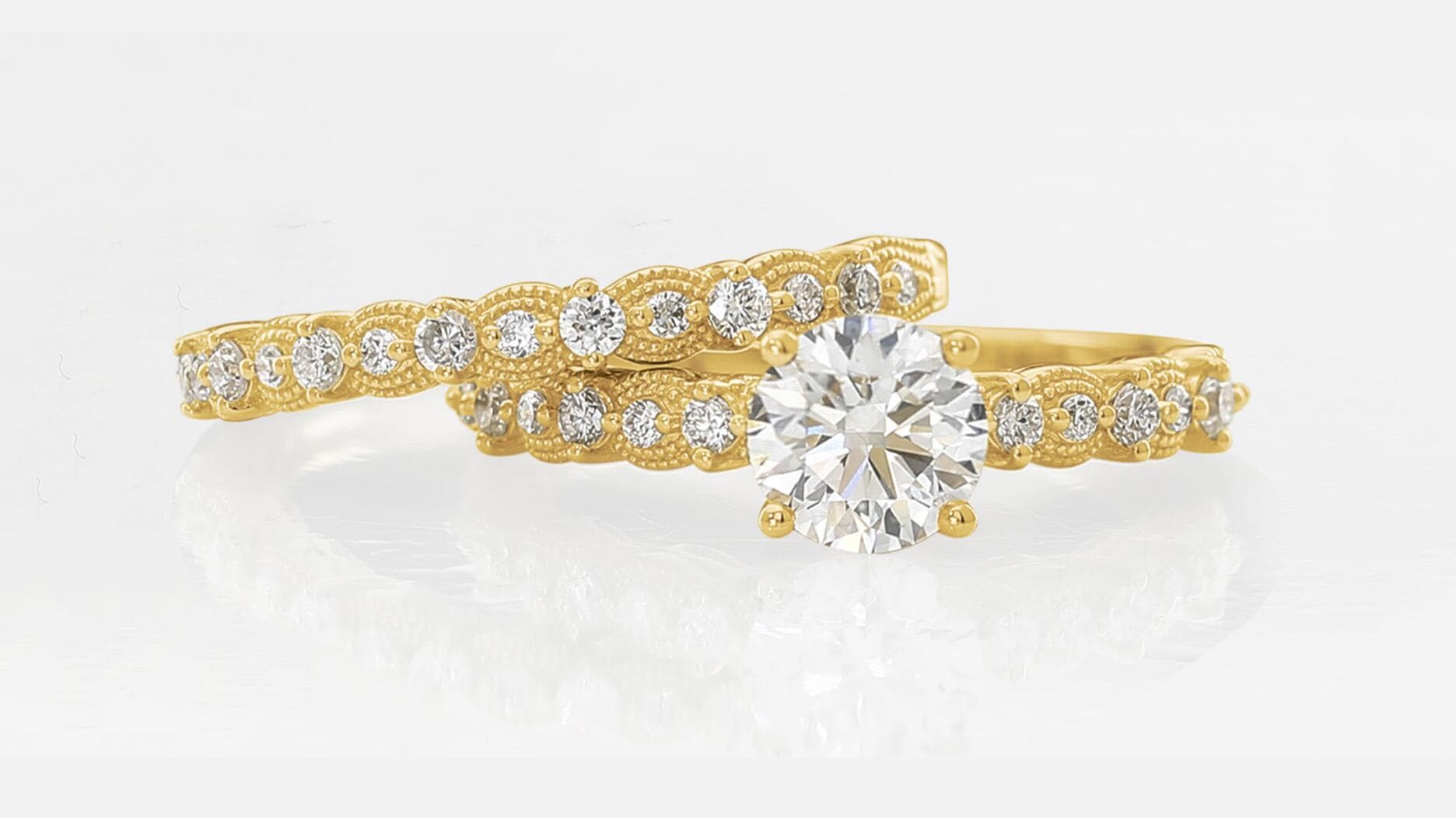
That matters because jewelry is not a category where efficiency wins by itself. A client may ask for a ring with a cushion-cut stone and an open gallery, but the emotional value is in the setting, the proportion of the shoulders, the finish on the metal and the certainty that the stone is what it claims to be. AI can help the trade move faster toward those outcomes, yet the craft still lives in the final decisions, the same way a well-cut pavilion or a clean bezel does not announce itself loudly, but changes everything about how a jewel wears and how it lasts.
Human judgment remains the luxury signal
CIBJO’s Technology Committee devoted its October 23, 2025 special report to AI before the CIBJO Congress in Paris on October 27, 2025, and its central argument was simple enough to survive the hype cycle. Stéphane Fischler said AI is “neither inherently good nor bad,” a line that places the technology where jewelry has always preferred it: in service of judgment, not as a substitute for it. The report pulled in voices including Elle Hill, Mahiar Borhanjoo, Thomas Baillod, David Block, Daniel Nyfeler and Emmanuel Piat, which signals how widely the issue already reaches across manufacturing, gemology and brand strategy.
The Paris discussion also pointed to the tension now defining the trade. AI-led changes could mean job losses in diamond grading and gemstone testing, but they could also create new roles elsewhere in the supply chain. That is the real luxury question beneath the technical one: if a machine can sort, predict or verify more quickly, where does expertise move next, and which parts of the job remain too tied to human eye, discretion and taste to automate cleanly?
Grading, traceability and the new proof of trust
Sarine Technologies has pushed that debate into the laboratory. The company describes Sarine Lab as the first ever technology-driven, automated, artificial-intelligence-based diamond grading lab, and its toolkit includes AI-powered 4Cs grading, light-performance visualization and traceability reports. Those are not abstract efficiencies. They shape how a diamond is described, how its sparkle is explained and how a retailer speaks to a buyer who wants more than a certificate number before making a significant purchase.
The provenance angle sharpened further on February 25, 2025, when Sarine and De Beers’ Tracr platform announced a collaboration to combine rough source data with manufacturing data for verifiable provenance. For a consumer, that means AI is not only about design iteration or supply chain management, but about confidence at the point of sale. A jewel that carries a clearer story from rough stone to polished diamond gives a brand a stronger foundation for trust, especially in a market where origin and disclosure now shape value almost as much as color and clarity.
The market is asking for speed without sacrificing standards
The pressure to adopt these tools is coming from a market that is still expanding. The Gem & Jewellery Export Promotion Council said Q2 FY2025-2026 exports rose 12.11 percent year on year to US$7.48 billion, up from US$6.68 billion, with gains across gold jewelry, diamonds, lab-grown diamonds, silver and platinum jewelry. GJEPC linked the growth to economic recovery, festival-season preparations and the India-UAE CEPA agreement, which is a useful reminder that jewelry production is now being asked to scale up and respond faster at the same time.
That combination favors systems that can forecast demand, streamline selection and reduce costly misfires. It also explains why AI is attracting attention beyond the tech department. In Mumbai, Antwerp, Singapore, Israel and the UAE, where sourcing, manufacturing and trade all overlap, the appeal is not futuristic novelty. It is the promise of fewer dead-end prototypes, better-matched assortments and more responsive planning when the market shifts between bridal demand, gift cycles and investment buying.
Desire still starts with the jewel itself
Even with all that infrastructure in motion, the category still depends on emotion. De Beers Group’s June 2026 Diamond Report says natural diamonds remain the most desired jewelry items, ahead of synthetic lab-grown diamonds, other gems and pure gold jewelry, and that desirability increased in 2025. That matters because it shows the trade is not moving toward a cold, data-led future. It is moving toward a more informed one, where the story around a stone has to be as credible as the stone itself.
AI, in that context, is best understood as a backstage discipline with a front-of-house effect. It may help a designer land on a bespoke setting faster, help a gemologist read a stone with greater precision and help a retailer explain provenance with more authority. What it does not remove is the thing luxury still depends on most: the human ability to decide which details deserve to endure.
This article was produced by Prism’s automated news system from verified source data, official records, and press releases, then run through automated quality and moderation checks before publishing. The system is built and supervised by the people who set the standards it runs under. Read our full AI policy.
Did this article answer your question?