Art Deco convertible jewelry, the original modular layering strategy
Art Deco convertibles turned layering into engineering, with detachable clips, brooch-pendant hybrids, and reconfigurable chains that still mirror today’s modular stacks.
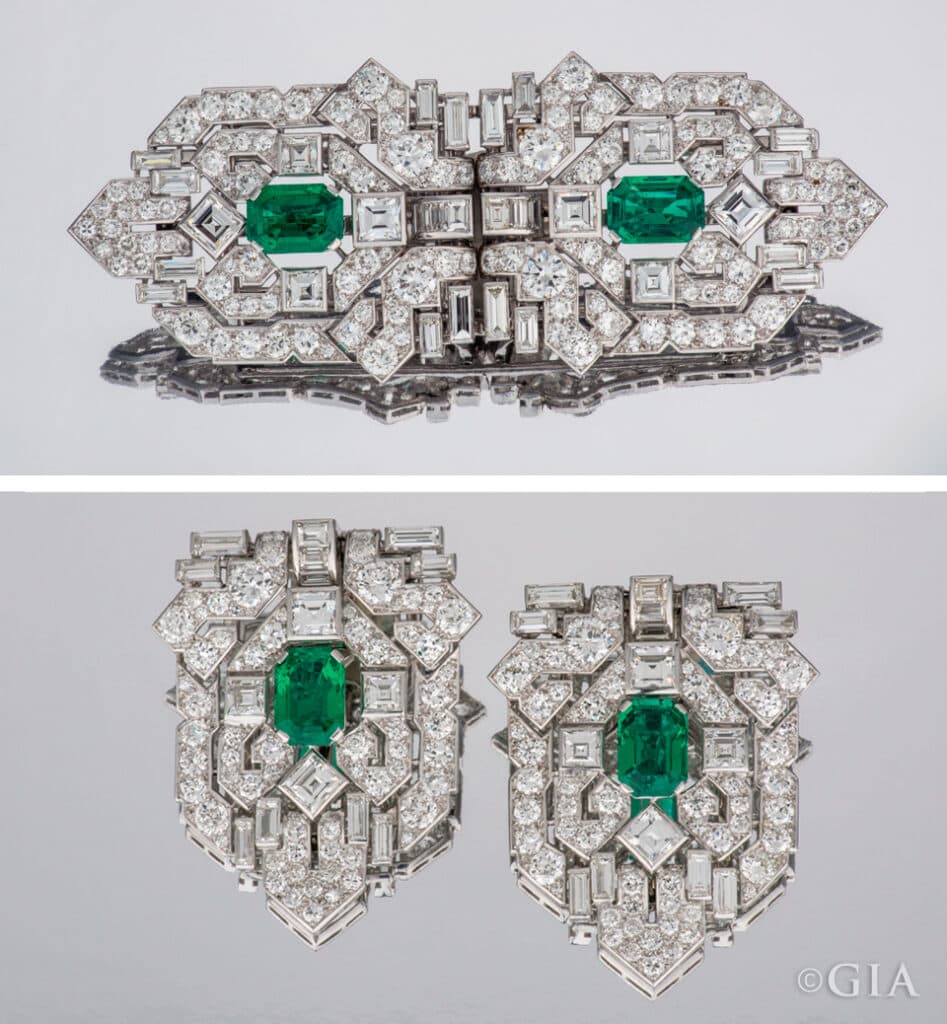
In the Art Deco years, a necklace could shorten, a pendant could detach, and a brooch could migrate from the lapel to the throat with a simple fitting change. Convertibles turned ornament into a system, and the Great Depression’s demand for value sharpened that modular logic.
The Paris origin of a modular idea
The style’s public debut is tied to the Exposition Internationale des Arts Décoratifs et Industriels Modernes in Paris, which ran from April to October 1925. From that moment through the late 1930s, Art Deco jewelry developed a visual language of geometry, order, and clean lines that made reconfiguration feel natural rather than mechanical. A 1925 poster for the Paris exhibition by Robert Bonfils became part of that origin story, a visual signpost for the movement’s crisp architecture.
That architecture gave jewelry a structural reason to be adaptable. Christie’s called Art Deco jewelry a “revolution in form and function.” The same design restraint that produced strong silhouettes also made detachable parts look intentional. A jewel built from measured volumes and sharp outlines could be broken into components without losing its authority.
Why convertibles became especially desirable
Convertible jewelry was not a novelty invented for collectors. Multi-use pieces existed before the 1920s and 1930s, but the economic pressure of the Great Depression gave them new urgency and practical value. When budgets tightened, one jewel that could serve as a necklace, bracelet, brooch, or separate wearable element offered more utility than a single-purpose statement piece.
A modern stack often aims for the same kind of efficiency: one investment piece that can generate multiple looks by rearranging its parts. The difference is that Art Deco makers arrived there with hidden engineering instead of styling instructions.
How the mechanism actually worked
Convertible pieces were built around hidden clips, screw fittings, and detachable components. A long chain could be shortened, a pendant section removed, or a brooch element worn on clothing and then folded back into a necklace arrangement. In practice, that meant the jewel sat differently on the body each time, changing not only its length but its visual weight and focal point.
Dynamic jewellery can be worn in more than one way, including brooches that function as pendants, and convertible jewellery is modular or transformable. Those contemporary descriptions fit the old work exactly. The engineering was not decorative excess; it was the mechanism that allowed one object to behave like several, which is why the pieces still feel so current beside layered chains, pendant necklaces, and stackable rings.
The best convertibles also understood proportion. A pendant that detached cleanly had to read as a complete form on its own; a brooch module had to hold its silhouette when pinned to fabric; a necklace segment had to look balanced whether it was worn alone or as part of a larger arrangement.
The maisons that turned utility into luxury
The category was shaped by houses that understood both craft and display. Trabert & Hoeffer was founded in New York City in 1925, while Mauboussin traces its Paris roots to 1827. The hybrid name Trabert & Hoeffer-Mauboussin became recognizable to collectors because it signaled a period when high jewelry was being asked to do more than dazzle once; it had to adapt, separate, and recombine.
Angelina Chen, Head of eCommerce for the Christie’s Jewelry Department, highlighted favorite Art Deco examples from the Christie’s Jewels online auction.
What Art Deco convertibles teach layered jewelry now
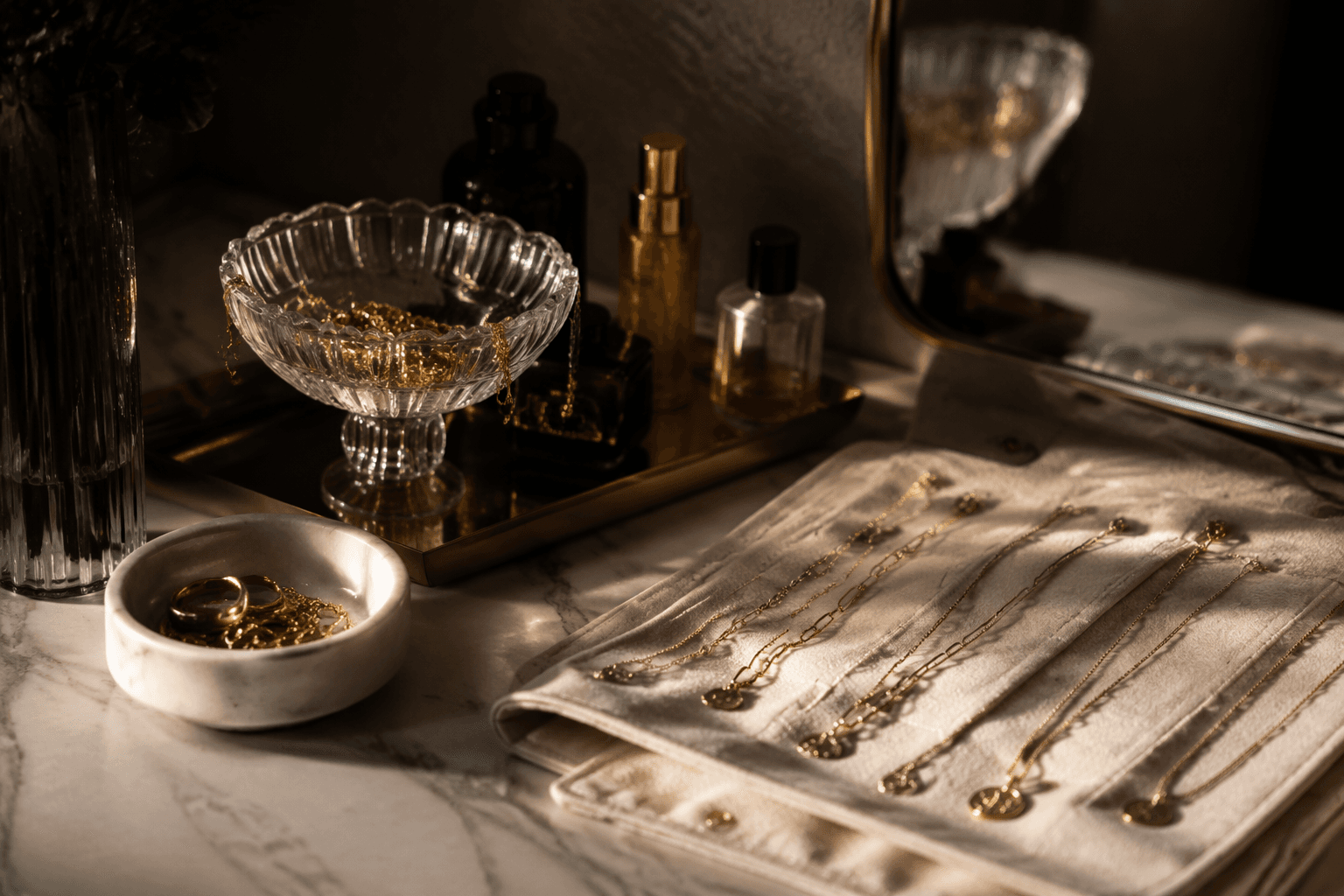
Today’s layering logic often centers on the same visual and practical goals. A fine chain can become a collar, a pendant can be added or removed, and a stack of rings or bracelets can shift from minimal to maximal without replacing the core piece. Art Deco convertibles anticipated that appetite for change by treating the jewel box as a toolkit rather than a fixed wardrobe.
The old convertibles conceived a necklace as parts, turned a brooch into a pendant, and let a jewel move from solo statement to layered ensemble without losing design integrity.
This article was produced by Prism’s automated news system from verified source data, official records, and press releases, then run through automated quality and moderation checks before publishing. The system is built and supervised by the people who set the standards it runs under. Read our full AI policy.
Did this article answer your question?