Bead layers, charm connectors drive customizable fine jewelry stacking
Beads are back as a modular stack, with connectors and mixed lengths turning nostalgia into a more personal, collectible language.

The bead is returning, but not as a simple boho throwback
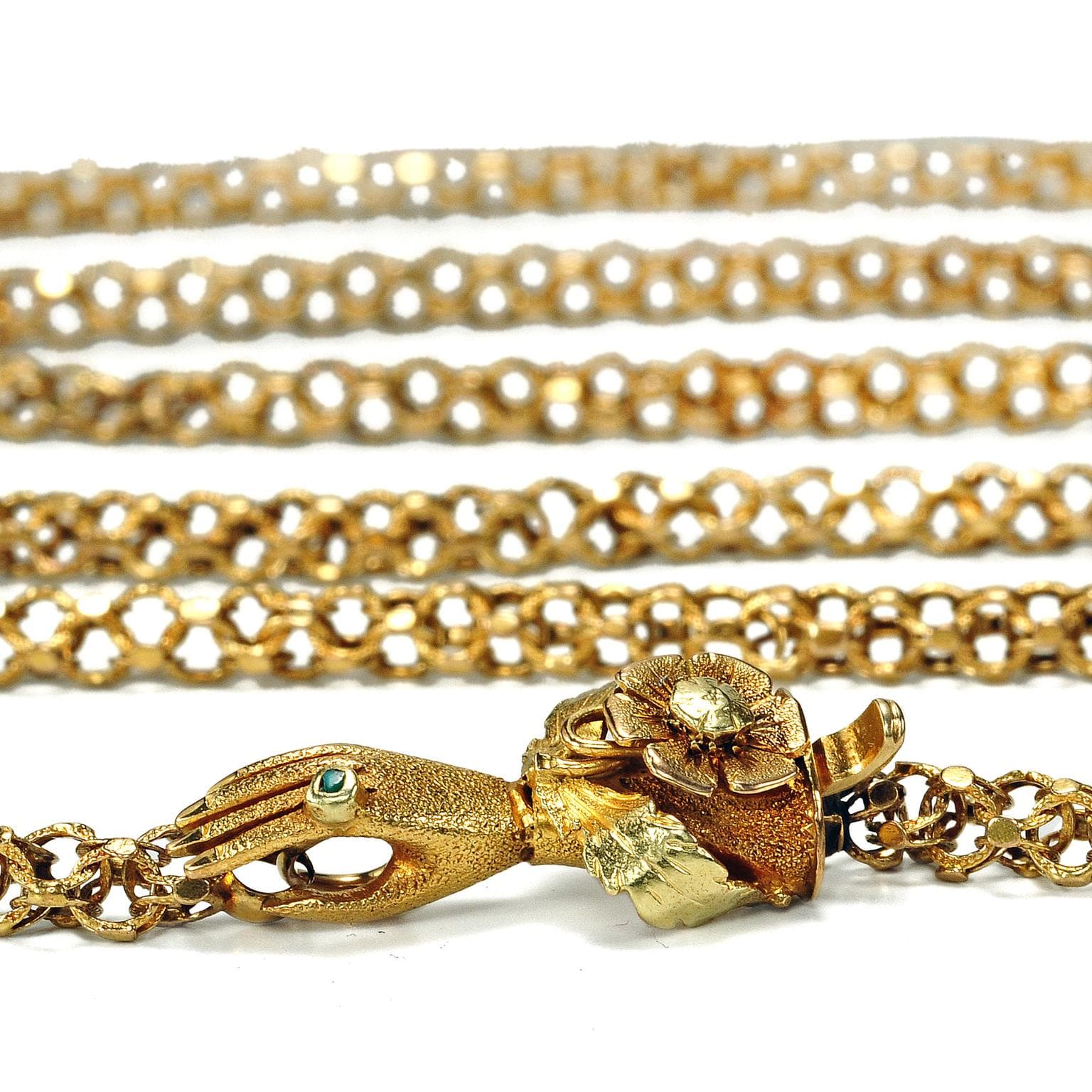
What feels fresh now is not the idea of beads itself, but the way they are being built into fine jewelry stacks. The new version draws on 1960s love beads, 1970s influences and ancient-inspired forms, then sharpens them with a modular logic: shorter strands, longer strands, and connectors that let a wearer add one charm or several. That shift makes the category feel less like a costume reference and more like a system for collecting, layering and editing a look over time.
The appeal is partly emotional. The 1960s counterculture still carries the visual vocabulary of peace, love and rejection of convention, and that mood translates cleanly into jewelry that reads relaxed without becoming careless. At the same time, the ancient references give bead layers a deeper sense of lineage. These are not novelty pieces trying on history for size; they are pieces that borrow from styles with real cultural endurance.
Why beads feel bigger than a trend cycle
Beads have never been a minor ornament. The Metropolitan Museum of Art notes that beads and beadwork have been used across cultures for millennia, and Britannica describes them as having served both decorative and talismanic purposes. That dual identity matters now. A bead can be purely visual, but it can also carry the feeling of protection, memory or ritual, which makes it especially suited to jewelry people choose and live with rather than simply wear once.
That longevity also explains why the trend lands differently from the usual necklace layering conversation. Standard layering can sometimes flatten into a formula of chain, pendant and chain again. Bead layers have more texture and more personality. Even when the palette stays restrained, the surface language changes the entire neckline: the eye reads rhythm, spacing and weight, not just length.
The modern update is modular
The strongest idea in this trend is flexibility. Shorter and longer versions let the same bead language work close to the collarbone or lower on the chest, which creates a more deliberate stack. Then come the connectors, the small but decisive detail that makes the category feel current. Those connectors allow for one charm, or multiple charms, turning a necklace into a customizable framework rather than a fixed composition.
That matters because fine jewelry buyers are increasingly responding to pieces that can evolve. A strand that can hold a single charm one day and a cluster of them the next becomes a collector’s object. It is not just decoration; it is a base layer for personal curation. In practice, that means the jewelry can move from understated to expressive without changing its core structure.
Proportion is what makes the stack work
Bead layers reward attention to proportion in a way that many chain stacks do not. A shorter strand near the neck can frame the face and keep the composition crisp, while a longer version introduces movement and a softer vertical line. When both are used together, the stack gains architecture. The result should feel intentional, not crowded.
The trick is to think in terms of scale rather than quantity. Larger beads carry more visual weight, so they need room to breathe. Smaller beads can build a subtler texture and let charms become the focal point. Connectors add another layer of proportion, because the size and number of charms change how the necklace hangs and how the eye moves across it. This is where the trend becomes more sophisticated than a casual layered look: every component affects balance.
How to read the trend in fine jewelry
- Shorter bead strands create a clean frame at the neckline and help keep the look polished.
- Longer strands introduce movement and make room for a more relaxed, collected feeling.
- Connectors turn the necklace into a customizable base, especially when they allow for one charm or several.
- Mixed bead sizes, when used thoughtfully, can give a stack depth without making it feel busy.
- The most compelling versions feel curated, not assembled at random.
The cultural references give the category its shape
The 1960s and 1970s are not being quoted literally here; they are being distilled into attitude. The 1960s reference brings in the idealism of the counterculture and the visual language of love beads. The 1970s influence adds warmth, ease and a more tactile sense of dress. Ancient-inspired styles, meanwhile, keep the category from becoming too retro or too casual. Together, those references create a bead story that is nostalgic but not trapped in nostalgia.
That is why the trend feels stronger than a generic layered-necklace revival. A chain stack can be about accumulation. Bead layers are about personality, memory and a visible point of view. The modular connectors sharpen that point of view further, because they make room for the wearer to decide how much adornment the piece carries on any given day.
The market signal is coming into focus at COUTURE
The broader trade picture is just as telling. The 2026 COUTURE Show is scheduled for May 27, with opening night at 6:00 PM, through May 31 at Wynn Las Vegas in Nevada. COUTURE describes itself as the world’s most exceptional curation of designer fine jewelry and luxury timepieces, and it is a business-to-business event for jewelry retailers, buyers and other industry professionals. Forbes says the 2026 edition will include approximately 350 jewelry designers and luxury brands.
That scale matters because it shows bead layering is not appearing as a niche styling note, but as part of a wider merchandising shift. When a trade event of that size puts energy behind a category, it suggests the market sees lasting appetite, not just a passing mood. In that context, bead necklaces with connectors look especially well-positioned: they suit retail storytelling, invite repeat collecting and let designers present one idea in multiple lengths and configurations.
Why this version of layering feels collectible
The most convincing bead layers do not ask to be worn in one prescribed way. They invite adjustment. One day the strand may carry a single charm and sit close to the throat; another day it may be paired with a longer version and a second charm cluster for more drama. That adaptability is what makes the trend feel modern. It respects the wearer’s hand in shaping the final look.
Fine jewelry has always lived at the intersection of craft and identity, and this bead comeback makes that relationship especially visible. The historical references bring depth, the connectors bring agency, and the lengths bring proportion. Together, they turn layering into something more intentional than a fashion echo: a system for building a personal, collectible stack that can keep changing without losing its core.
This article was produced by Prism’s automated news system from verified source data, official records, and press releases, then run through automated quality and moderation checks before publishing. The system is built and supervised by the people who set the standards it runs under. Read our full AI policy.
Did this article answer your question?