Blue Nile and Tiffany turn necklace lengths into layering formulas
Necklace layering looks polished when the lengths do the choreography. Blue Nile and Tiffany turn 14 to 36 inches into a simple formula: short, mid, long.

The 120,000-year-old shells from Qafzeh Cave in northern Israel were already arranged on string. The cleanest necklace stacks are built like architecture: one chain sits close to the neck, one lands at the collarbone, and one drops lower so each piece has its own line, its own job, and its own room to breathe.
The length chart that turns layering into a formula
Standard necklace lengths run as follows: collar at 14 inches or less, choker at 14 to 16 inches, princess at 18 inches, matinee at 20 to 24 inches, opera at 24 to 30 inches, and rope at 30 inches or more. Tiffany’s size guide uses the same logic in a slightly different set of common lengths, listing 16, 18, 20, 24, 30, and 36 inches as the numbers most shoppers return to again and again.
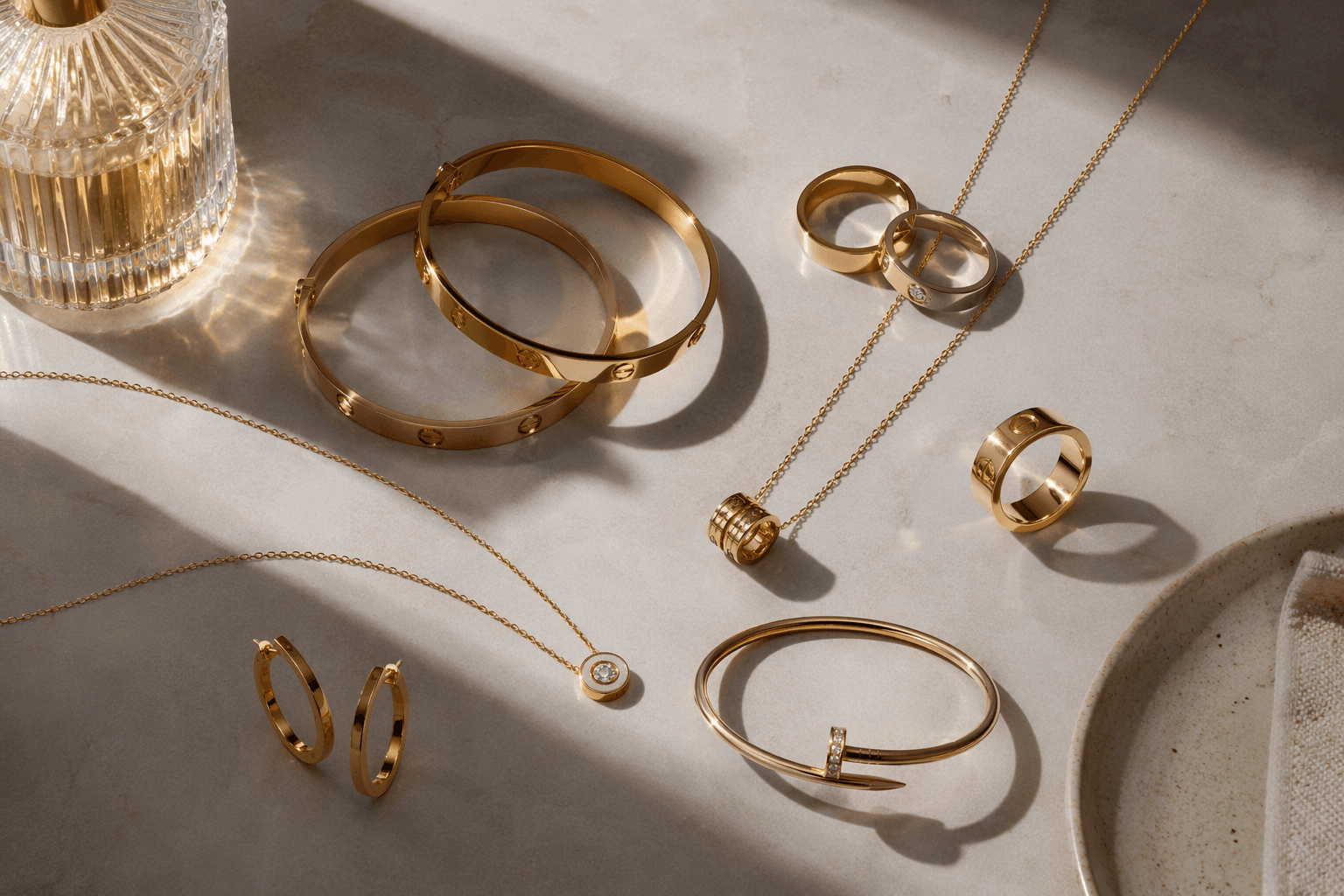
The easiest formula is also the clearest: start short, move to mid-length, then finish long. A 16-inch chain can serve as the anchor, an 18- or 20-inch piece can land near the collarbone, and a 24-, 30-, or 36-inch chain can finish below the rest. That spacing keeps the stack from collapsing into one crowded band across the chest.
Which combinations create contrast, and which ones compete
The most successful stacks usually step across visible zones rather than hovering in one. A choker at 14 to 16 inches with an 18-inch princess length creates a crisp two-part look, while an 18-inch piece with a 24-inch matinee chain adds a more obvious vertical drop. If you want a longer, more dramatic arrangement, 24 and 30 inches create the kind of separation that reads immediately, especially when one piece carries a pendant or a heavier visual weight.

Competition starts when two necklaces land in the same visual band. A 16-inch chain and an 18-inch chain can look tight if both are fine and both sit high on the throat, and a 20-inch and 24-inch pair can blur if neither has enough texture, scale, or pendant presence to separate it. The counterintuitive rule is this: the size difference matters less than the landing zone, so two necklaces can be numerically apart and still look close if they sit on the same line of the body.
Pendant size changes the perceived length. Both the size and shape of the pendant affect where a necklace sits, so a short chain with a substantial charm can read lower than a simple chain of the same measurement.
Why the same length does not sit the same way on every body
A string test can show where a necklace will fall before you buy: cut the string to the desired length, place it around the neck, and repeat with other lengths to see how they work together. The same 18-inch chain will not sit identically on every person. Neck circumference changes the result, and a narrower neck lets necklaces hang lower, while a broader neck creates a shorter drape.
A necklace that looks like a mid-length layer on one body may behave like a choker on another. The fit test is the quickest way to see whether a new purchase will support the stack you already own.
How to match the stack to the neckline
Collar lengths pair with off-the-shoulder and V-neck tops, chokers with scoop or strapless necklines, princess lengths with crew or boatneck tops, matinee lengths with high necklines and button-down shirts, and opera or rope lengths with turtlenecks and evening dresses. When the top already exposes a lot of skin, shorter layers can sharpen the line; when the neckline climbs higher, longer chains keep the jewelry visible.
A crew neck can make an 18-inch princess length feel centered, while a V-neck often gives a 16-inch anchor and a 24-inch drop more room to breathe. On a turtleneck, the long line of an opera or rope chain does the work that shorter pieces cannot.
The long history behind a very current habit
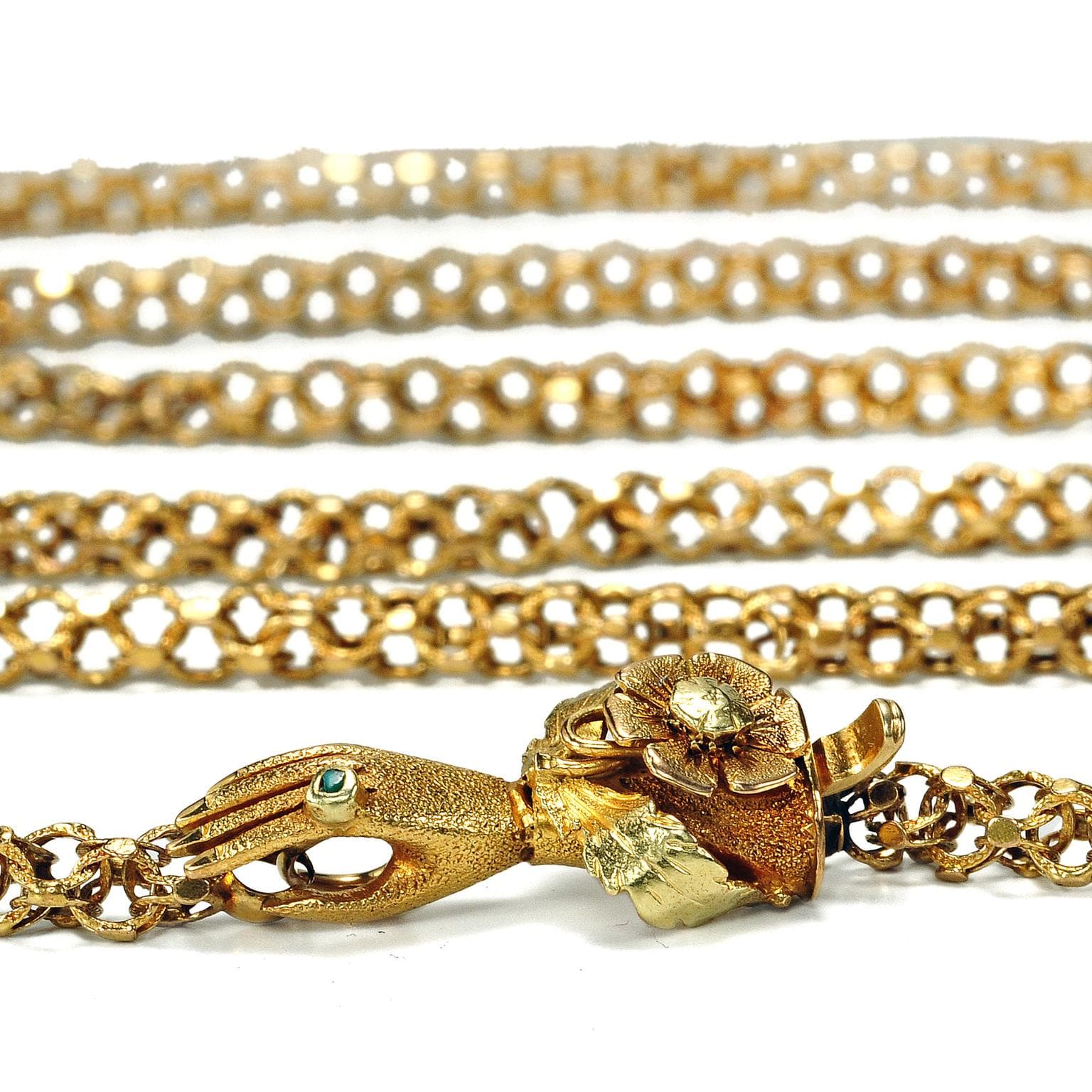
Layering may feel like a modern styling trick, but the instinct is ancient. Pendants go back to the practice of wearing amulets or talismans around the neck in the Stone Age, and elaborate necklaces later became part of court life. At Ur, in modern Tell al-Muqayyar, Sumerian necklace beads dating to about 2600 to 2500 BCE were found as four strands in a royal grave, a reminder that multiple strands have carried status for thousands of years.
The Hellenistic period pushed that language further, with courts producing necklaces, pendants, bracelets, rings, and other elaborate forms.
This article was produced by Prism’s automated news system from verified source data, official records, and press releases, then run through automated quality and moderation checks before publishing. The system is built and supervised by the people who set the standards it runs under. Read our full AI policy.
Did this article answer your question?