Chanel layers Gabrielle Chanel’s symbols into bold high jewelry designs
Chanel turns Gabrielle Chanel’s six emblems into a layered high jewelry language, where repetition, color, and symbolism create stacks with a point of view.

A stack with a story
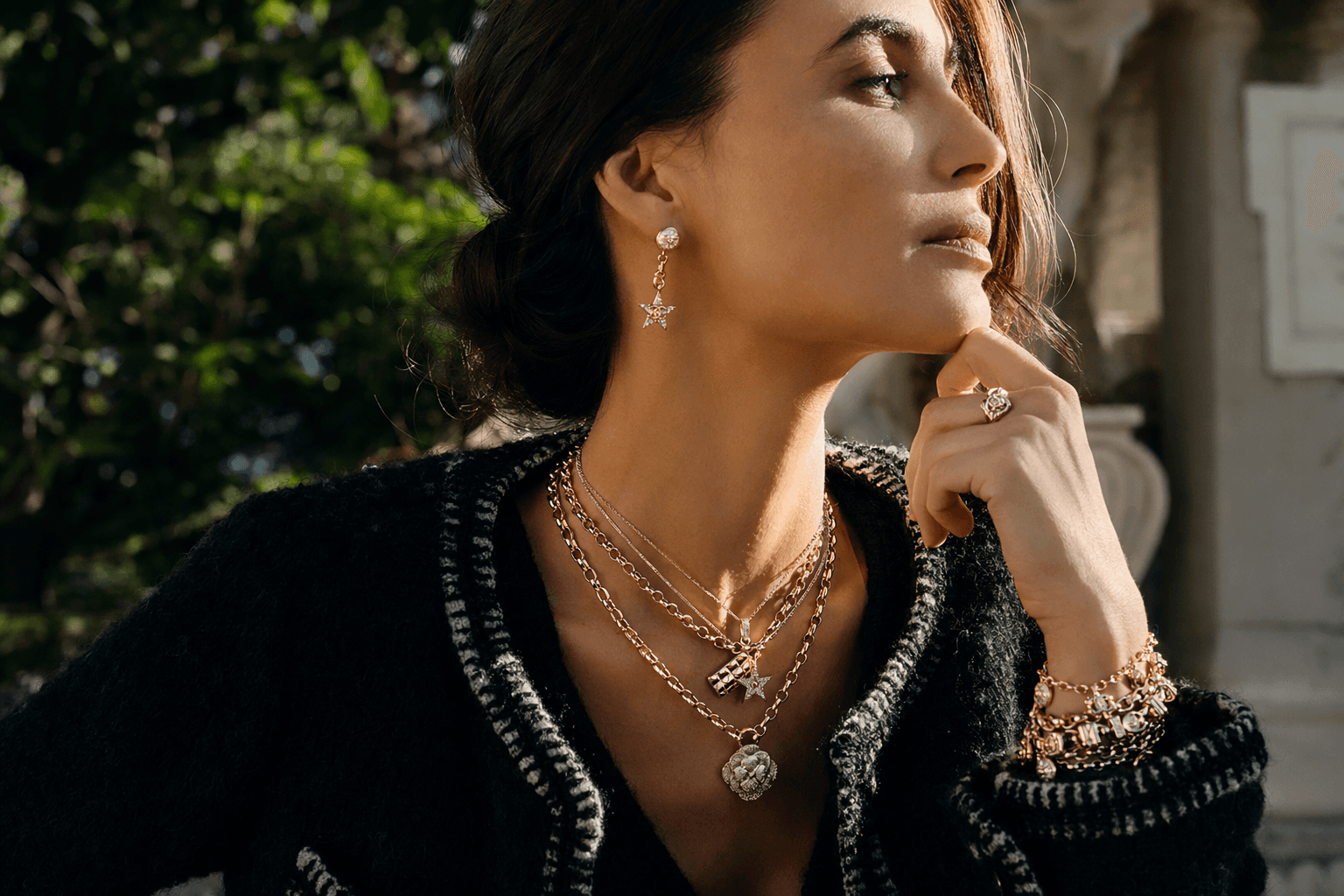
Chanel’s Signes & Symboles collection treats layering as more than a styling move. In 85 pieces, the house returns to Gabrielle Chanel’s own symbolic universe, building a high jewelry vocabulary from the lion, N°5, the comet, the ribbon, the feather and the camellia. The result is not a random mix of motifs but a system, where each element feels like a talisman and every layer adds another chapter.
What makes the collection compelling is the way it balances continuity with surprise. Chanel describes the pieces as recurring signatures reinterpreted by the Fine Jewelry Creation Studio, and that is exactly how the collection reads: familiar emblems pushed into bolder color harmonies and stronger contrasts. For readers who build jewelry stacks, that approach is a useful lesson. A layered look feels considered when the motifs repeat with intention, not when every piece is trying to say something different.
Why symbols matter more than size
High jewelry often gets discussed in terms of scale, rarity and stones, but Chanel leans into something more personal here: symbolic repetition. The six emblems are not decorative afterthoughts. They are the house’s shorthand for identity, and they create a visual rhythm that works the way a well-built stack does, with one motif echoing another until the whole arrangement has its own voice.
That is why the collection feels so suited to a modern layering conversation. A charm, a celestial mark, a floral signature or an animal emblem can anchor a stack in the same way a central necklace or cuff does. The visual payoff comes from repetition and variation together. One lion might feel commanding; a comet beside a camellia softens the mood; a ribbon can bridge the gap between strength and delicacy. Chanel’s design language turns those contrasts into structure.
The six emblems that define the language
The house’s high jewelry vocabulary is built on six enduring emblems inherited from Gabrielle Chanel: the lion, N°5, the comet, the ribbon, the feather and the camellia. Together they form an aesthetic system that is easy to recognize and difficult to reduce to a single mood.
- The lion brings power and authority, making it the most assertive emblem in the group.
- N°5 carries the house’s most famous code into jewelry form, tying ornament to identity.
- The comet adds movement and a sense of celestial lift.
- The ribbon softens the stack with a line that can feel elegant, graphic or playful.
- The feather introduces lightness and motion.
- The camellia gives the language its floral calm, balancing the more dramatic symbols.
For layering, this is the key insight: a strong stack does not need every piece to match. It needs a repeating grammar. Chanel’s six motifs work because they are distinct enough to create contrast, yet unified enough to feel like they belong in the same conversation.
La Pausa gives the launch its emotional center
The collection was unveiled at La Pausa, Gabrielle Chanel’s villa on the French Riviera near Roquebrune-Cap-Martin. Chanel says the house was built in 1928 and was the only home entirely imagined by Gabrielle Chanel, which makes it more than a scenic backdrop. It is a physical expression of her taste, autonomy and desire to control the world around her.
That setting matters because it gives Signes & Symboles a narrative anchor. This is not simply a jewelry presentation staged in a glamorous location. It is a return to a place Chanel designed as a private retreat and a symbol of success and independence. The launch location reinforces the idea that the collection is about more than sparkle: it is about authorship, and about the way symbols can carry a life story across decades.
A line that runs from 1932 to now
Chanel also places Signes & Symboles in a longer jewelry lineage that begins with Bijoux de Diamants, the first and only high jewelry collection created by Gabrielle Chanel herself in 1932. That connection is crucial, because it frames the new collection as a continuation of a founding idea rather than a marketing reset.
Frédéric Grangié, Chanel watch and jewelry president, said the brand was returning to Chanel’s founder’s symbolic universe. Gabrielle Palasse-Labrunie, Gabrielle Chanel’s grand-niece, has described Chanel as having “invented a myth based on signs and symbols.” Taken together, those ideas explain why the collection lands with such force. It is heritage, but not in the dusty sense. It is heritage used as a design engine.
How the collection translates into layering language
Seen through a layering lens, Signes & Symboles offers a clear template for building a more personal stack. The point is not to copy the collection piece for piece. It is to understand how motif jewelry gains power through repetition, contrast and a shared visual code.
A stack inspired by this approach works best when it follows a few principles:
- Choose one dominant symbol to give the eye a place to land.
- Repeat one or two supporting motifs so the stack feels intentional.
- Mix bold and delicate forms to create movement.
- Use color harmonies to connect pieces, even when the shapes differ.
- Let one emblem surprise the others, the way Chanel pairs continuity with surprise.
This is where Chanel’s approach feels especially modern. The collection does not ask the wearer to choose between elegance and personality. It shows how a stack can be both polished and intimate, with each emblem acting like a clue to the wearer’s own tastes and references.
Why this matters beyond Chanel
The larger lesson in Signes & Symboles is that layering works best when it has a point of view. A stack built from charms, celestial signs, florals and animal emblems can look rich and expressive, but only if the pieces speak the same symbolic language. Chanel’s collection makes that argument with unusual clarity. It turns Gabrielle Chanel’s favorite signs into a contemporary system for dressing the body, one that feels disciplined, personal and alive.
That is the real strength of the collection’s bold color harmonies and 85-piece scale. It is not just abundance for its own sake. It is the sense that every layer belongs to a larger myth, and that a strong jewelry stack, like a strong house code, becomes memorable when it knows exactly what it stands for.
This article was produced by Prism’s automated news system from verified source data, official records, and press releases, then run through automated quality and moderation checks before publishing. The system is built and supervised by the people who set the standards it runs under. Read our full AI policy.
Did this article answer your question?