Chanel made jewelry layering part of its signature style
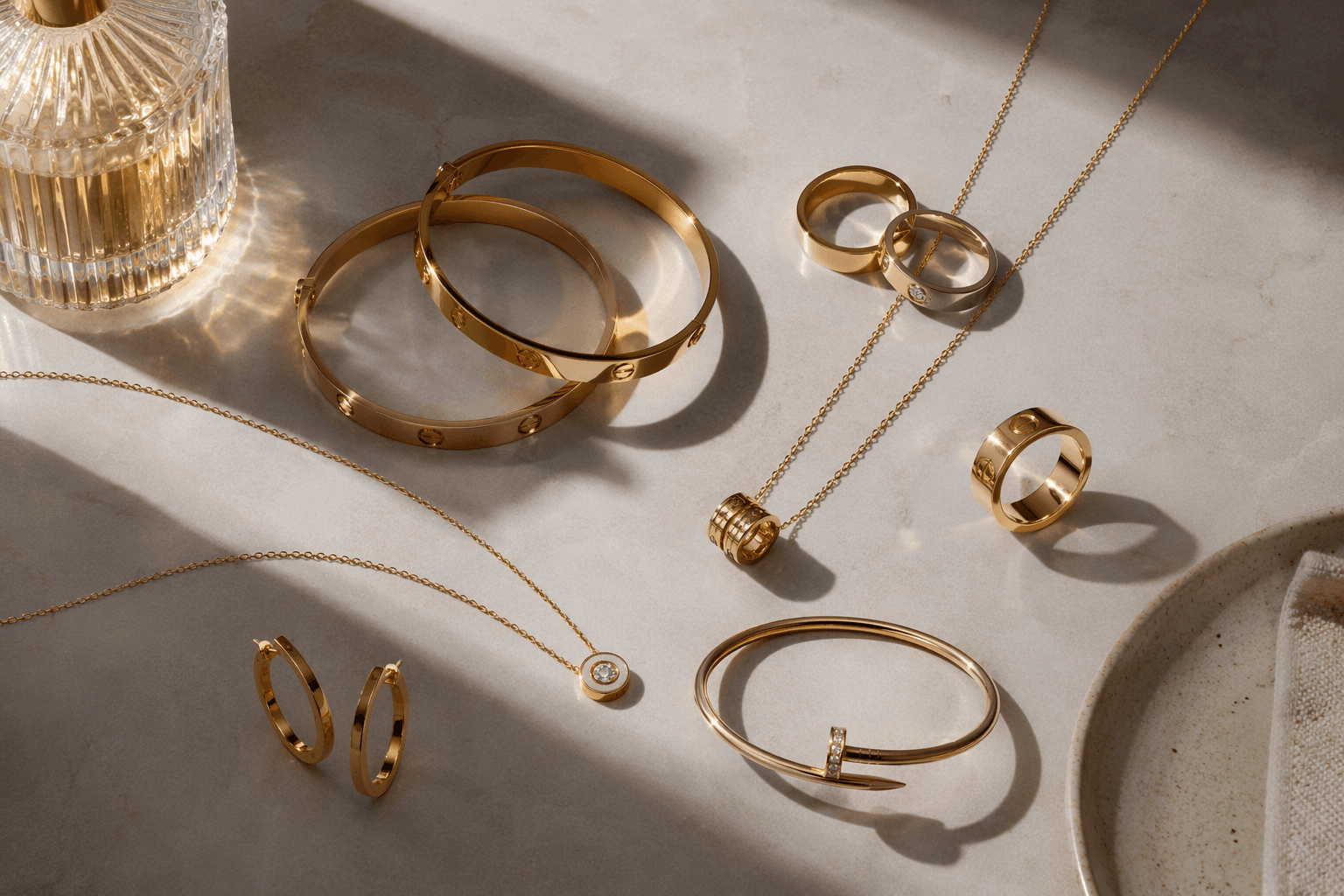
Chanel turned layering into a house code, pairing pearls, chains, and costume jewelry long before stacked necklaces became a modern obsession.

The original stack
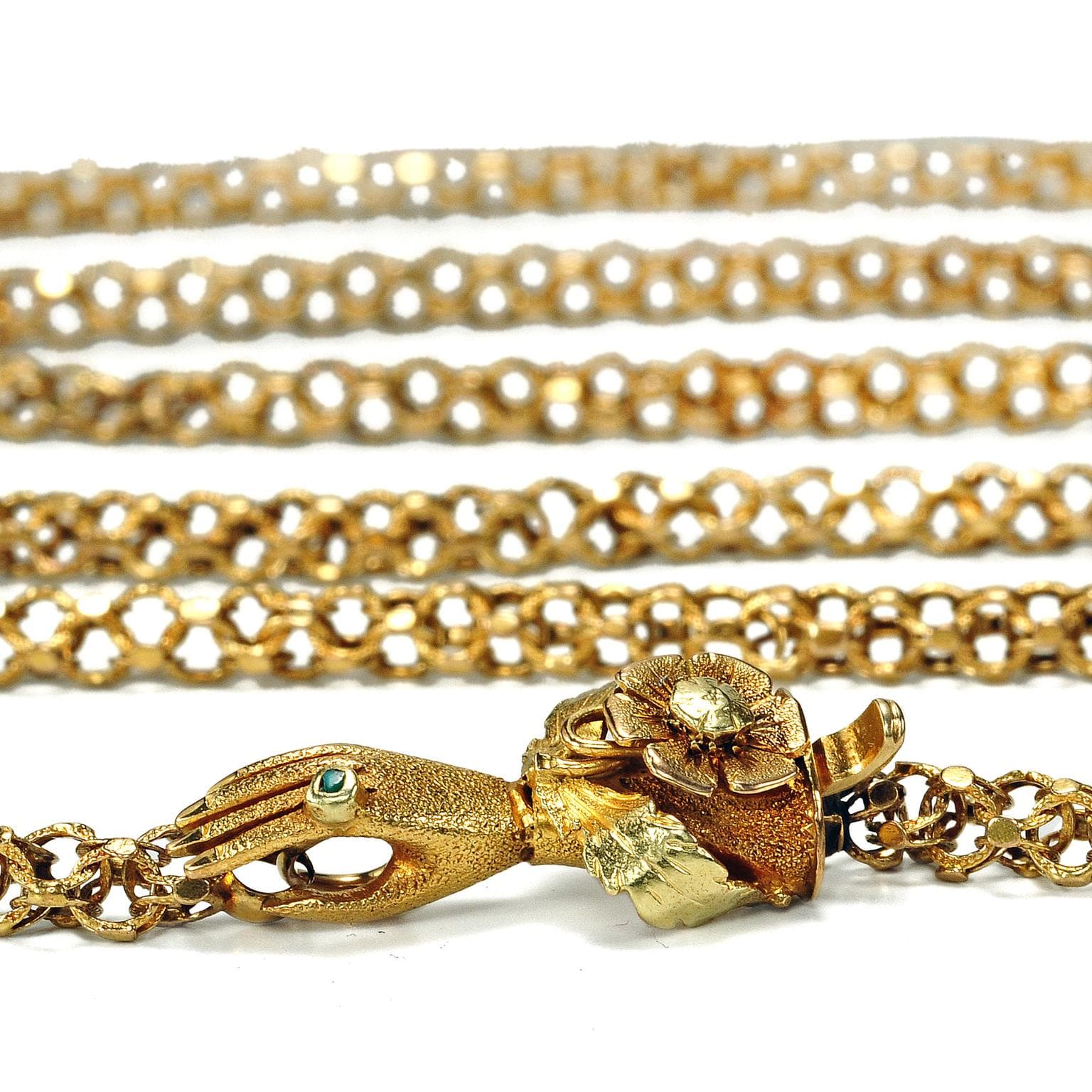
What feels like a fresh styling instinct today, the layered necklace, the mixed-metal pile, the deliberate collision of fine and costume pieces, was already part of Gabrielle Chanel’s design language a century ago. In the 1920s, she began promoting costume jewelry as an alternative to gold and to pieces set with pearls and precious stones, then wore bold faux-pearl, gilt-chain, and glass-stone combinations with plain daywear. The effect was never ornamental excess for its own sake. It was a new way of dressing that made jewelry read as part of the silhouette, not an afterthought.
The Metropolitan Museum of Art places Chanel at the center of modern dressing, describing her post-World War I sensibility as one of comfort, function, simplicity, and the “casual chic” that defined the 1920s. That matters because layering, in Chanel’s hands, was never about piling on more. It was about creating a visual rhythm, the kind that lets a strand of pearls, a chain, and a charm speak in different tones while still feeling composed. The modern high-low stack owes much to that instinct.
Why the mix worked
Chanel understood something that still governs the most convincing layered jewelry: contrast creates authority. Faux pearls against simple clothing, gilt against matte fabric, glass stones against daylight dressing, all of it sharpened the eye. Rather than treating preciousness as the only measure of value, she treated arrangement, proportion, and attitude as equally important. That is why the current appetite for mixed-price, mixed-metal jewelry feels less like a new trend than a return to one of fashion’s most durable ideas.
Her approach also blurred a line that once seemed rigid. Fine jewelry and costume jewelry were not separate worlds in Chanel’s wardrobe; they were neighbors. That blend is central to the appeal of today’s layered look, where a strand with a little gleam can sit beside something more formally set, and where a long necklace can temper the formality of a collar or choker. The point is not to match everything. The point is to make the whole read as intentional.
Chanel’s own current fashion collections still reflect that language. The house’s official site continues to present necklaces, pendants, chokers, long necklaces, earrings, and other costume jewelry pieces, which shows that layering remains embedded in the brand’s vocabulary rather than preserved as museum theory. For Chanel, jewelry has never been a seasonal afterthought. It is part of the way the house thinks about dress.
The 1932 leap into high jewelry
If the 1920s established Chanel’s layered, democratic approach to ornament, 1932 proved that the same eye could command the highest tier of the market. That year, Gabrielle Chanel created BIJOUX DE DIAMANTS, which Chanel describes as the world’s first high jewelry collection. More than 45 jewels were presented at her Paris townhouse at 29, rue du Faubourg-Saint-Honoré, in a setting that underscored the intimacy and conviction of the launch.
The collection carried a very specific idea of freedom. Chanel said it was conceived to liberate women’s bodies while adorning them, a phrase that captures the tension at the heart of her work. The jewels were meant to sit with ease, not encumber the wearer. That philosophy connects directly to modern layering, which works best when pieces appear to move with the body rather than fight it. A chain should drape cleanly. A choker should frame, not crowd. A longer strand should lengthen the line of the torso, not interrupt it.
BIJOUX DE DIAMANTS also had an unmistakable market effect. Chanel says Diamond Corporation Limited’s stock rose within two days of the collection’s release. That detail is more than anecdotal sparkle. It shows that Chanel was not only defining a look, she was influencing how luxury itself was perceived, packaged, and valued. The collection turned jewelry into both cultural signal and commercial force.
The modern revival has a blueprint
The current surge in layered jewelry, from stacked necklaces to mixed-metal chains and charm-heavy combinations, reads differently once Chanel is in the picture. What seems contemporary is, in fact, a revival with a clear historical blueprint. The house’s early costume jewelry, built from faux pearls, gilt, and glass stones, already anticipated the visible contrast that drives today’s stacks. Its high jewelry, meanwhile, proved that the same language could be translated into diamonds without losing ease or modernity.
That continuity is reinforced by Chanel’s own history page, which traces the house back to Gabrielle Chanel’s birth in 1883 and presents fashion and jewelry as one long continuum. Seen that way, layering is not a passing styling trick or a social-media invention. It is part of Chanel’s original logic: ornament should move with the body, hierarchy should be flexible, and beauty should come from the way pieces converse with one another.
The most persuasive layered jewelry still follows that rule. It does not merely accumulate. It composes. And in that sense, every well-judged stack today carries a trace of Chanel’s first idea, that jewelry can be modern when it looks effortless, deliberate, and alive on the body.
This article was produced by Prism’s automated news system from verified source data, official records, and press releases, then run through automated quality and moderation checks before publishing. The system is built and supervised by the people who set the standards it runs under. Read our full AI policy.
Did this article answer your question?